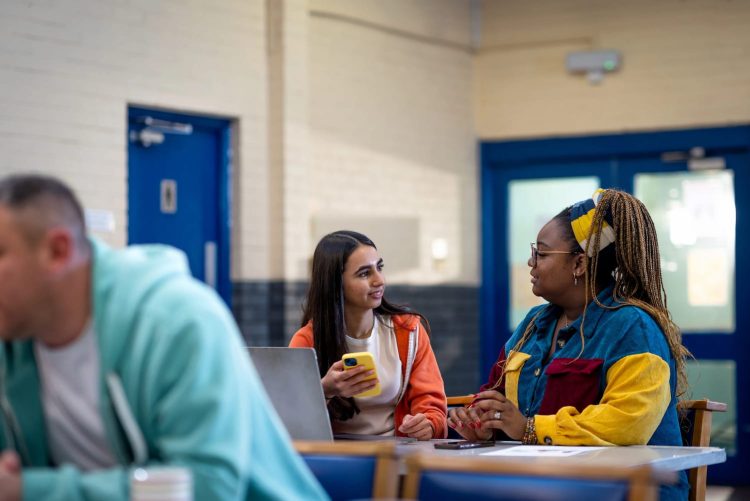

The hubs form part of the council’s Swindon 2028 Transformation Programme, which aims to shift support away from costly crisis responses and towards earlier intervention.
A cabinet report due to be considered next week states that too much help currently reaches residents only “once needs have escalated”, which the council says leads to poorer outcomes and higher costs.
The report makes clear that the hubs are not simply about improving access, but about managing demand before it becomes unmanageable.
The hubs are intended to act as physical access points where residents can speak to council officers, health partners and voluntary organisations in one place.
The model is described as a “no wrong door” approach, designed to prevent people being passed between departments or having to repeat their circumstances.
Four existing community buildings have been selected for the prototype phase during 2026.
Park Library and the Reuben George Centre in Park South is expected to open first in February, followed by The Meadows in Penhill in March, Central Library in April, and West Swindon Library later in the year.
While the council describes the locations as community focused, the report confirms that deprivation levels, service demand and health outcomes were key factors in choosing where to begin.
The first hubs will operate in areas where healthy life expectancy is lowest and demand for services is highest.
Each hub will have a different focus depending on local need.
Park South is expected to provide drop in prevention officers, welfare advice through Citizens Advice, youth work, housing support and health coaching.
Penhill’s hub will initially focus on children and families, including midwifery, health visiting and parenting support, before expanding to a wider all age offer.
At Central Library, the ground floor is planned to become a community hub, while the upper floors remain for library, arts and learning use.
Proposals for the site include employment support, mental wellbeing services, housing advice, youth training opportunities and a café run in partnership with Young Swindon and Wiltshire.
The West Swindon hub, based at the Link Centre, is expected to include a free food pantry alongside employment, health and welfare advice.
The report highlights food insecurity as an increasing concern that is now being treated as part of mainstream support.
Councillor Jim Grant, cabinet member for communities and partnerships at Swindon Borough Council, said the hubs are intended to make it easier for residents to
“drop in, have a conversation and get the right help at the right time”.
However, the cabinet report itself points to rising demand, increasing complexity of need and duplication across services as drivers for change.
The pilot will run throughout 2026 on what the council calls a “shape, test, learn” basis, with resident and partner feedback used to refine the model ahead of any wider rollout in 2027.
Funding for the initial phase is limited, with just over £61,000 of Section 106 money allocated for fixtures and equipment in library buildings.
The report states this reflects a focus on reorganising existing services rather than major new investment.
The council acknowledges that success will depend on whether organisations are willing to share data, decision making and responsibility.
While the hubs are presented as a practical change, the report describes prevention as a “whole council shift”, suggesting a deeper cultural change is required.
For residents, the test will be whether the hubs make support easier to access earlier, before problems escalate into crisis.