

For most passengers boarding at Swindon station on Monday morning, the restored direct service to Oxford was simply a quicker journey. For the politicians gathered on the platform, it was a long-awaited transport victory after more than two decades without a direct connection between the two towns.
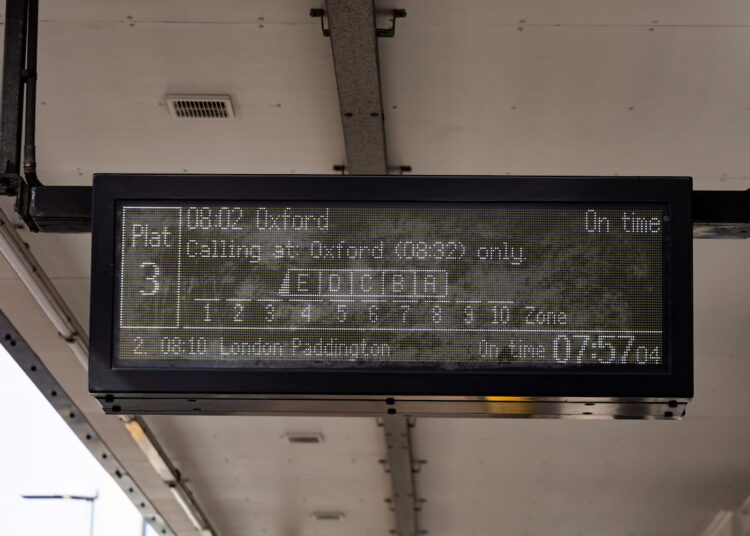
The first direct train to Oxford departed at 7am, marking the return of a service absent for 23 years. Operated by Great Western Railway, the new route links Bristol Temple Meads, Bath, Chippenham, Swindon and Oxford, cutting the fastest journey time between Swindon and Oxford to less than 30 minutes. To encourage early take-up, GWR is also offering introductory fares for the first month, including £6 single tickets each way between Swindon and Oxford on the direct service.
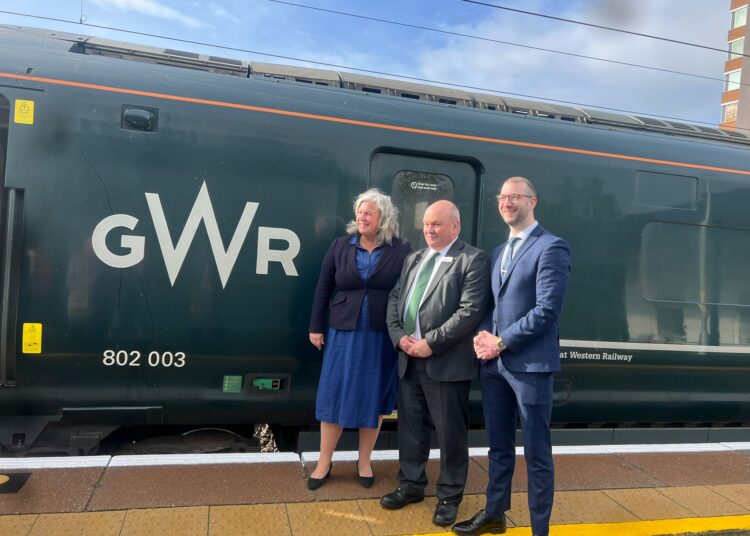
Transport Secretary and Swindon South MP Heidi Alexander joined Swindon North MP Will Stone and GWR representatives to mark the launch, with both MPs highlighting the economic and practical importance of reconnecting the towns. Will Stone said:
“Given the relatively short distance between Swindon and Oxford, current connectivity is poor. An hourly train link will significantly cut down journey times by rail and will further strengthen the economic linkages between our two places in a mutually beneficial way.
“Swindon is one of the most productive towns in the UK, and with the Panattoni site developing, its employment offer will only grow to both local residents and the wider area.
Heidi Alexander added:
“Along with Will… this is something I have long championed on behalf of residents. Stronger transport links are vital to unlocking opportunity, and this service is a clear example of what can be delivered when local and national partners work together.”
Passengers no longer need to change at Didcot Parkway or Reading. Travellers heading towards Oxford’s universities, research parks and hospitals now have a direct route rather than a fragmented one.

For years, Swindon has occupied an interesting position within the regional economy, geographically close to Oxford but never fully connected to it. While the town has long benefitted from its position on the London-to-Bristol corridor, its identity has often been tied more to logistics, warehousing and commuter expansion than to the “knowledge economy” increasingly dominating parts of southern England.
Oxford, meanwhile, faces mounting pressures of its own. Housing affordability has deteriorated sharply, commercial space is constrained, and the city’s globally significant science and technology sectors continue to expand faster than the city itself can comfortably absorb.
Swindon’s appeal in that context is obvious. Housing remains significantly cheaper than Oxfordshire and commercial land is more available and cheaper. What the town has lacked is a stronger sense of integration with the economic ecosystems developing around Oxford.
Business groups are already framing the route in exactly those terms. Matt Griffith, Director of Policy at Business West, described the restored line as a “massive win-win” for both towns, arguing that Swindon could provide the business space and housing Oxford increasingly struggles to accommodate, while giving residents easier access to Oxford’s economy and research sector.

Swindon Borough Council has spent recent years attempting to reposition the town as a destination for higher-value investment. Recent investment meetings and new company announcements with defence and AI firms, led by Will Stone, suggest an ambition to align the town with sectors, like advanced tech, traditionally associated more with Oxfordshire than Wiltshire.
The launch also comes as wider attention grows around the so-called “Oxford-Cambridge Growth Corridor”, with business leaders increasingly looking at how surrounding towns can support expansion in science, research and technology industries. Supporters of the new rail link argue Swindon is well positioned to benefit from some of that economic spillover.
For now, the return of a direct Oxford service signals something many local leaders have argued for years, that Swindon’s future may depend less on looking inward and more on positioning itself within a wider regional network of education, research and innovation.
The timing is also politically significant. In December, Great Western Railway is expected to move into public ownership as part of the government’s wider rail renationalisation plans. Public ownership could make it easier to prioritise routes like Swindon to Oxford based on long-term economic benefits, rather than just profit. However, passengers will ultimately hope that nationalisation will create cheaper pricing for a perceptibly expensive route to London.
This week’s launch was, on the surface, a timetable change, but underneath it sits a more complicated question about what kind of economy Swindon wants to be part of.