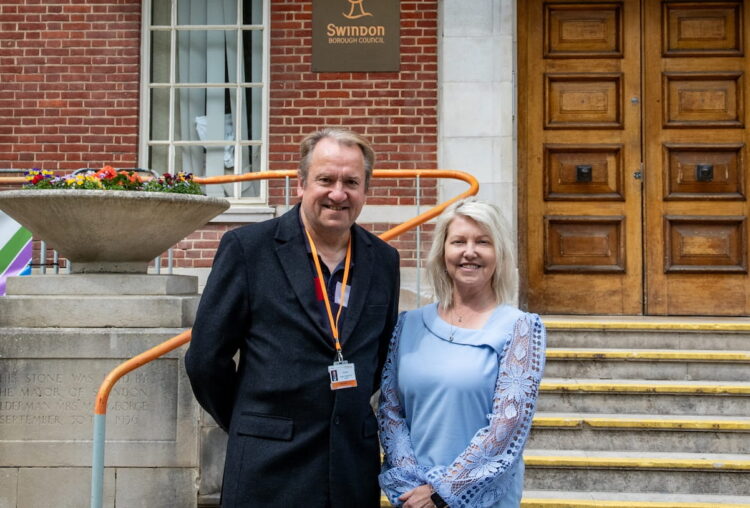

Lovell, who previously served as a Conservative councillor in Moredon and later Lower Stratton before leaving the party, will now help lead Reform’s 14-member group alongside newly appointed leader Sara Godwin. The move comes ahead of Friday’s pivotal first full council meeting, where councillors will formally vote to appoint the council leader and deputy leader following elections that left Swindon under no overall control.
The Conservatives remain the largest party, but without a majority, meaning any administration will require cooperation, negotiation, or informal agreements with opposition groups to get major decisions through.
That reality mirrors a wider national shift in British politics, where the traditional dominance of two-party majority control is increasingly being replaced by fractured councils, minority administrations and issue-by-issue alliances.
In Swindon, Reform now finds itself holding significant influence over what happens next.
Speaking exclusively to Swindon24, Lovell said Reform would judge proposals individually rather than automatically backing either Labour or the Conservatives.
“We’re in quite a good position because there’s no overall control,” he said. “People will be wanting our advice and help.”
He also acknowledged that Reform could support motions brought forward by Labour, even if opposed by a Conservative-led administration.
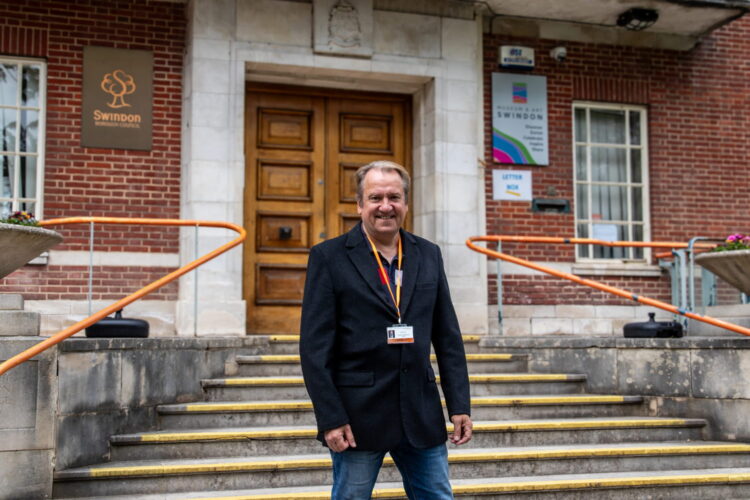
“There will be motions that Labour think are a great idea, and we might think is a great idea, which the administration, who don’t have overall control, can do nothing about,” he said.
Godwin echoed that approach, insisting Reform would not enter the chamber tied to either side politically.
“We can’t say we’re going to side with Labour or Conservatives,” she said. “We’re going to do what Reform wants clearly, and if that happens to be what Conservatives are doing, then we would support that.”
She added:
“We may have some alignment with Labour, who knows, but we’re all here for Swindon people.”
Unlike many first-time councillors, Lovell already understands the mechanics of local government, committees and council procedure after first entering politics as a Conservative activist in the late 1990s.
“I haven’t changed a single opinion since I started getting into local politics,” he said. “But I felt that the Conservative Party just wasn’t delivering.”
Reform’s local leadership says its immediate priorities include scrutiny of council finances, planning policy and infrastructure delivery.
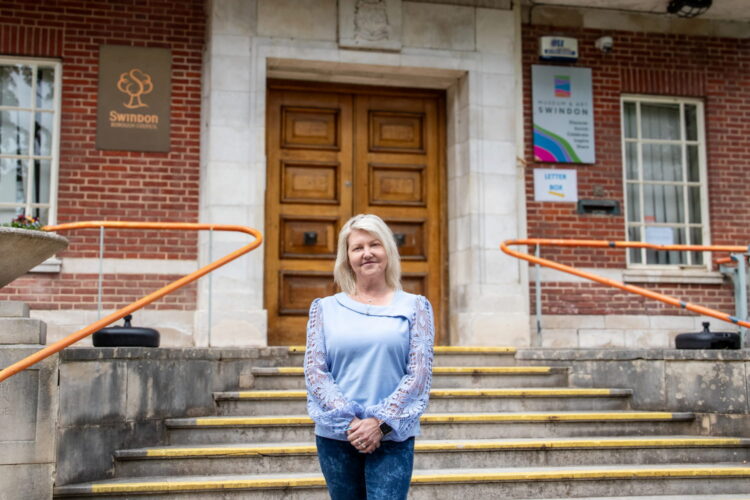
Godwin confirmed that reviewing the council’s finances remains central to the party’s agenda.
“It’s absolutely still on top of our agenda,” she said. “We’d love to get more involved in the finance side of things.”
The party also signalled support in principle for regeneration projects such as the Oasis Leisure Centre redevelopment, although both leaders stressed they would want to fully examine future plans before committing support.
“We all want to see it return to its former glory,” Lovell said. “We’ll be supporting that idea as much as we can.”
The broader challenge facing all parties is whether Swindon’s politicians are prepared for a more collaborative era of local government.
For decades, council politics largely operated through majority control, where administrations could push through policy with limited need for compromise. That model is becoming less certain nationally as support fragments across Conservatives, Labour, Reform, Liberal Democrats and Greens.
In Swindon, Friday’s first full council meeting may offer the clearest indication yet of which direction the borough is heading.
It will not simply decide who runs the council, it may reveal whether Swindon’s political parties are capable of operating in Britain’s emerging era of coalition-style politics at all.