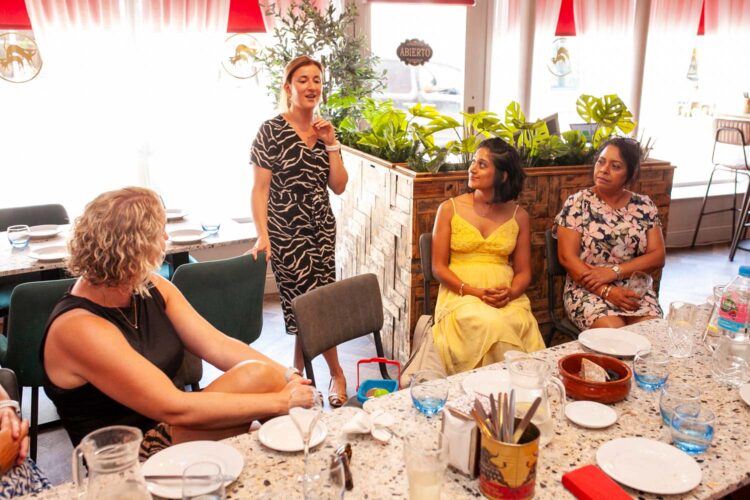

Doctors, dietitians and gynaecology experts joined members of the public at Los Gatos in Old Town for the latest educational session organised by MessageGP. The event focused on women’s health and encouraged open conversations about symptoms that are often overlooked or considered difficult to discuss.
Speakers urged women to seek professional advice rather than relying on information shared on social media, while stressing the importance of talking to friends and family about health concerns.
Dr Arpit Srivastava, NHS GP and co-founder of MessageGP, said:
“I think first of all, just go talk to a professional, but actually, it’s not even just talking to a professional – talk to each other.
“Sometimes people don’t talk about their symptoms or their feelings with each other, and actually just by talking to those around you, you’ll definitely find someone who’s gone through something similar.”
He said menopause is often associated only with hot flushes, despite affecting many other aspects of health.
“It encompasses energy, weight, metabolism, bowels, heart health, long-term bone risk and dementia risk,” he explained.
“There are so many aspects to this, so really talk to people around you, talk to professionals around you.”
Specialist women’s health dietitian Jasel Small said many women receive conflicting advice about nutrition and should instead concentrate on adding healthy foods to their diet rather than restricting what they eat. She said:
“I’m really trying to spread a message of adding in rather than restricting.
“As women, we have very specific nutritional needs and a lot of the time we’re told to cut out, we’re told to shrink. Actually, we should be fuelling ourselves properly and consciously.”
She highlighted iron deficiency as a common issue, particularly for women following predominantly plant-based diets.
“There are things that we can do to boost absorption,” she said.
“It’s getting vitamin C in at the same time as eating these foods – squeezing lemon juice onto meals, having broccoli, tomatoes or peppers alongside food.”
She also advised avoiding tea, coffee and calcium-rich foods when eating plant-based sources of iron to help improve absorption.
Consultant gynaecologist David Griffiths said many young women experiencing pelvic pain or heavy periods do not always receive the support they need.
“I see a lot of young girls with pelvic pain and period problems, and they don’t really get listened to,” he said.
He explained that severe symptoms can affect education, employment and everyday life.
“If you’ve got problems which are affecting your life, you must go and see your GP.”
He said the session aimed to help women recognise symptoms that could be linked to conditions such as endometriosis and encourage them to seek medical advice.
Dr Monique Vekeria, consultant radiologist and co-founder of MessageGP, said women are increasingly exposed to online claims about supplements and treatments that can be difficult to assess.
“We are being bombarded by adverts for supplements and different interventions, and it’s really hard in this day and age to know what to trust,” she said.
Drawing on her own experiences of pregnancy, motherhood and thinking ahead to menopause, she said community events can help women feel more informed throughout different stages of life.
“There is no such thing as a silly question,” she said.
“Everything you say to your GP is confidential. They’ve heard everything before.”
The women’s health event was the latest in a series of educational sessions organised by MessageGP. It follows an earlier talk on prostate health, with further events planned covering other areas of medicine in informal community settings.