Space weather forecasters are tracking the arrival of a coronal mass ejection, a fast-moving cloud of charged particles released by a powerful solar flare earlier this week.
When these particles collide with Earth’s magnetic field, they can trigger geomagnetic storms that produce aurora displays high in the atmosphere.

Forecasts suggest the solar material will interact with Earth’s magnetosphere overnight, potentially allowing auroral activity to be seen across northern Europe and parts of the UK.
Auroras are usually limited to high-latitude regions such as Scandinavia and northern Scotland, but strong geomagnetic storms can push visibility further south.
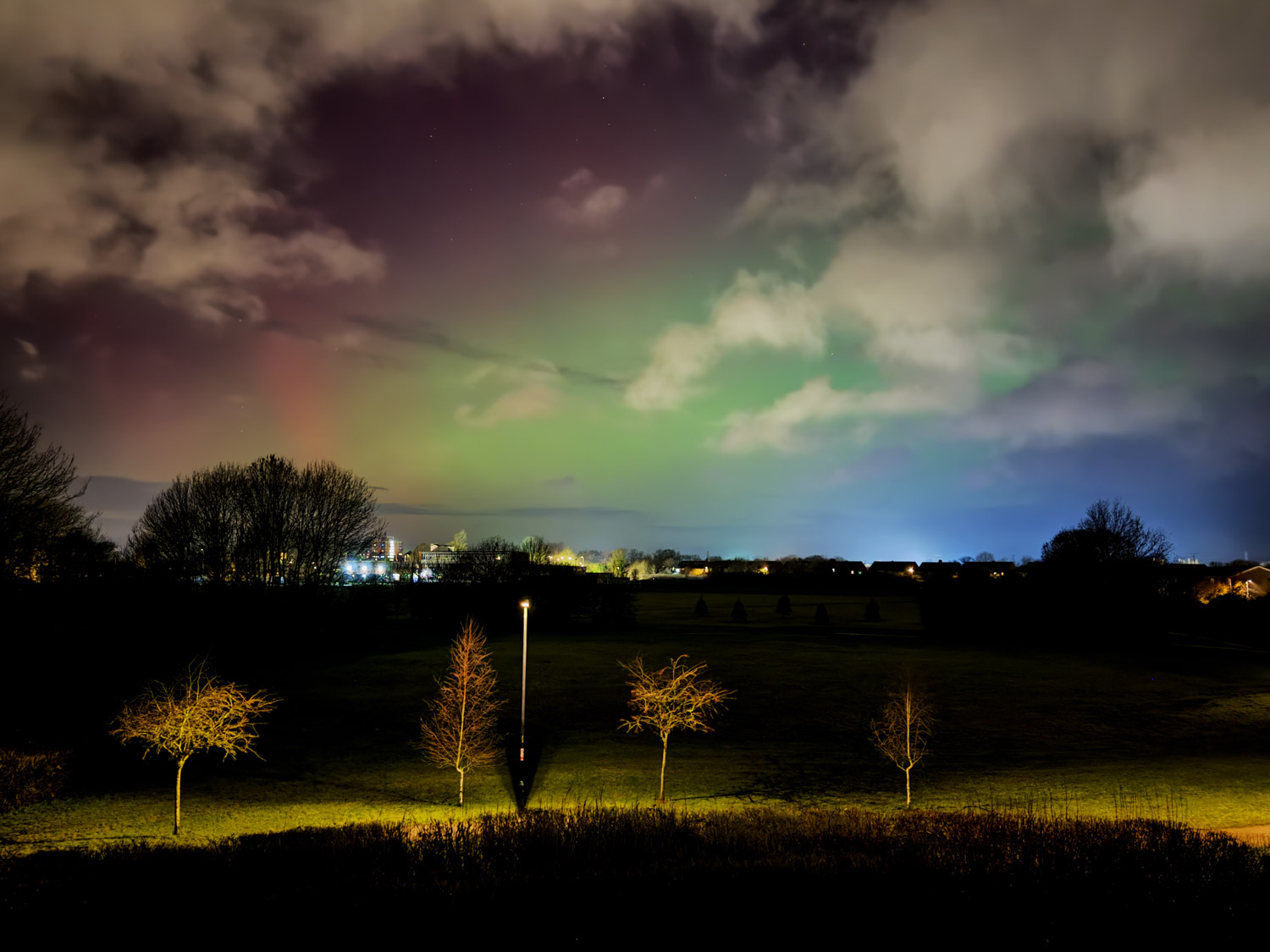
Any display seen over Swindon were expected to be faint and low on the northern horizon, rather than the bright curtains of light seen in Arctic regions.

Despite this, some residents have reported unusual colours in the night sky.
Maryna, from Stratton, said: “There’s a soft green light sitting low in the sky towards the north. It’s subtle, but it’s definitely there, and it seems to shift slightly.”
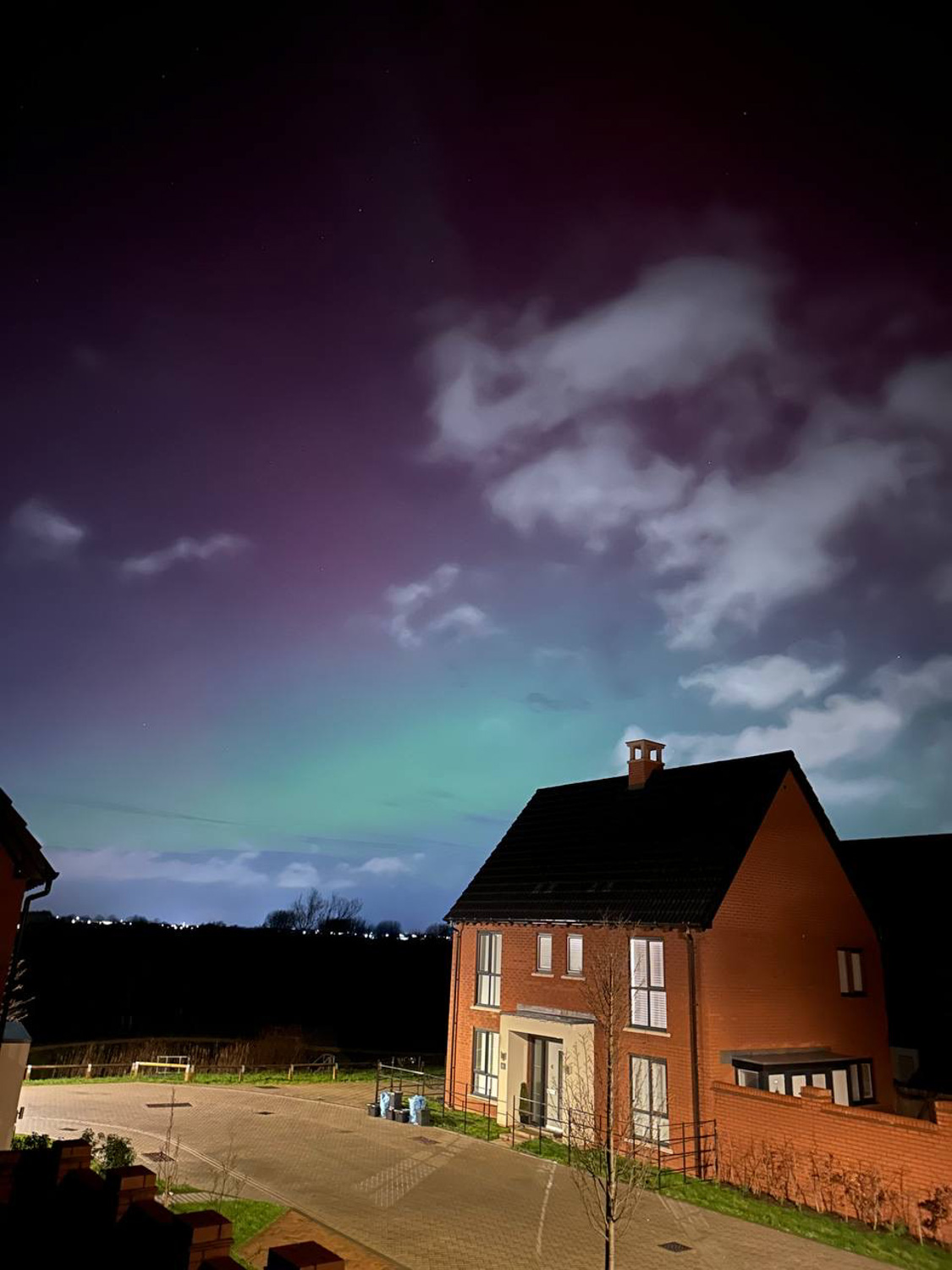
In Old Town, Yuliia said: “At first I think it’s just cloud reflecting light, but then the colour changes and fades in a way that doesn’t look normal. It makes you stop and really look.”
Experts advise those hoping to spot the aurora to head to darker areas away from streetlights, face north, and allow time for their eyes to adjust to the darkness.
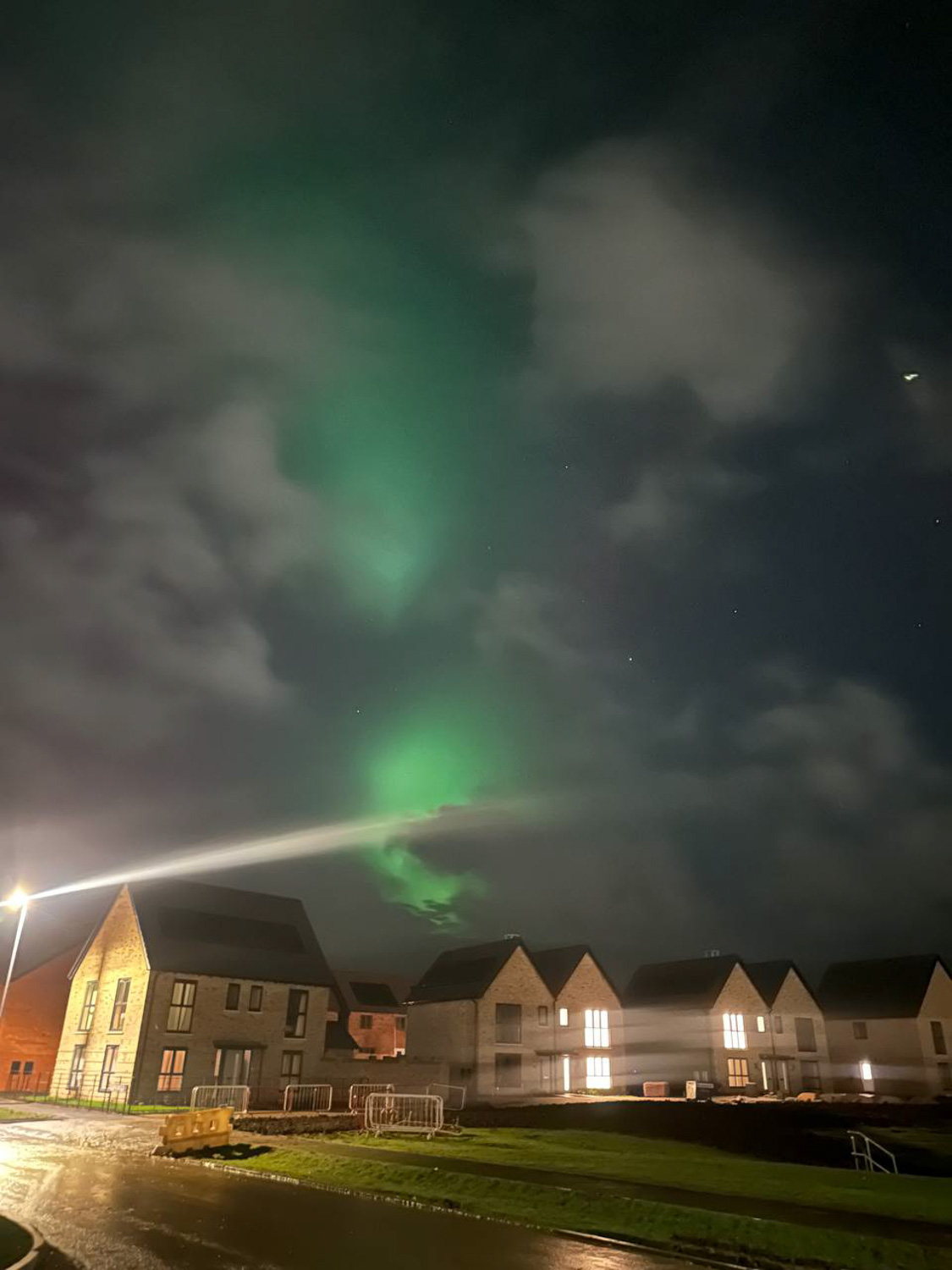
They say cameras and mobile phones may capture colours that are difficult to see clearly with the naked eye.
Scientists are continuing to monitor geomagnetic activity overnight, with confirmation of aurora visibility over southern England dependent on real-time measurements as the solar storm passes.
See even more photos on our facebook post