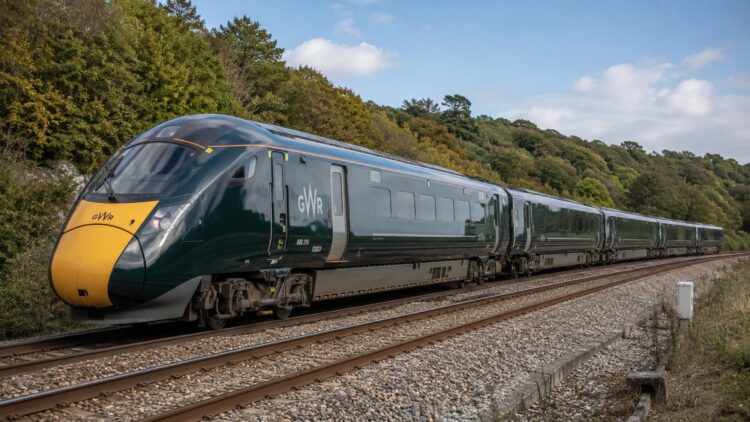

The operator, which runs daily services through the town, will be nationalised on 13th December 2026 as part of Labour’s plan to bring passenger rail services under state control through Great British Railways.
The change will see Great Western Railway become the 11th train company transferred into public ownership since Labour entered government and began implementing its rail reforms.
The decision carries particular relevance for Swindon, not only because of the town’s reliance on main line services to London, Bristol, Cardiff and the South West, but because the reforms are being led by South Swindon MP and Transport Secretary Heidi Alexander.
Swindon’s relationship with the railway dates back more than 180 years.
The arrival of the Great Western Railway works transformed the town from a small market settlement into a major industrial centre, with generations of families employed in engineering, maintenance and railway operations.
Today, trains passing through Swindon station continue to carry commuters, business travellers and students across the country, with the operator remaining closely linked to the town’s economy and identity.
The Government says bringing operators into public ownership will improve coordination, simplify ticketing and boost reliability across the network.
The transition will take place as existing contracts expire, avoiding the need to pay significant compensation for early termination.
Ministers have not promised lower fares or immediate improvements for passengers.
Transport Secretary Heidi Alexander said the move would help create “a railway passengers can rely on”, as Labour continues its overhaul of Britain’s rail system.
A Great Western Railway spokesperson said: “We welcome the clarity provided by the announcement and will continue to work closely with the Department for Transport as we move into public ownership.
“Throughout this process, our priority will be maintaining a punctual, reliable service for customers while continuing to support regional growth and connectivity across our network.”
The nationalisation date aligns with the December 2026 timetable change across the rail network.
For many Swindon passengers, the impact of the move is likely to be judged on whether services become more reliable.
Regular commuters who experience delays, cancellations and overcrowding may view ownership as secondary to consistent on time performance.
Nevertheless, the announcement carries symbolic weight in a town built on the railway industry.
After roughly three decades of privatised operation, Swindon’s historic rail operator is set to return to state control once again.