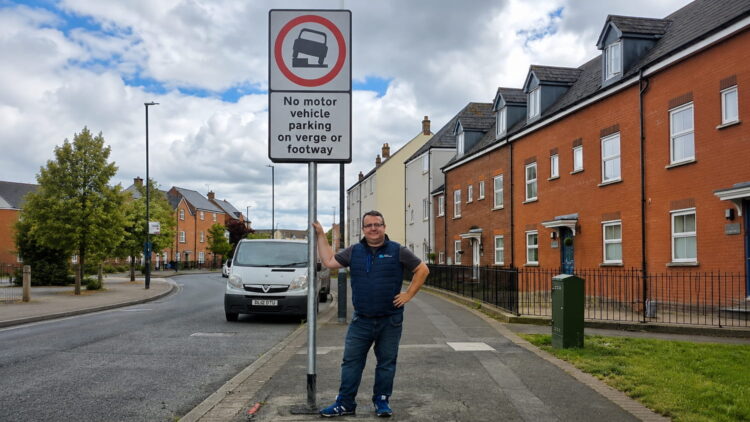

New restrictions will apply to parts of Redhouse Way, Millgrove Street and Eastbury Way. Motorists will be prohibited from parking on pavements and grass verges in designated areas.
The eighteen month trial follows concerns raised by residents and ward councillors about vehicles blocking footpaths.
Signs and road markings have been installed ahead of enforcement starting next week.
Daniel Adams, who represents St Andrews West and Tadpole, secured the trial.
He said: “A central pillar of my work has always focused on improving accessibility to our public spaces for those with disabilities and people in general.
“Time and time again, I’m told stories of people with mobility issues forced into the road to get around cars parked on a footpath, people with visual disabilities unable to continue as they can’t find a safe path, and parents with young children having cars driven at them as they try and walk to school.”
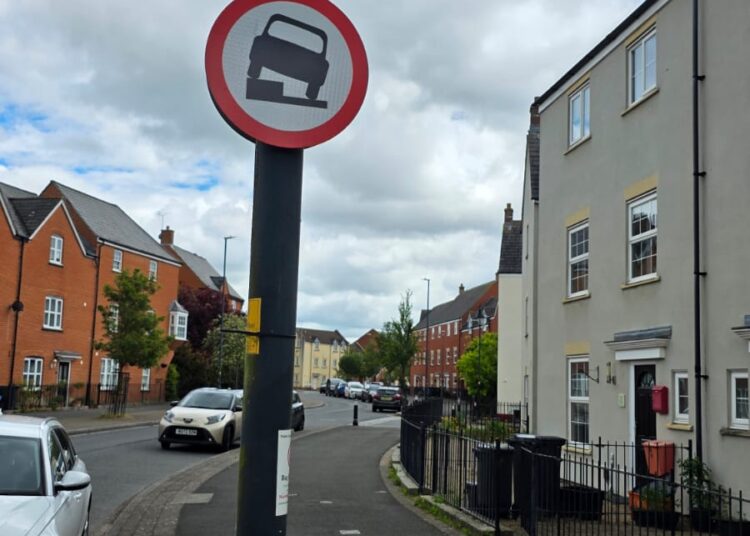
While pavement parking is automatically illegal in London, rules have differed elsewhere in England.
Recent powers granted to local authorities by the previous Conservative Government allow councils to introduce targeted restrictions where there is local backing.
Councillor Adams said the scheme could be expanded if it proves effective.
“I secured a trial last year for three roads in my ward, Redhouse Way, Millgrove Street and half of Eastbury Way. The yellow lines are down, signs installed and enforcement begins on 3rd June.
“If the trial is successful then it can be rolled out elsewhere in a similar fashion to the new 20mph zones where there is local support.”
Swindon Borough Council said the trial has been developed using a community led approach, with residents and councillors identifying problem areas.
Residents will have six months to submit feedback once the trial begins. The council will then review responses and present a report to Cabinet.
If supported and deemed successful, councillors will decide whether to make the measures permanent and consider introducing similar restrictions in other parts of Swindon.
The trial comes amid a wider national debate about pavement parking and its impact on accessibility for wheelchair users, visually impaired pedestrians and families with pushchairs.