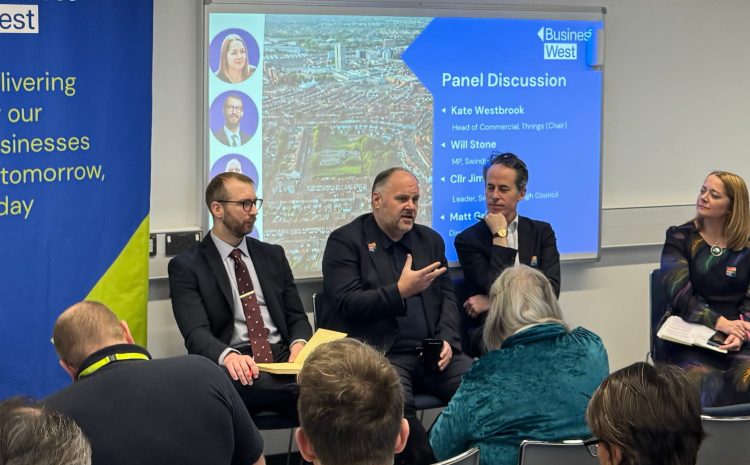
The discussion, hosted by Business West as part of the Festival of Tomorrow, brought together leaders involved in regeneration, investment and skills development in the town.
Panellists agreed that Swindon’s challenge is turning its strong economic performance into visible, town centre-led growth.
Panelists included Kate Westbrook, Head of Commercial at Thrings & Business West Non-Executive Director Matt Griffith, Director of Policy, Business West Will Stone, MP for Swindon North Cllr Jim Robbins, Leader of Swindon Borough Council.
Speakers pointed to Swindon’s high productivity and employment levels, describing the town as an outlier nationally despite its size.
Matt Griffith said: “If you look at the national stats, Swindon is outstanding in terms of its productivity. It’s got amazing employment rates and an incredibly strong private sector.”
He added that Swindon’s long-term strength lies in its ability to adapt, from railways to automotive manufacturing and now advanced manufacturing and defence technologies.
“Its superpower is that it’s flexible. Because it’s relatively small, it has a focus which other places struggle with, and it’s been able to adapt to future economic challenges and opportunities.”
Leader of Swindon Borough Council Councillor Jim Robbins said political alignment and renewed inward investment capacity were already accelerating progress.
Speaking about MP Will Stone, Robbins said:
“It is unheard of for someone in their first year in Parliament to have had such a massive impact on the area they represent. The amount of jobs that he has already brought to the town is unbelievable.”
Robbins said rebuilding an in-house inward investment team had been a turning point, alongside fixing planning delays and restoring daily engagement with businesses.
“Just having those people who are out every day talking to our businesses, keeping those already here happy, and going out to bring in new people has been massive.”
He also highlighted major reforms to the council’s planning system.
Robbins said the authority inherited more than 800 undetermined planning applications, but the backlog has now been almost entirely cleared.
“If you put in a planning application now in Swindon, it goes through in weeks. It just flies through the system. It works.”
Panellists said the change has significantly improved Swindon’s credibility with investors.
However, speakers acknowledged that regeneration has historically lagged in the town centre.
Robbins said previous efforts were repeatedly disrupted by external shocks, including the 2008 financial crisis and the pandemic.
“It’s not for the want of trying in Swindon, but somehow we always managed to coincide regeneration with a big local event that knocked it off course.”
Attention is now focused on Fleming Way, Kimmerfields, land around the railway station and the Heart of Swindon programme.
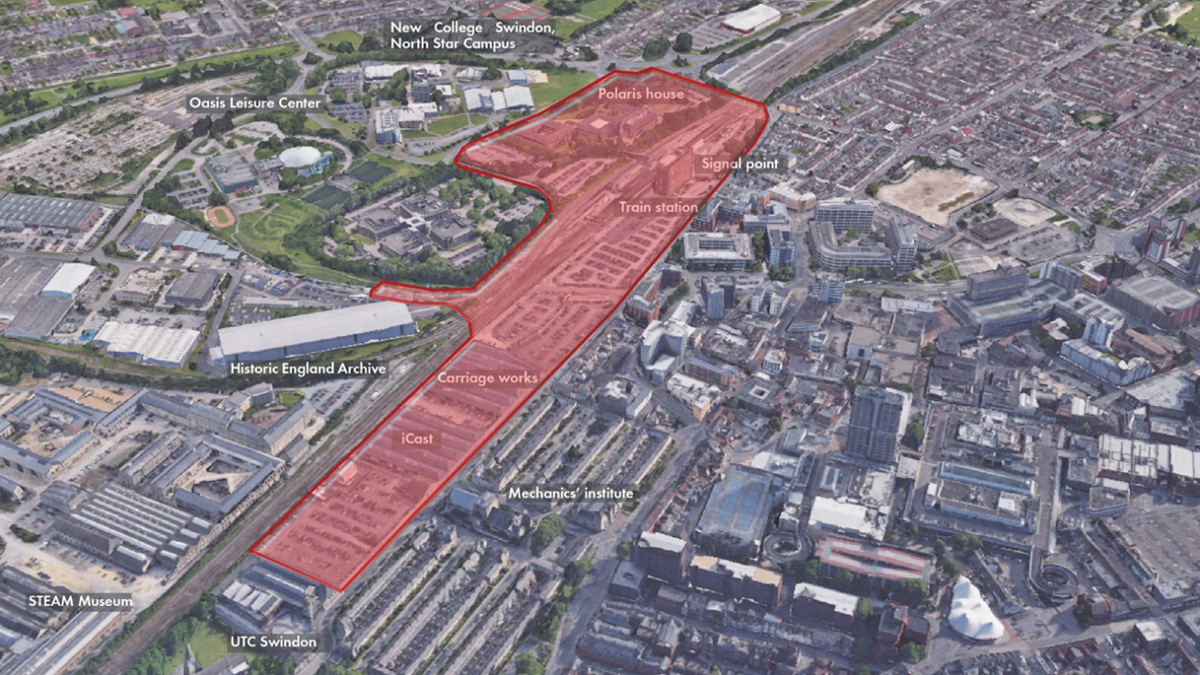
Robbins described Swindon Knowledge Central as the most significant opportunity.
The project covers more than 100 acres of brownfield land around the station, combining housing, employment, education, research and innovation.
“There’s a reason it’s called Knowledge Central. It’s about getting learning space in there, research collaboration space, startup business space, and hopefully university provision.”
He also said the scale of UK Research and Innovation’s presence in Swindon remains underappreciated.
“Ten billion pounds a year flows through UKRI, and not enough people know that happens in Swindon.”
Skills were repeatedly described as the deciding factor in whether regeneration succeeds.
Robbins said development alone is not enough.
“All of these things are brilliant developments, but unless we get the skills element right, and there are clear pathways for our young people, we won’t have succeeded.”
He said young people across Swindon should be able to see clear routes into the new jobs being created.
“If you’re growing up in Parks or Walcot, you should be able to see a route into those good new jobs.”
Robbins acknowledged public scepticism after years of stalled regeneration plans.
“I could create a coffee table book of all the CGI images of things that were going to happen in Swindon that never did.”
He said the council is now focused on delivery rather than promises.
“We only want to talk about stuff when it’s actually happening. We want people to believe in it and get behind it.”
The panel ended with a call for greater engagement from local businesses, particularly small and medium-sized firms.
Stone urged companies to come forward and help build local supply chains.
“If we don’t know what businesses exist in Swindon and what they do, we can’t link people together.”
Robbins said keeping more public spending within Swindon is a priority.
“When we came in, 38% of council spend was with Swindon businesses. We’re now at 48%, and we’ve set a target of 60%”
He concluded: “We’re trying to get to a place where we deliver good things, people see them happen, and then they get behind it. That’s how we change the story of Swindon.”