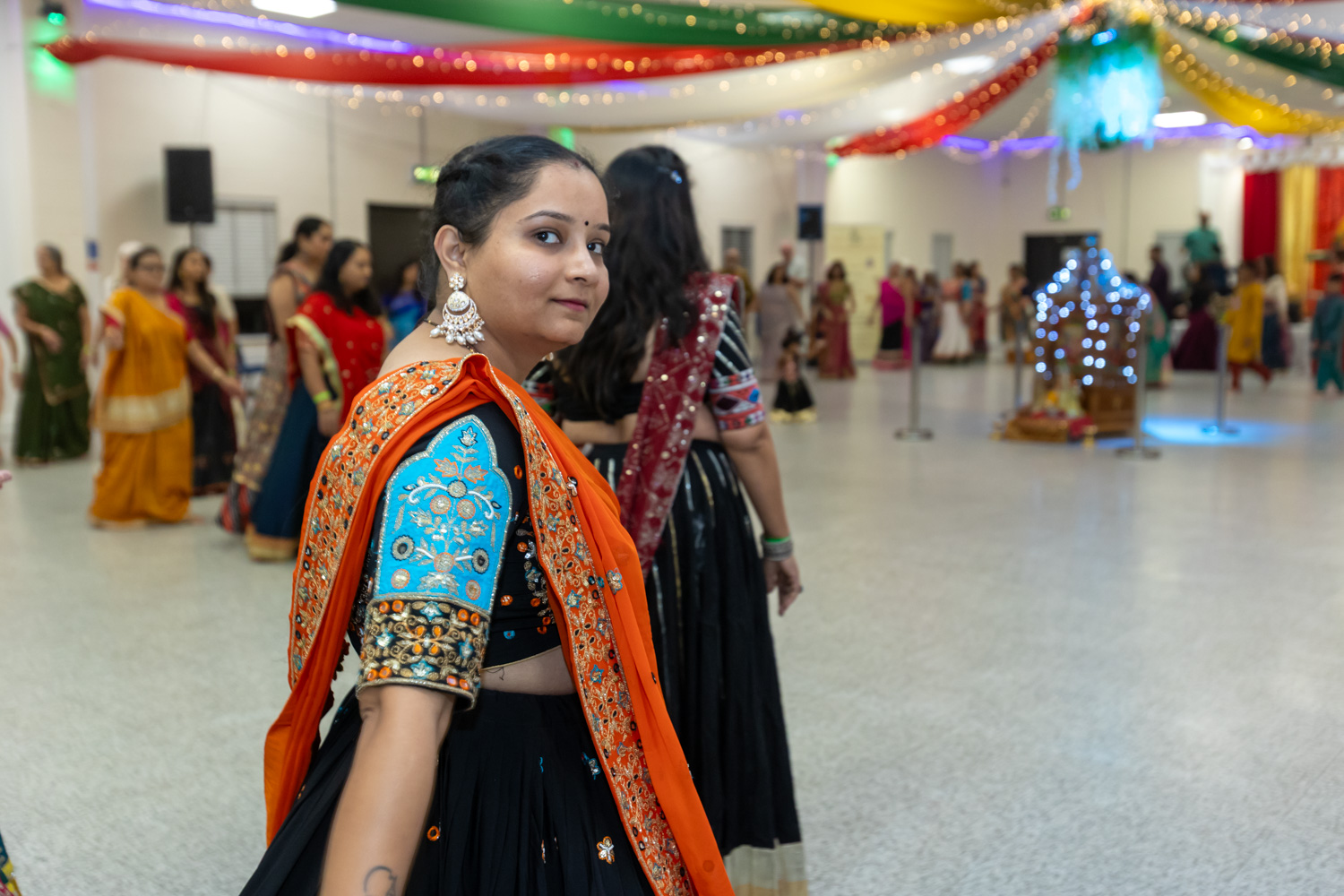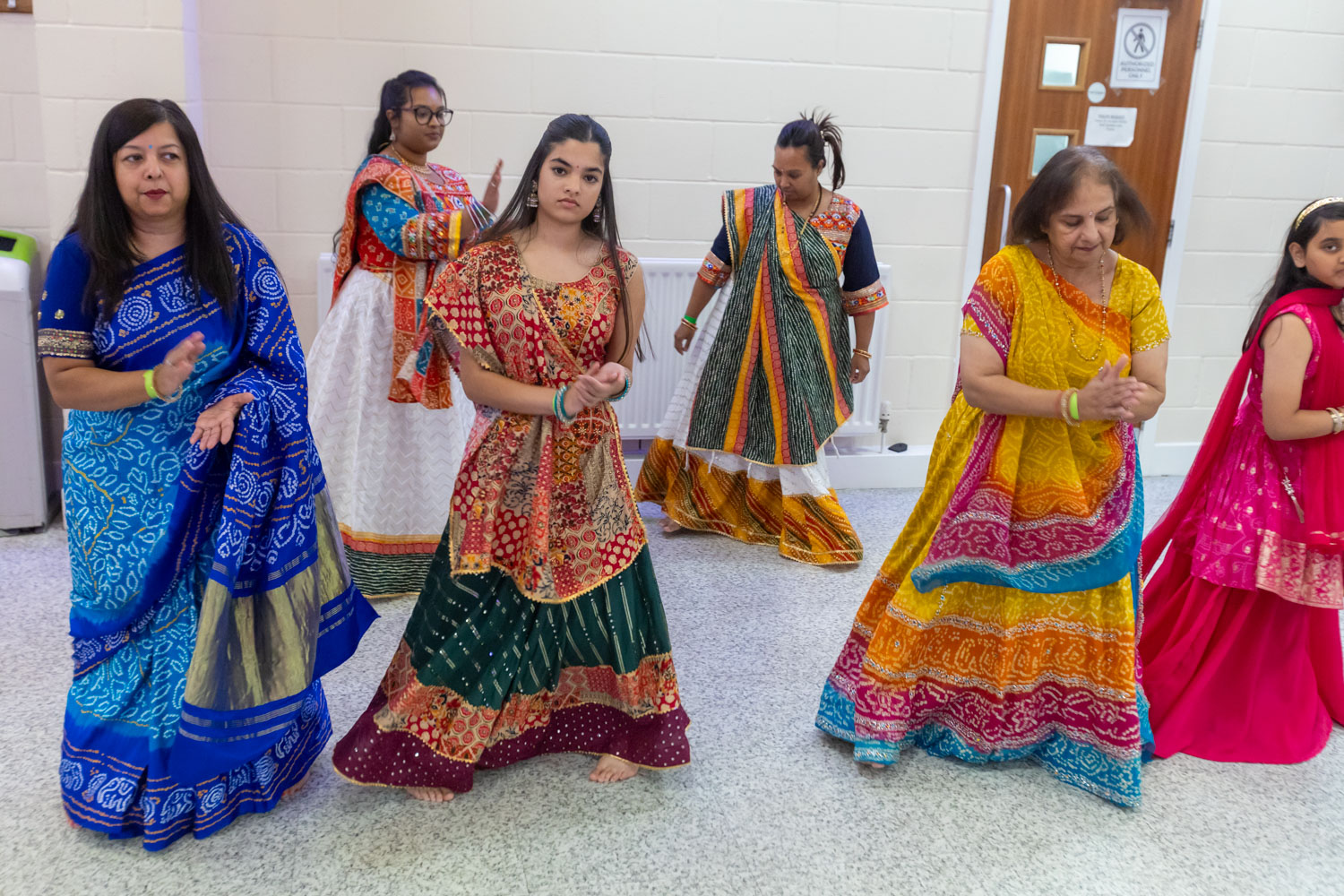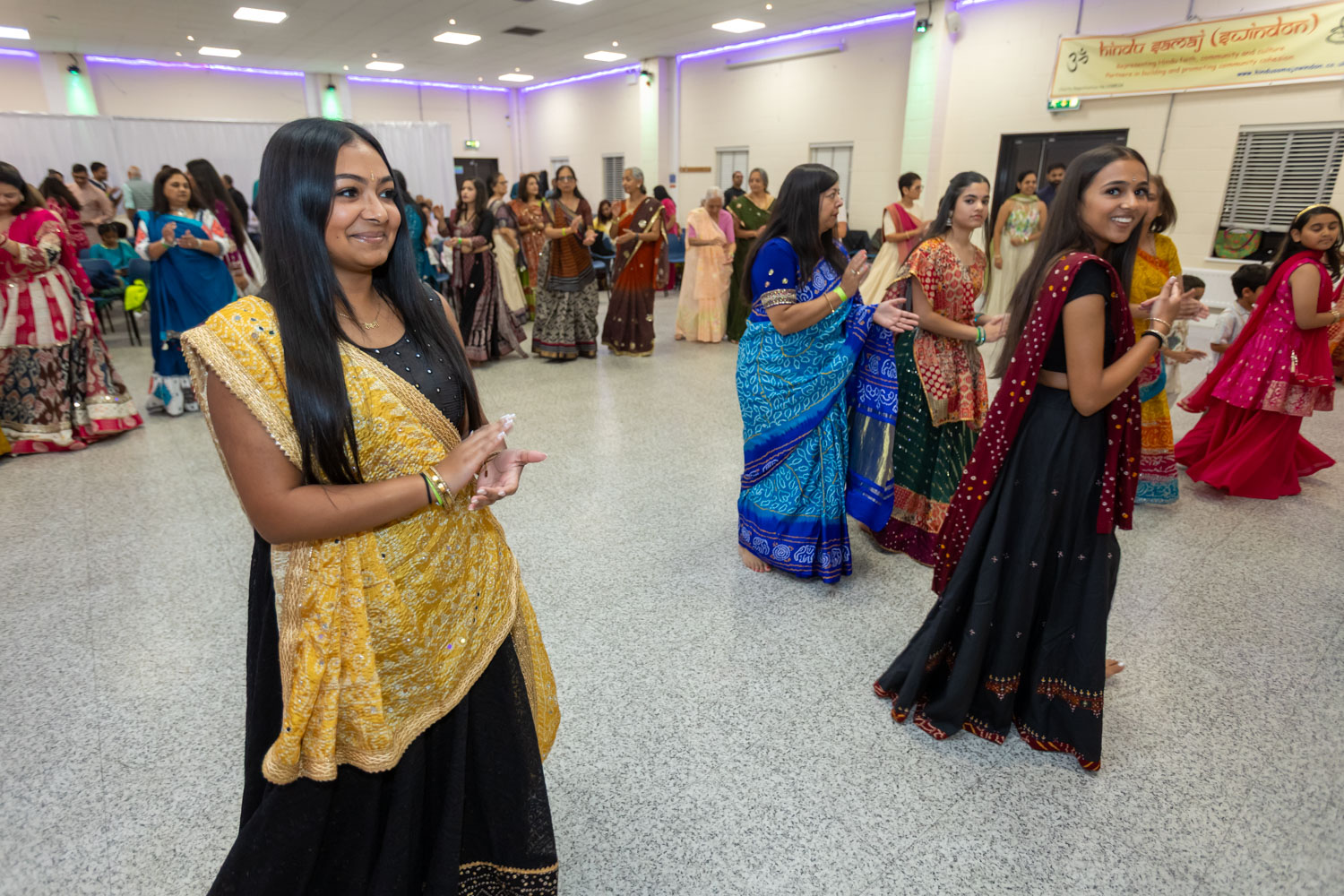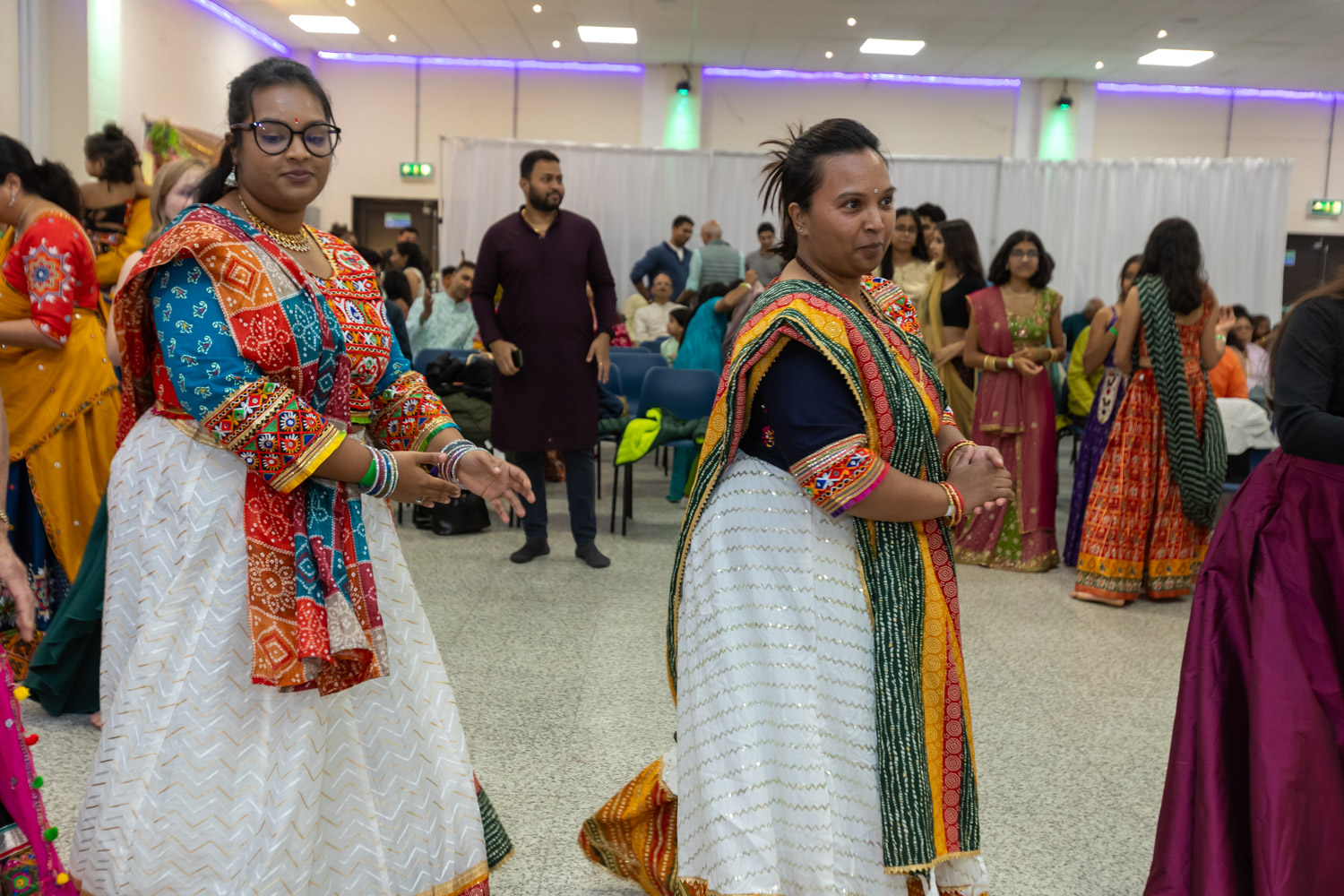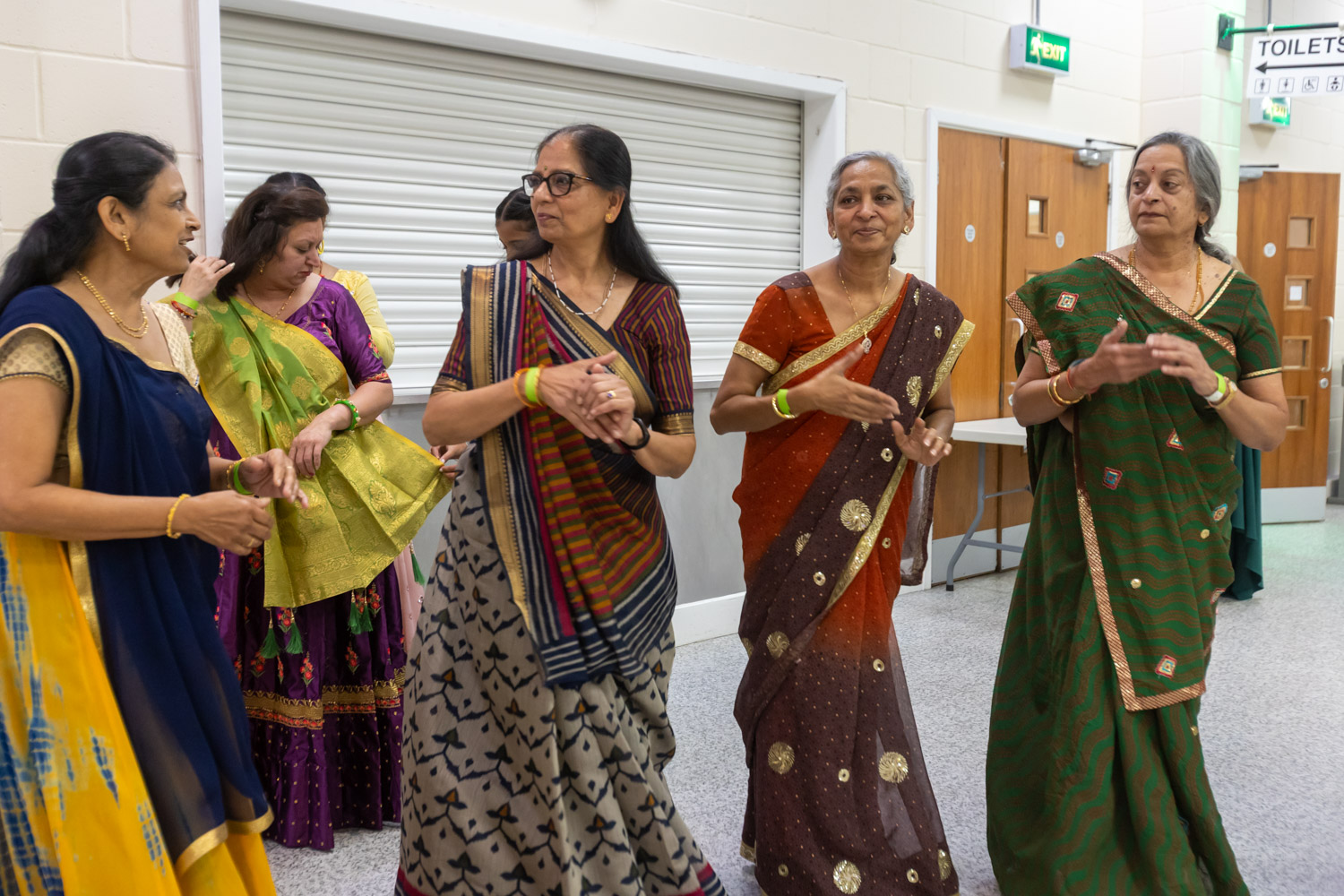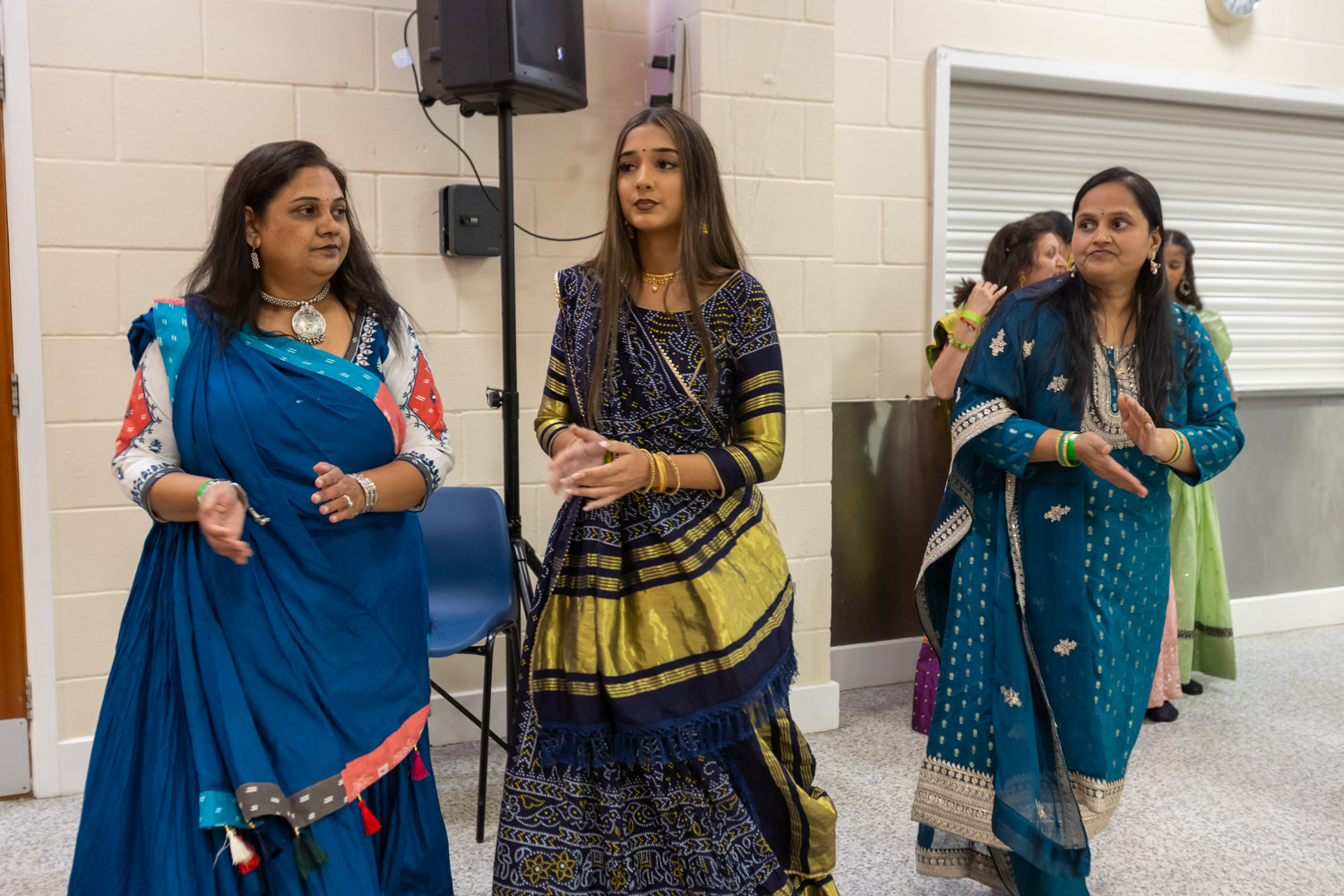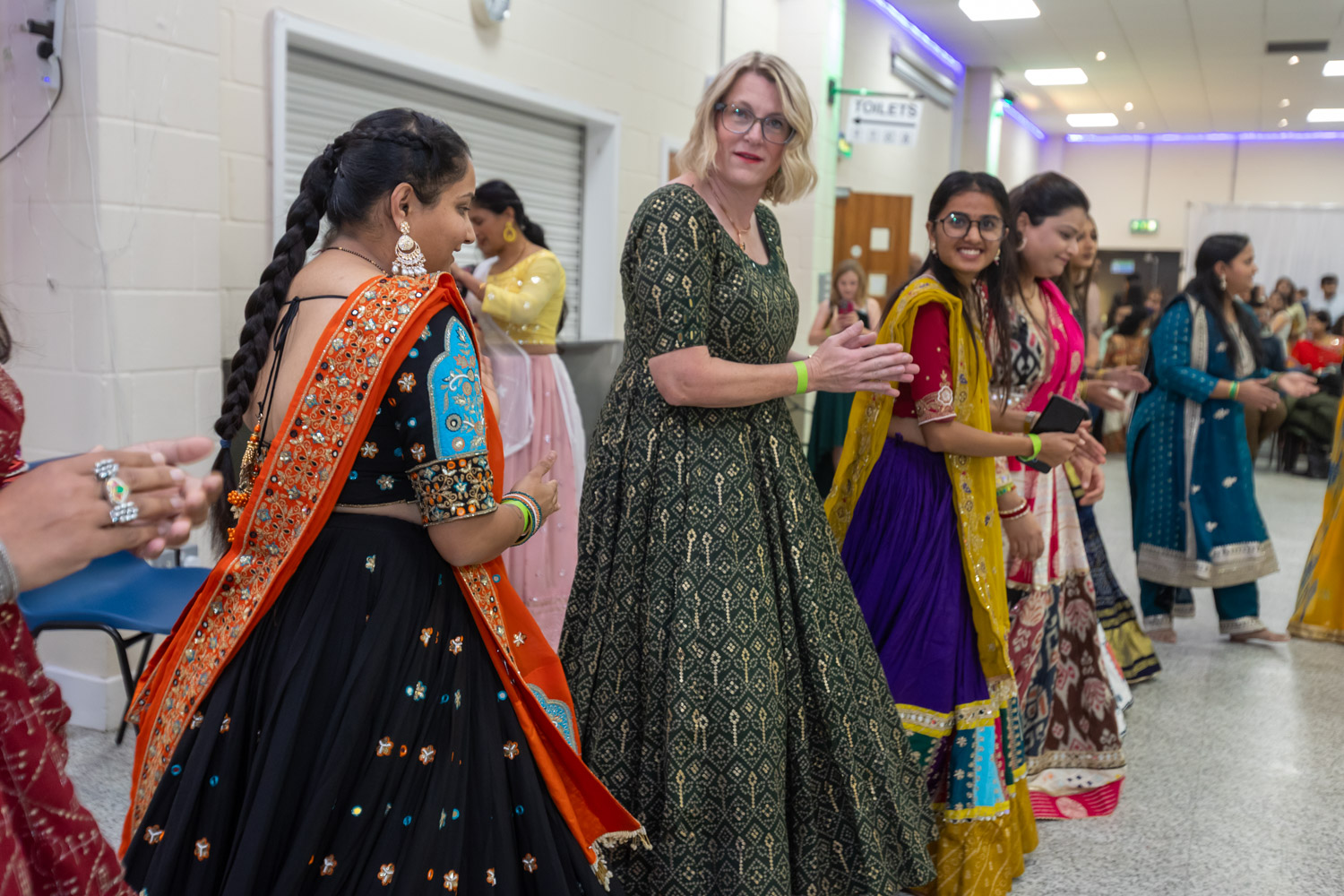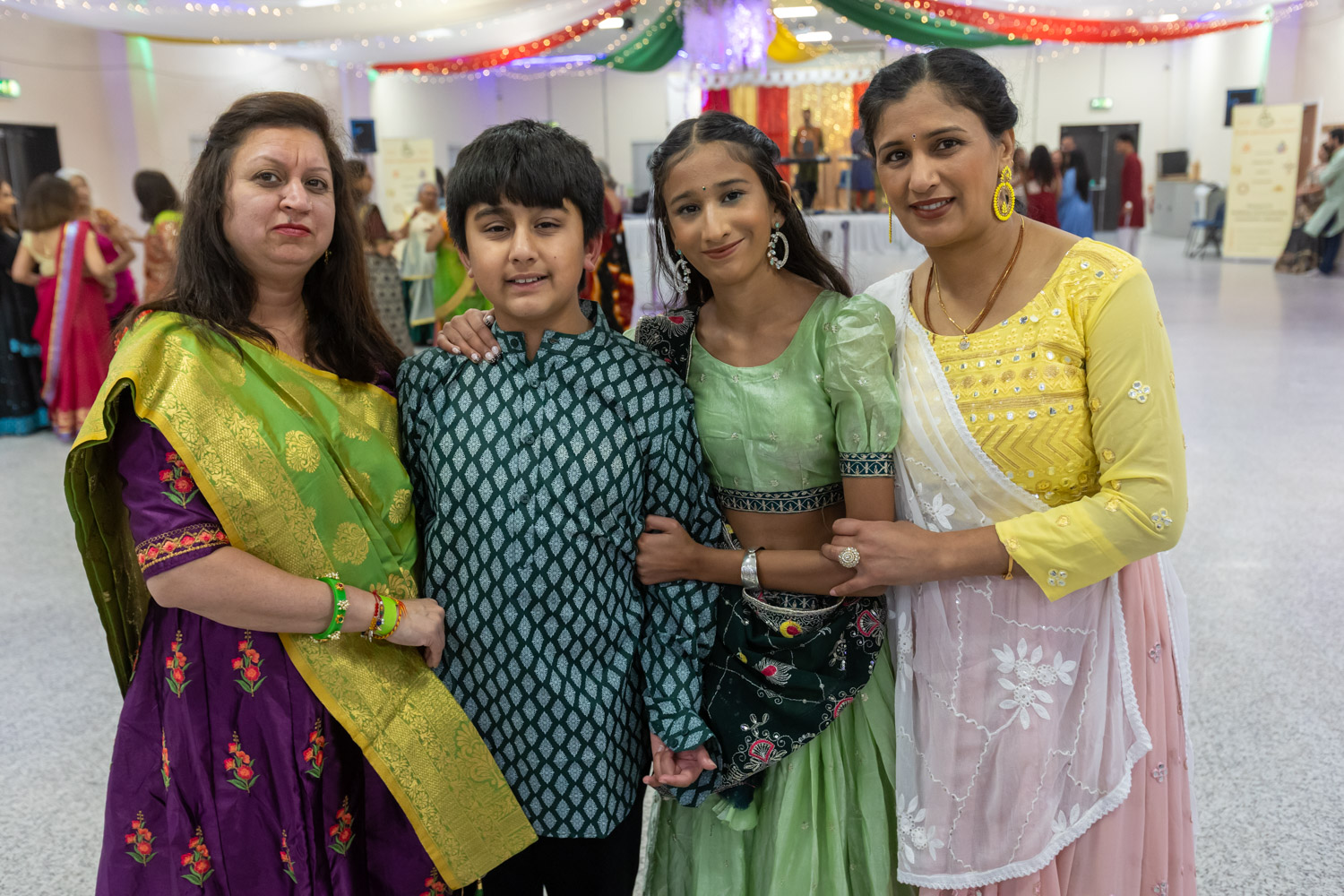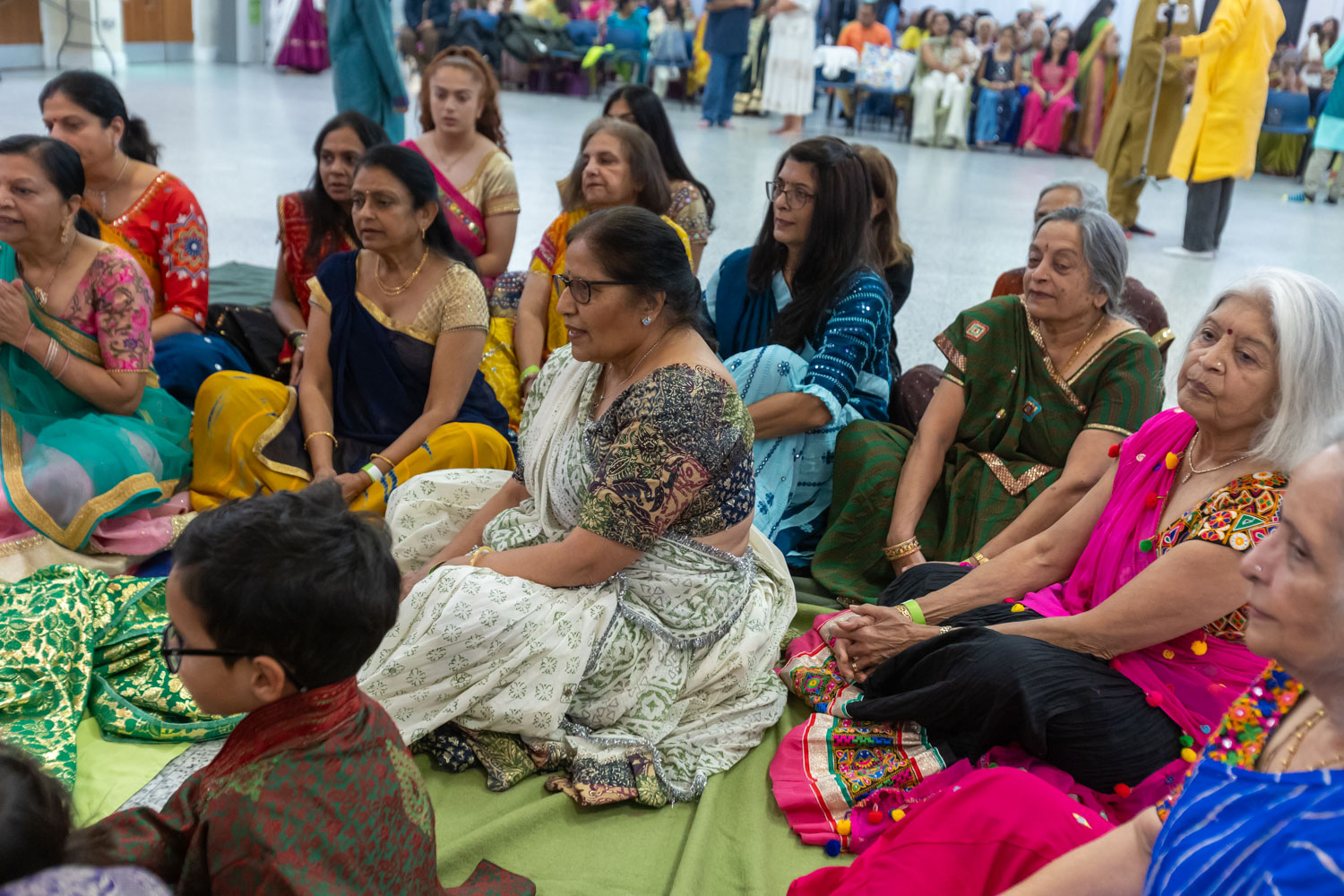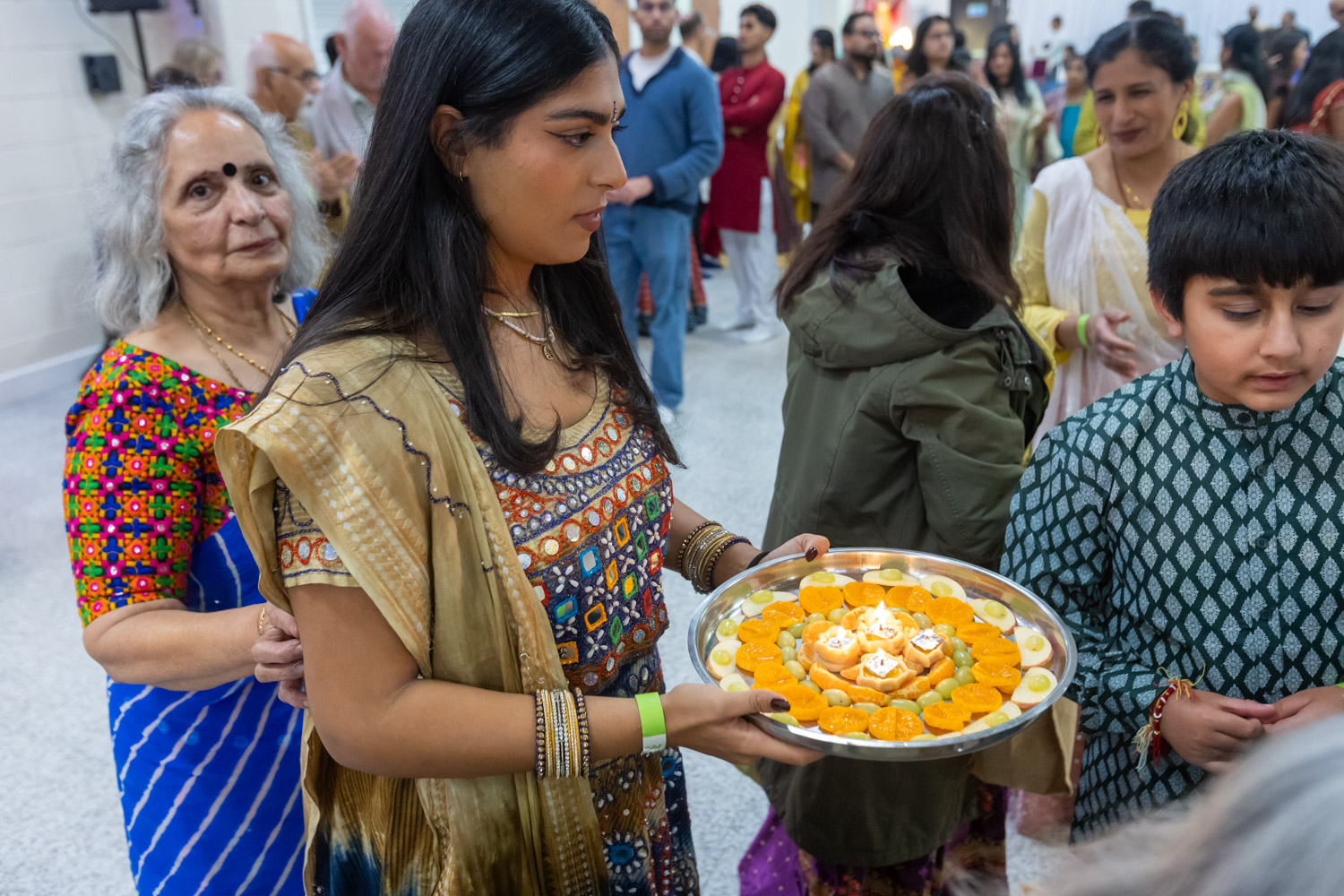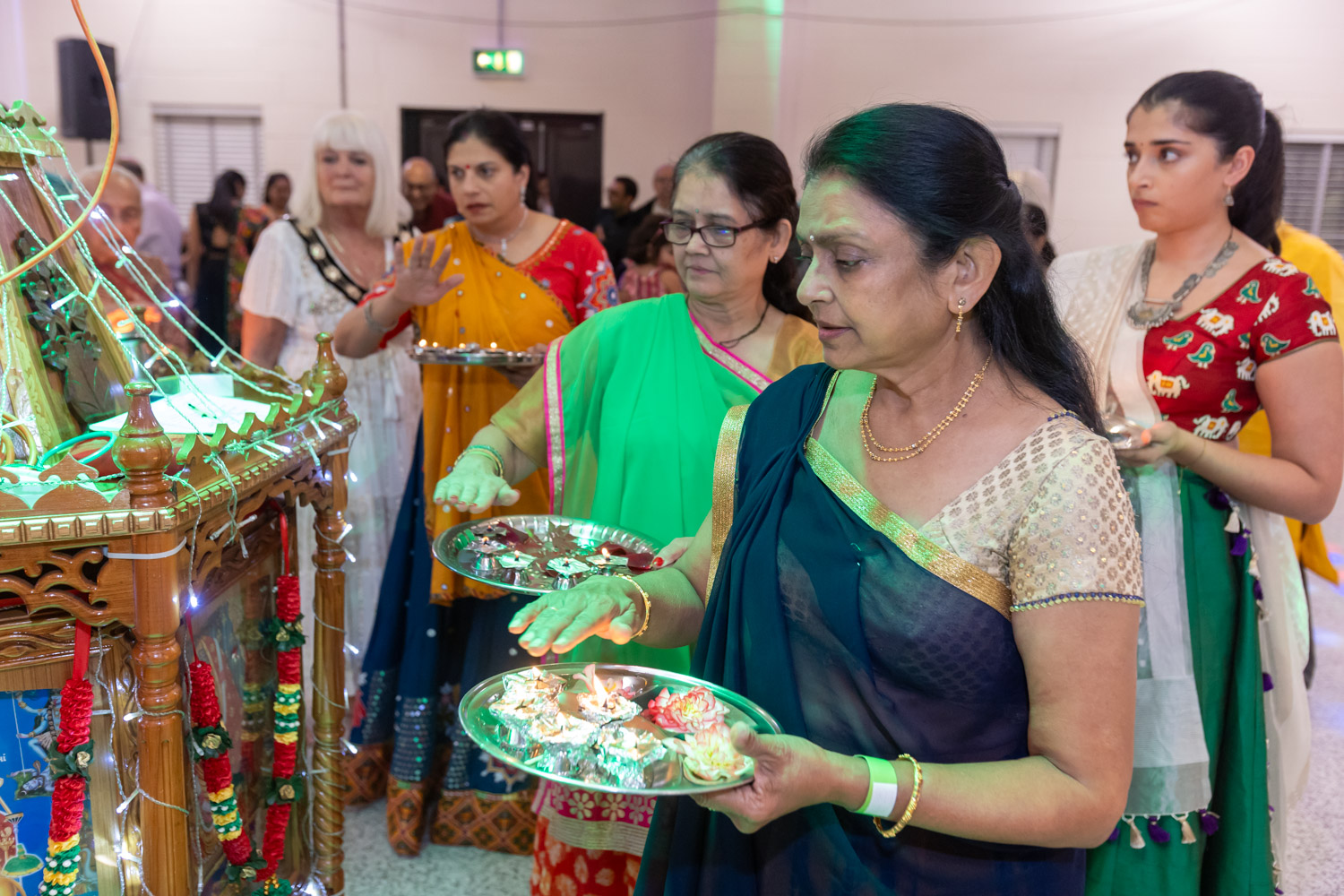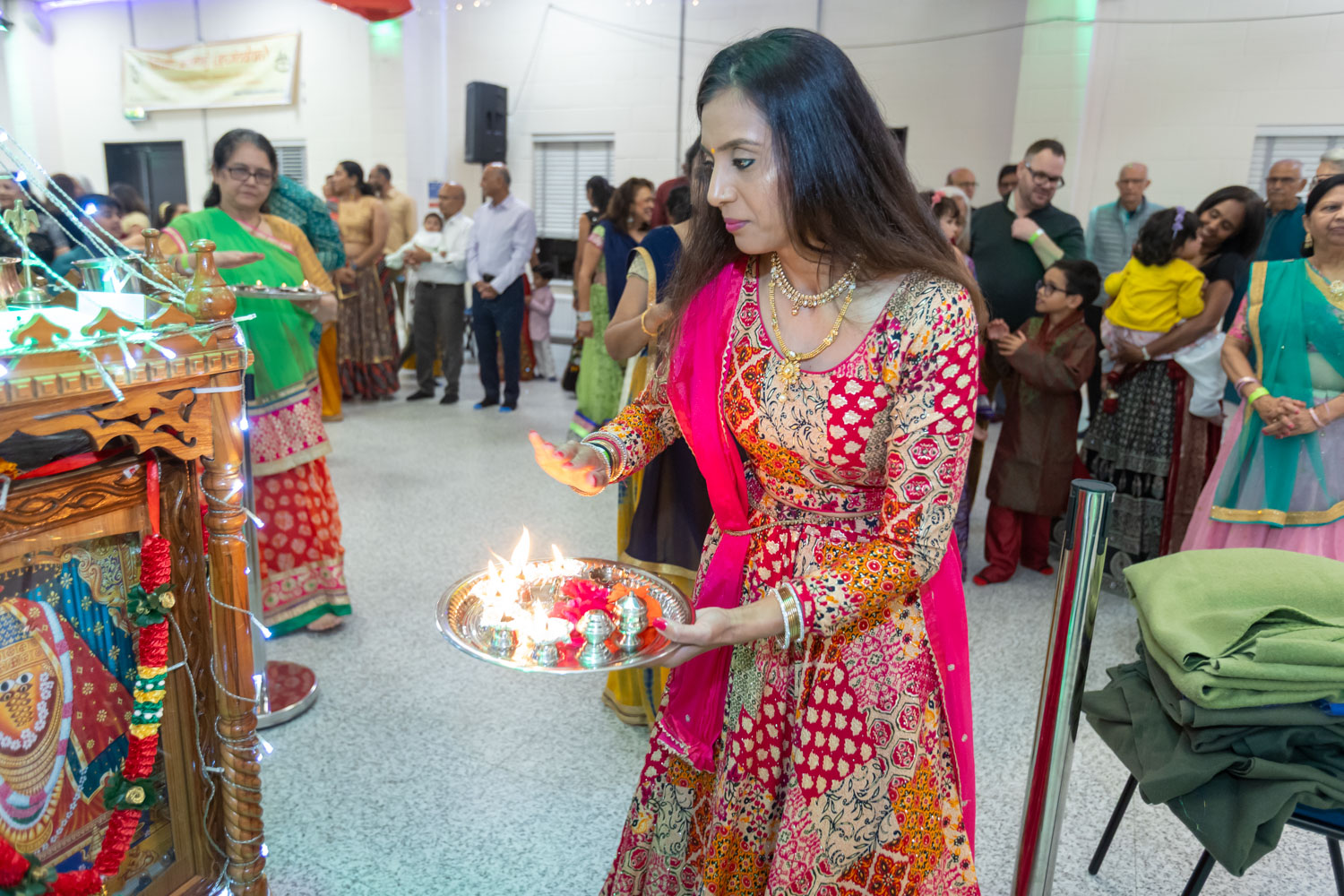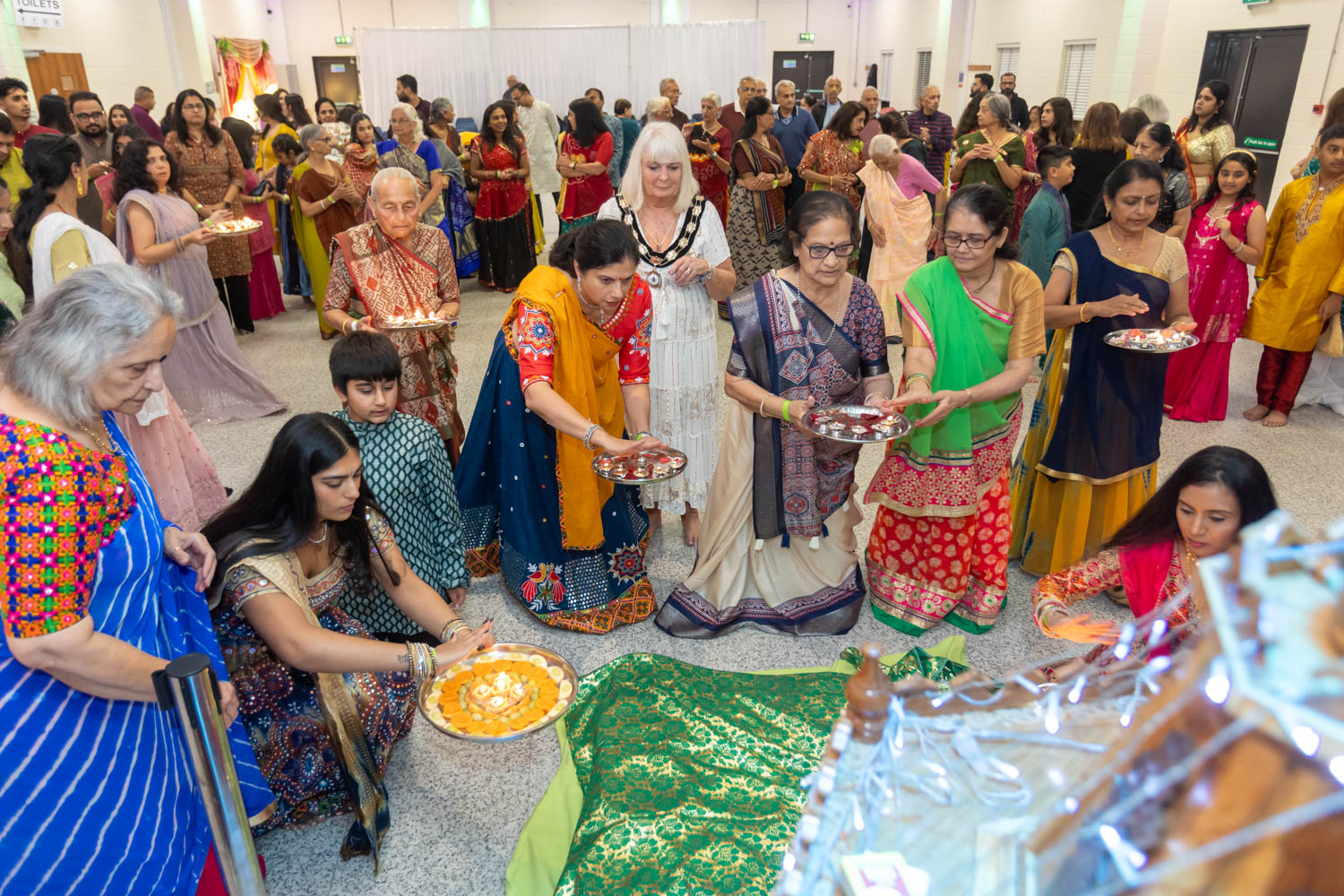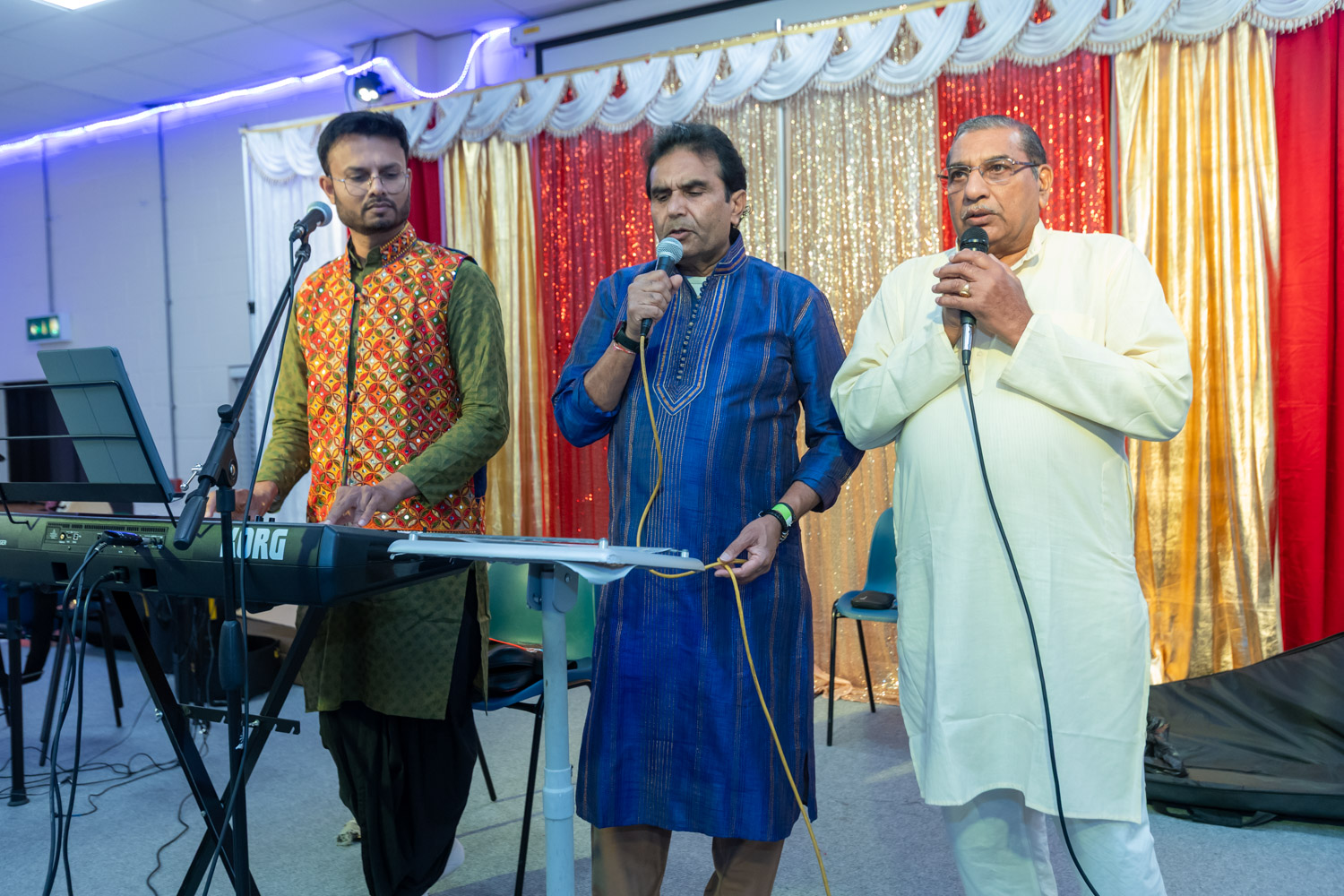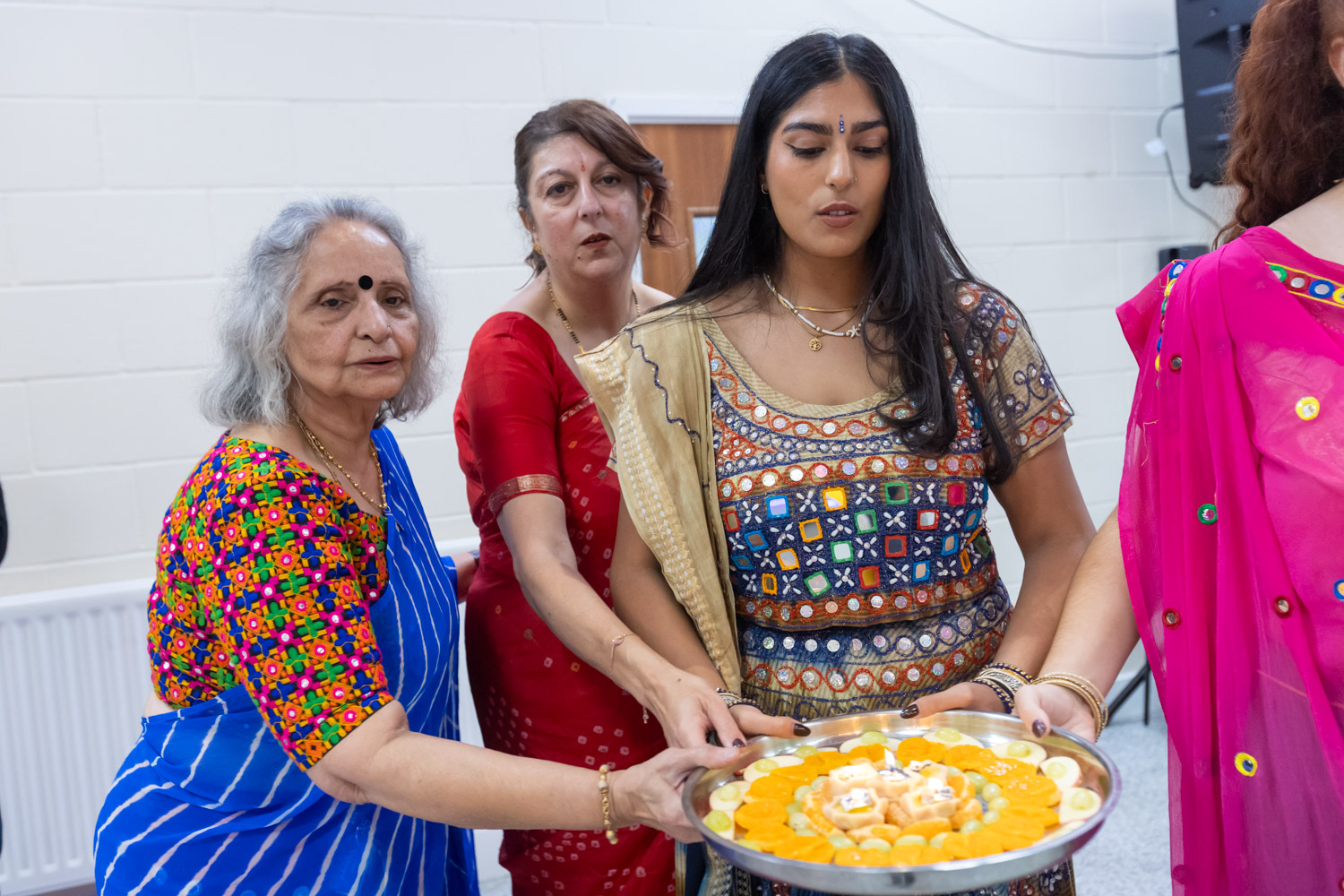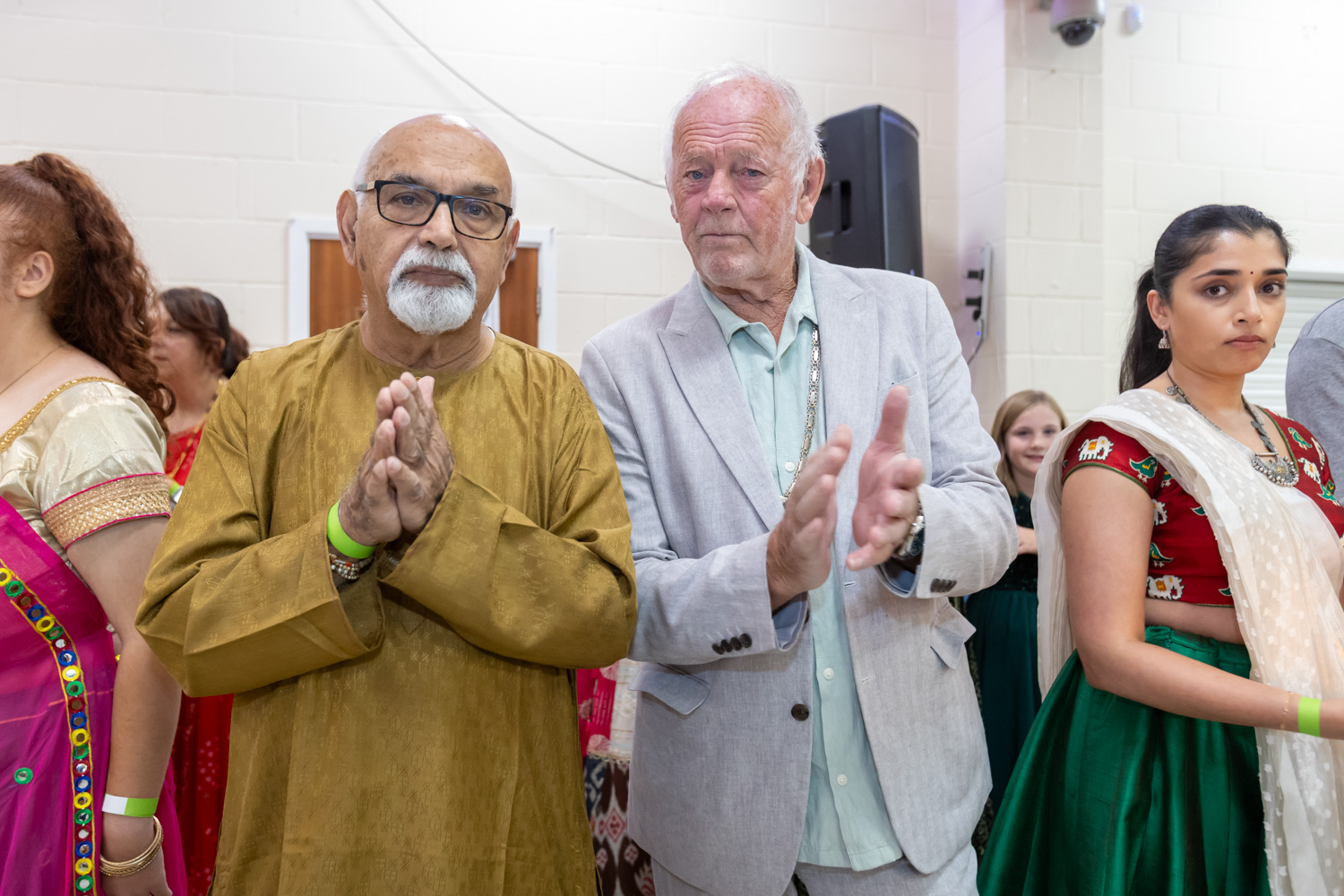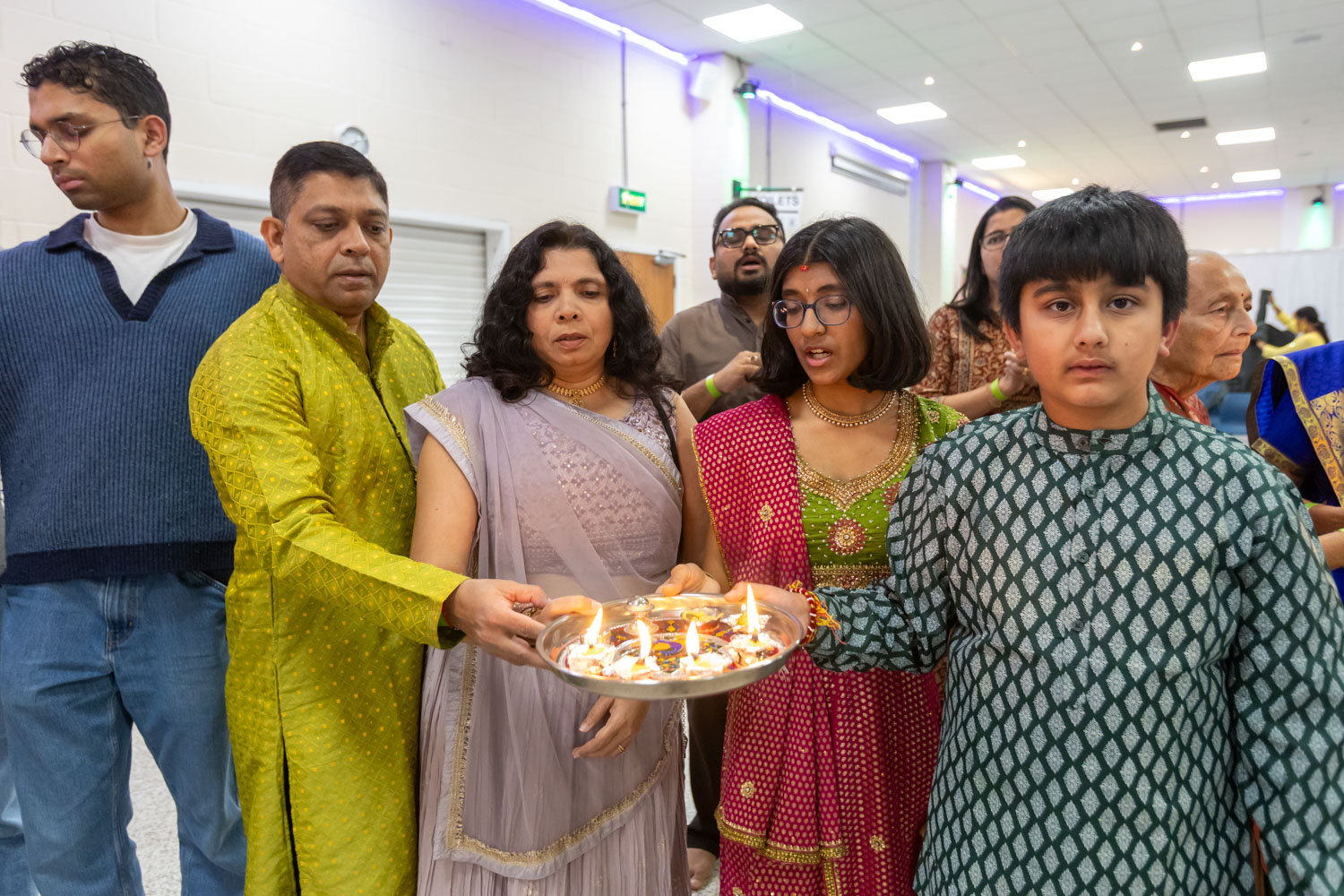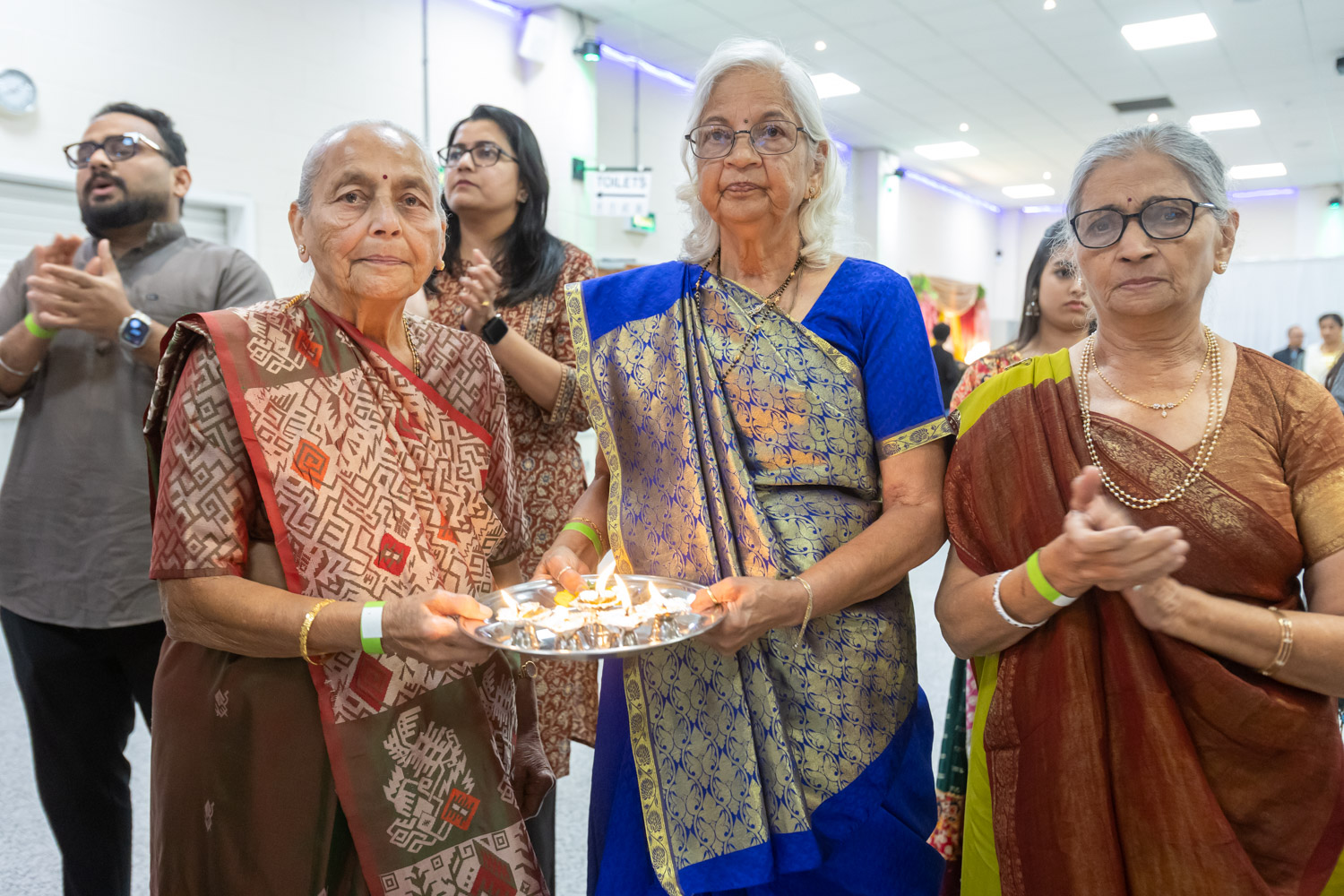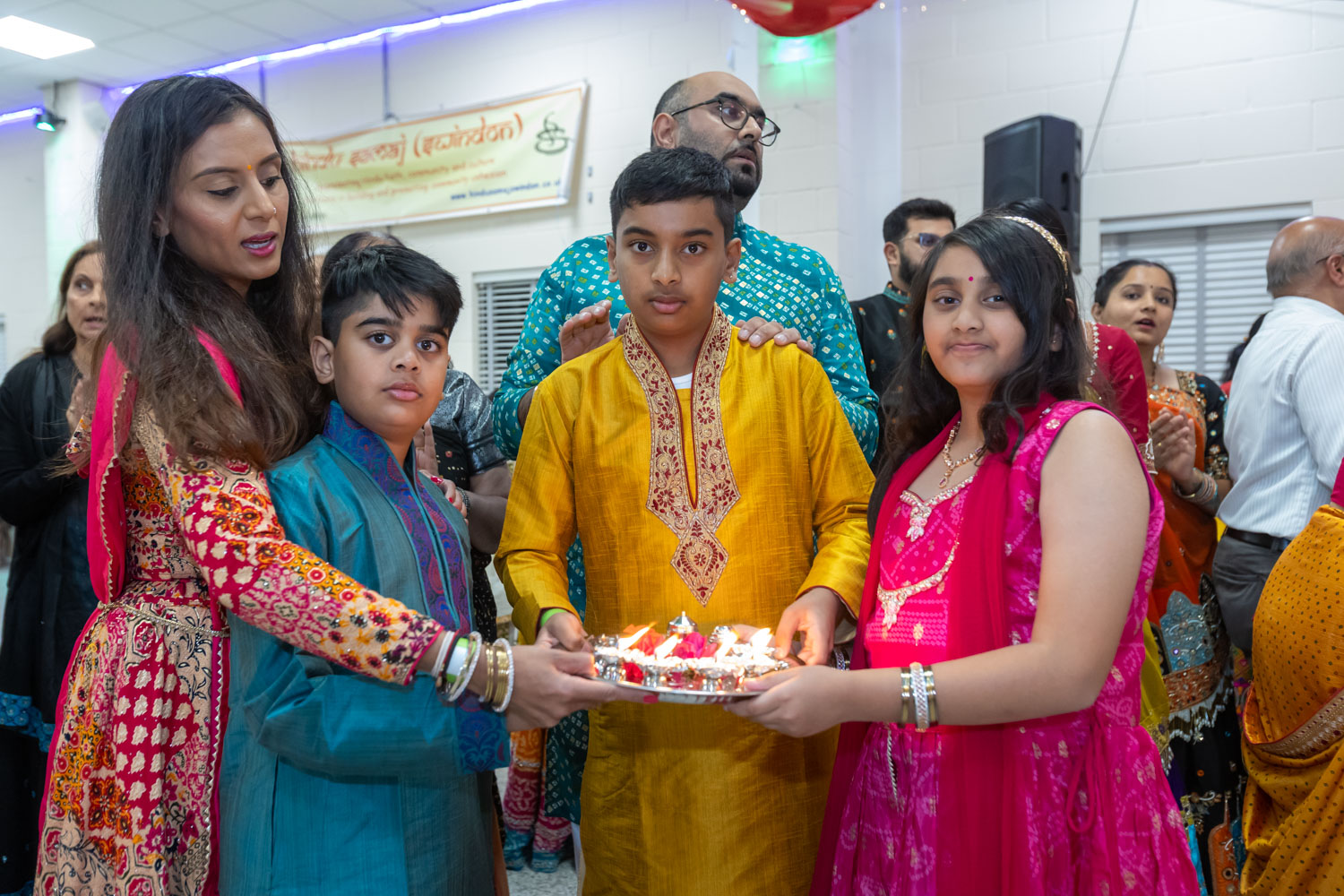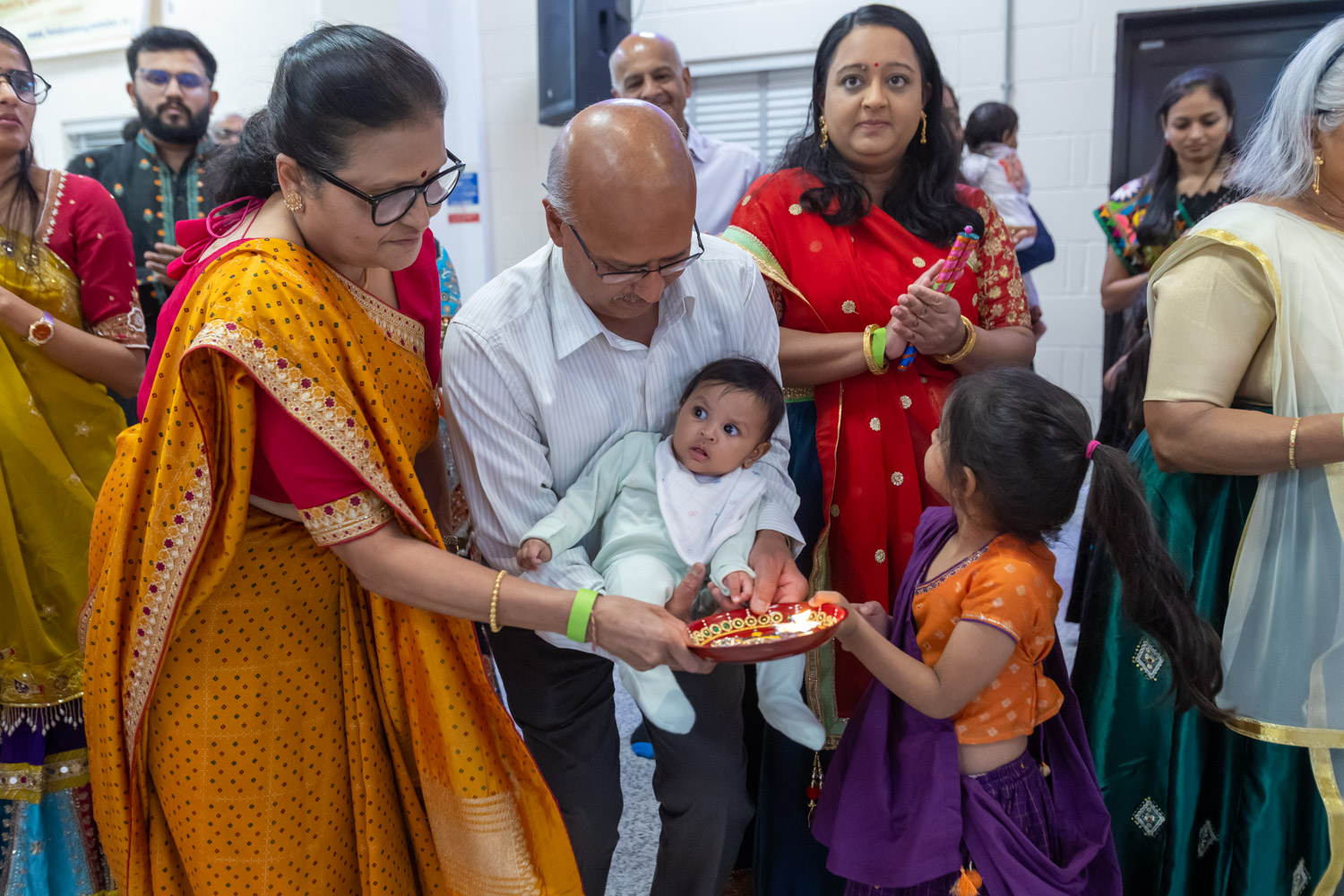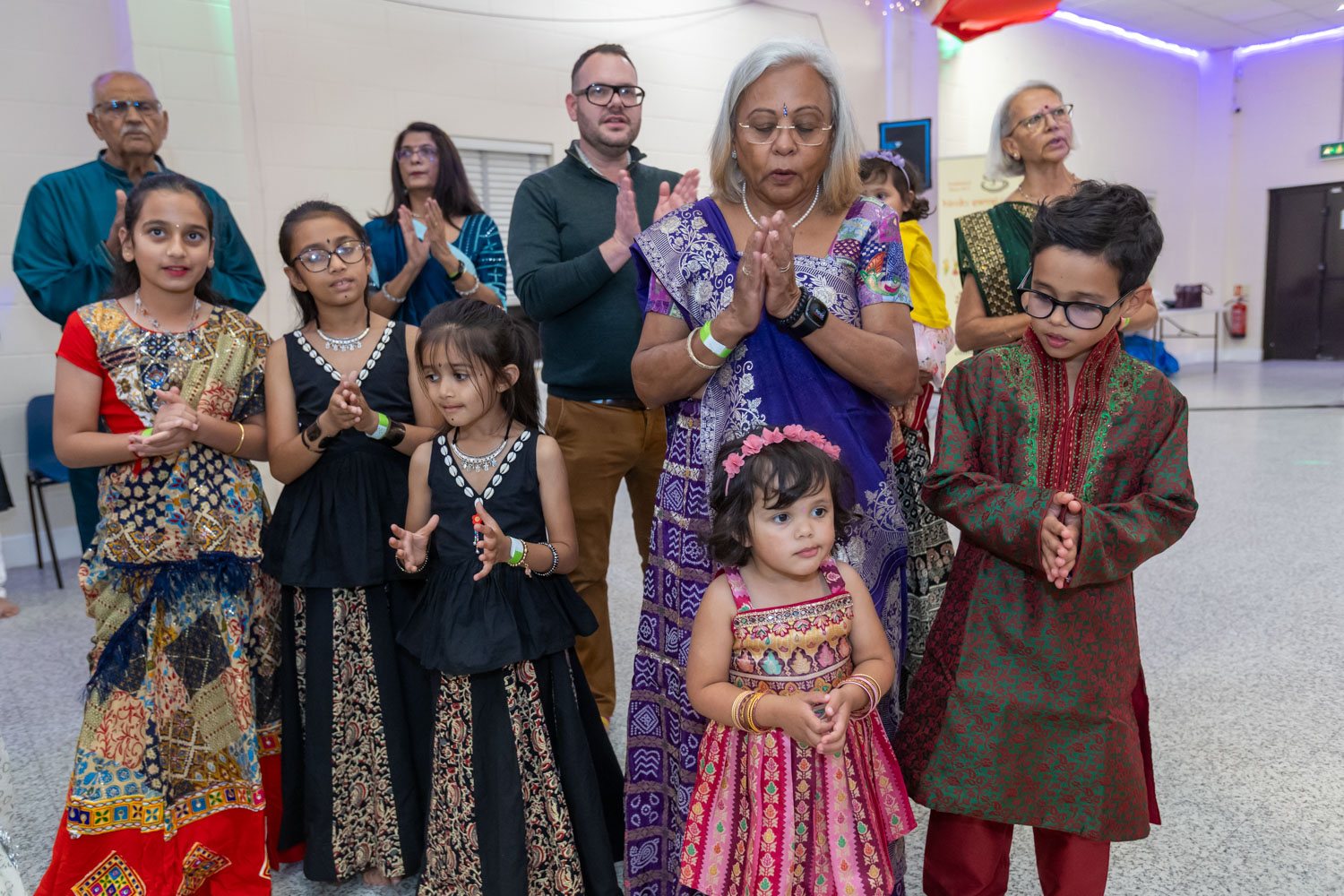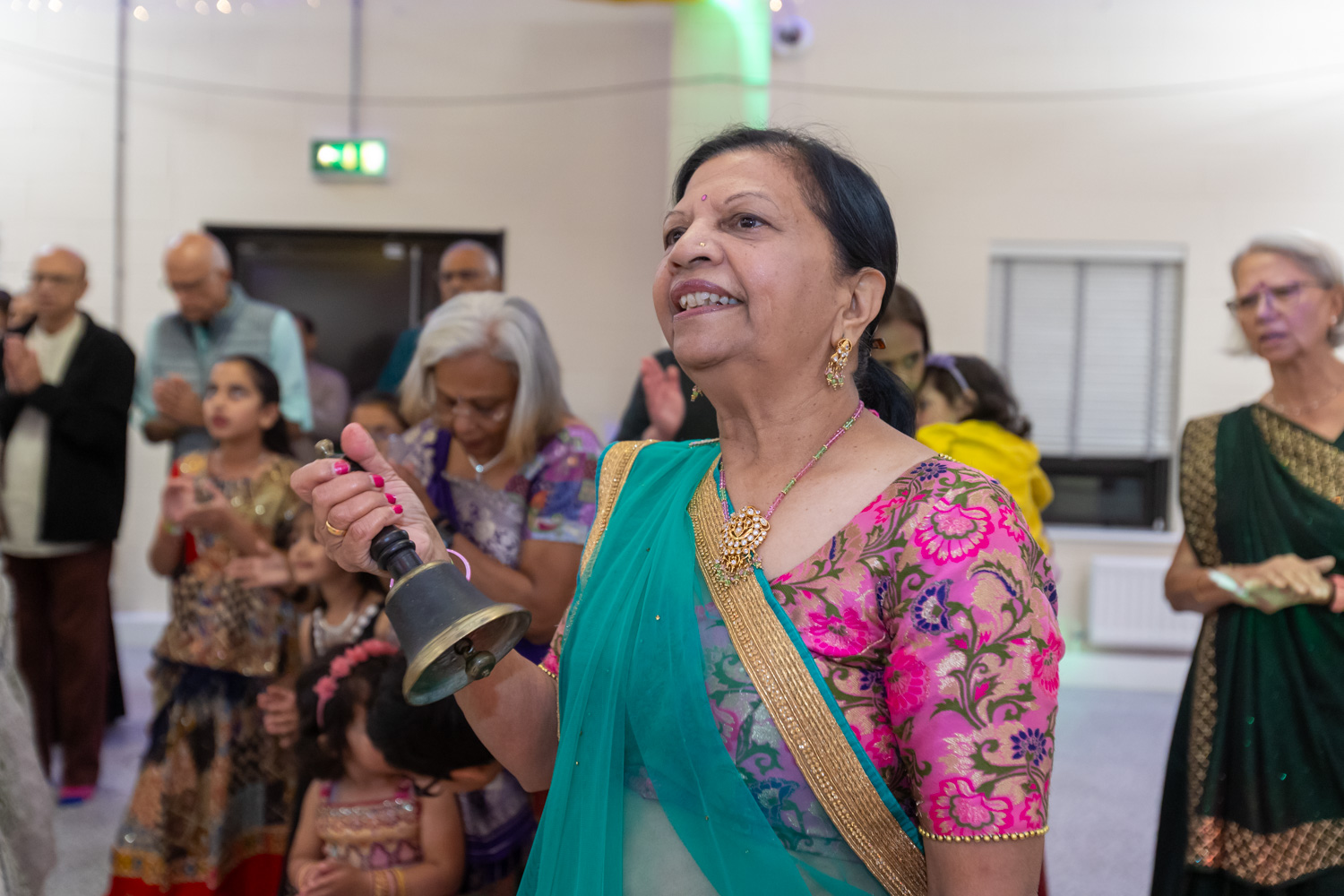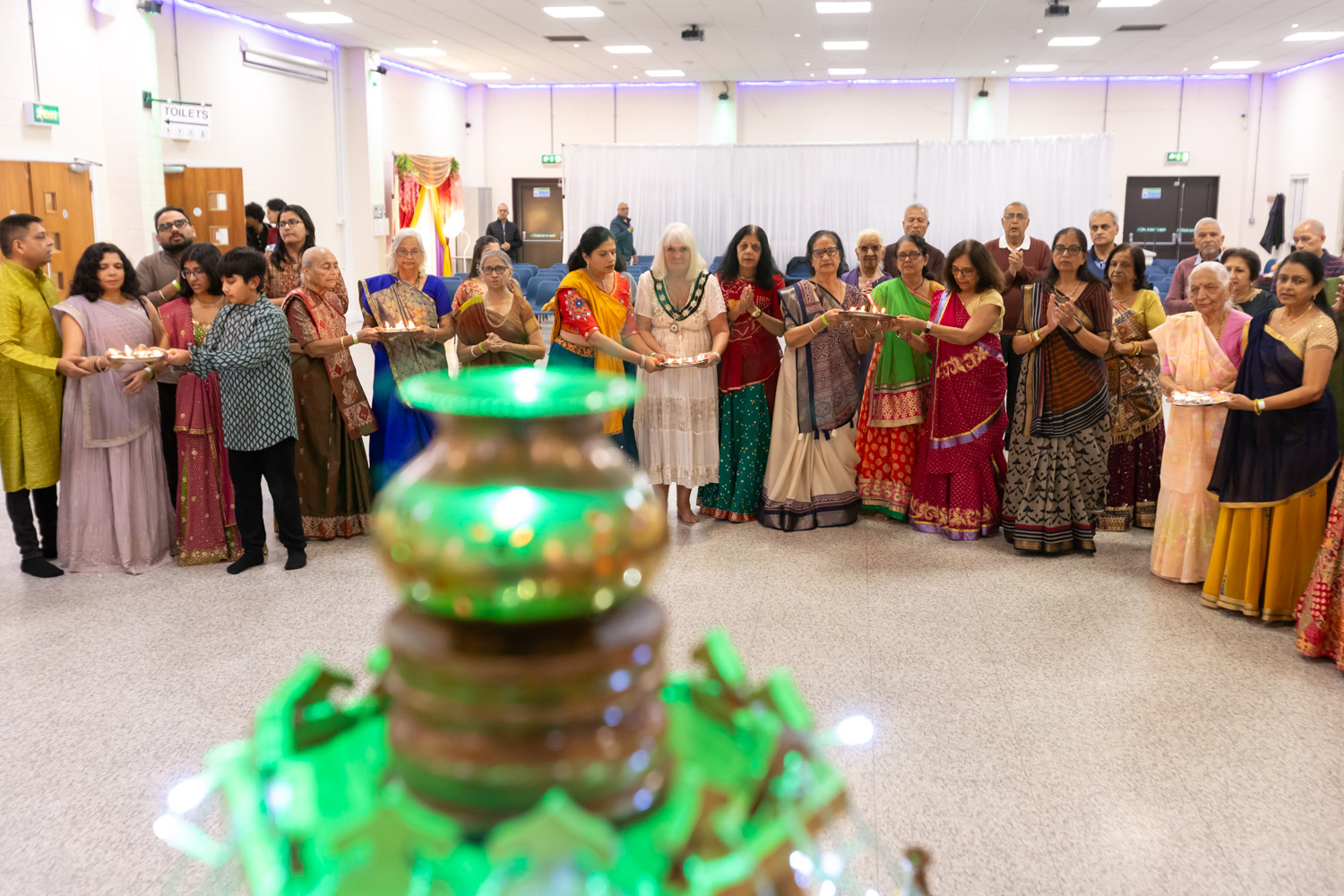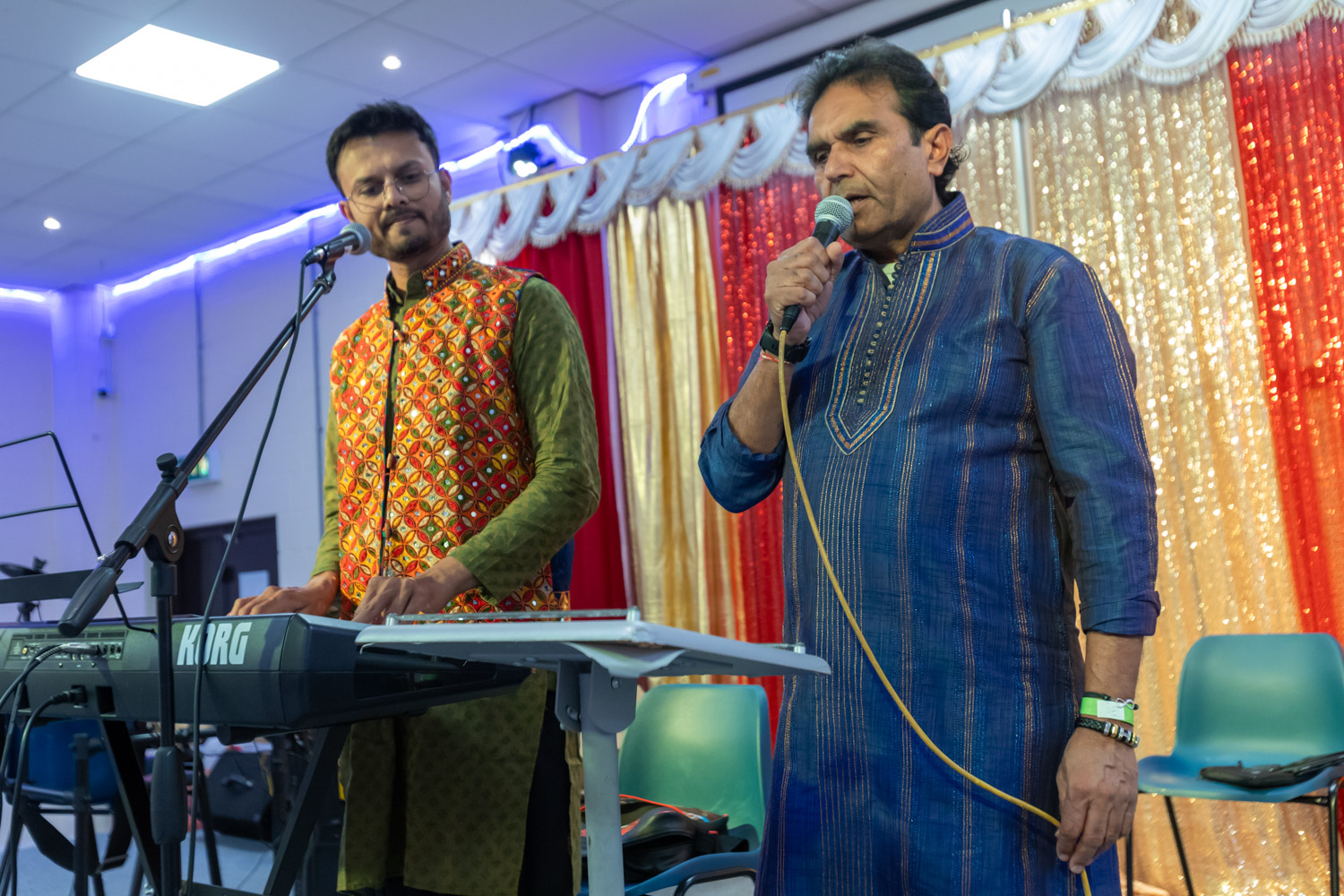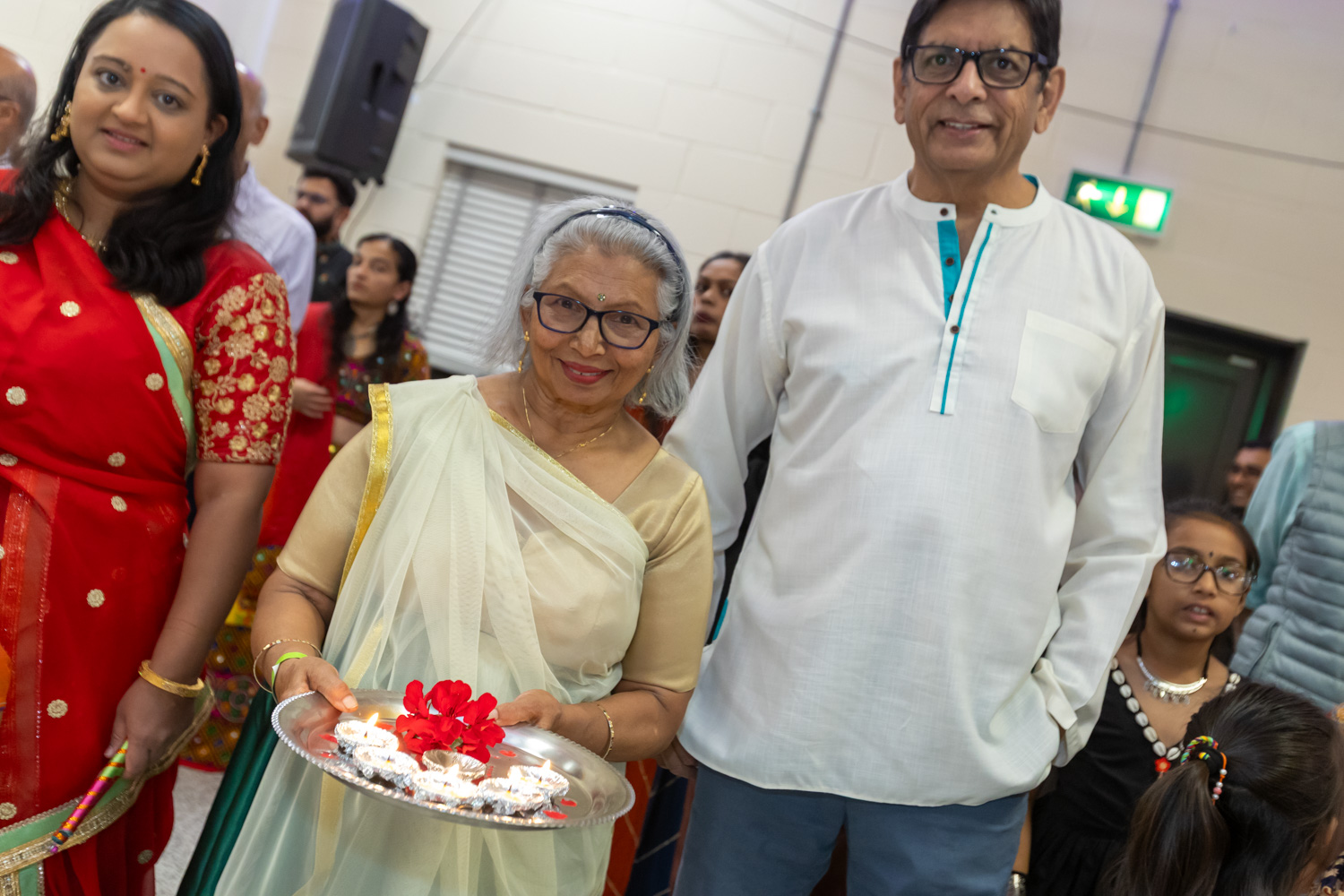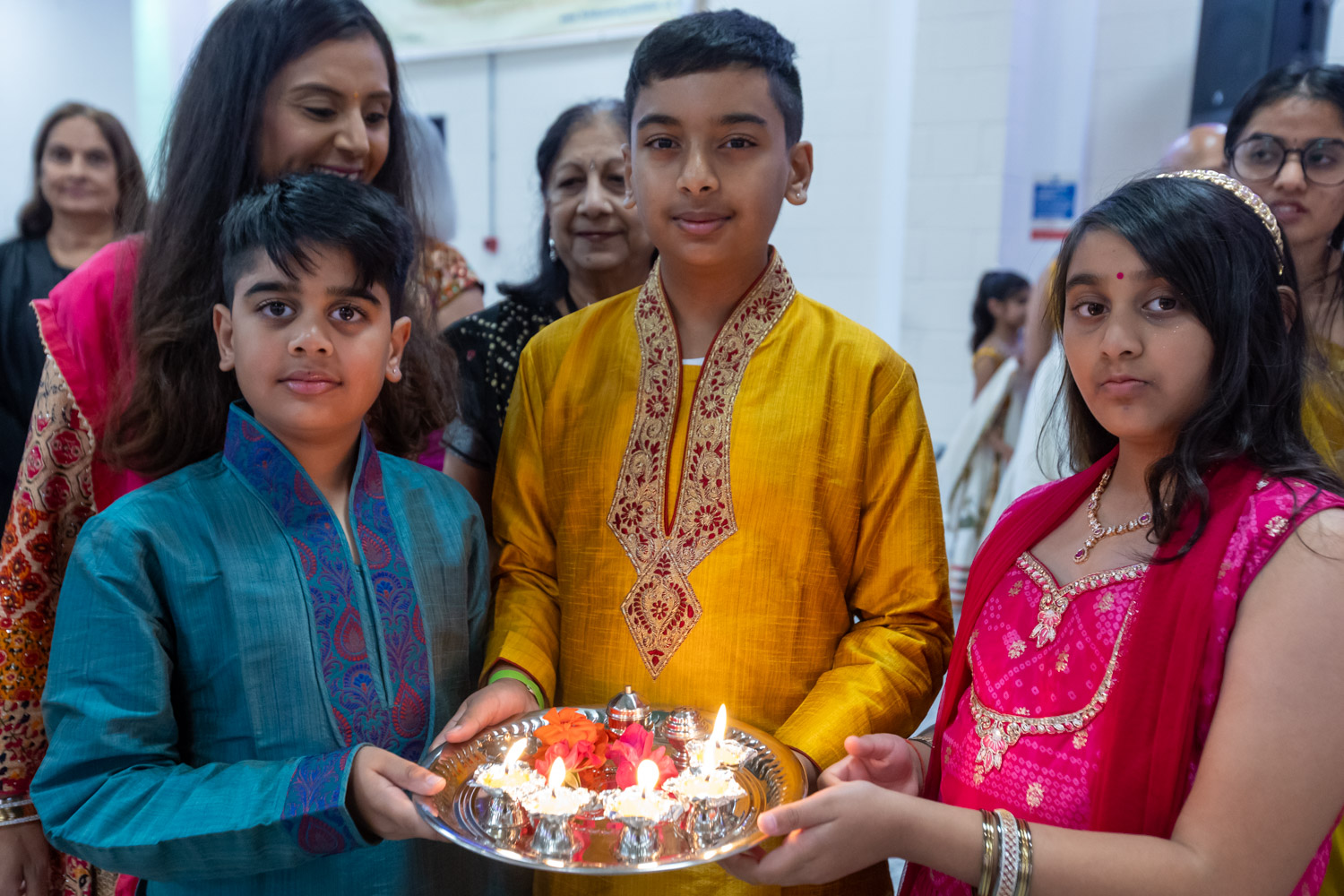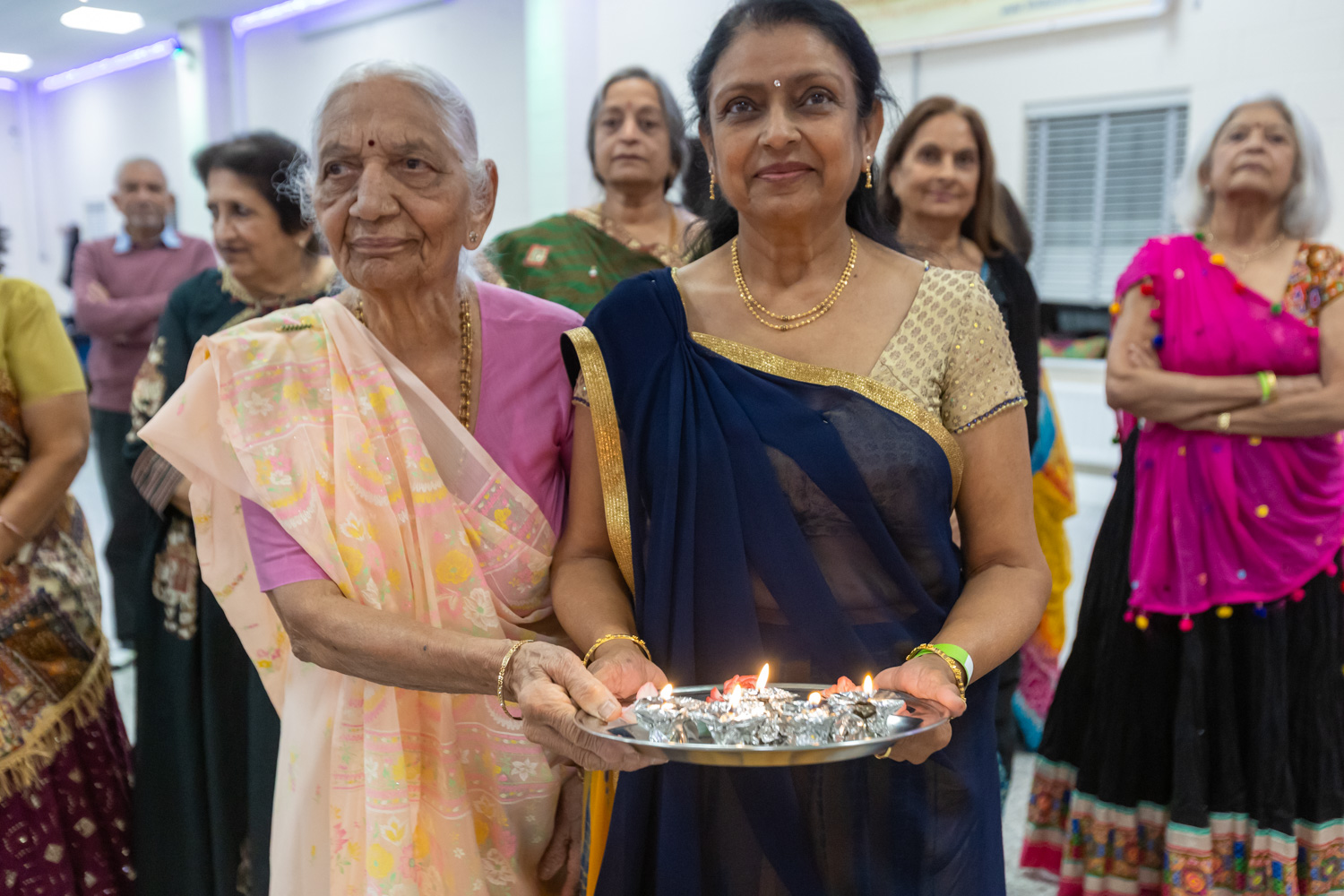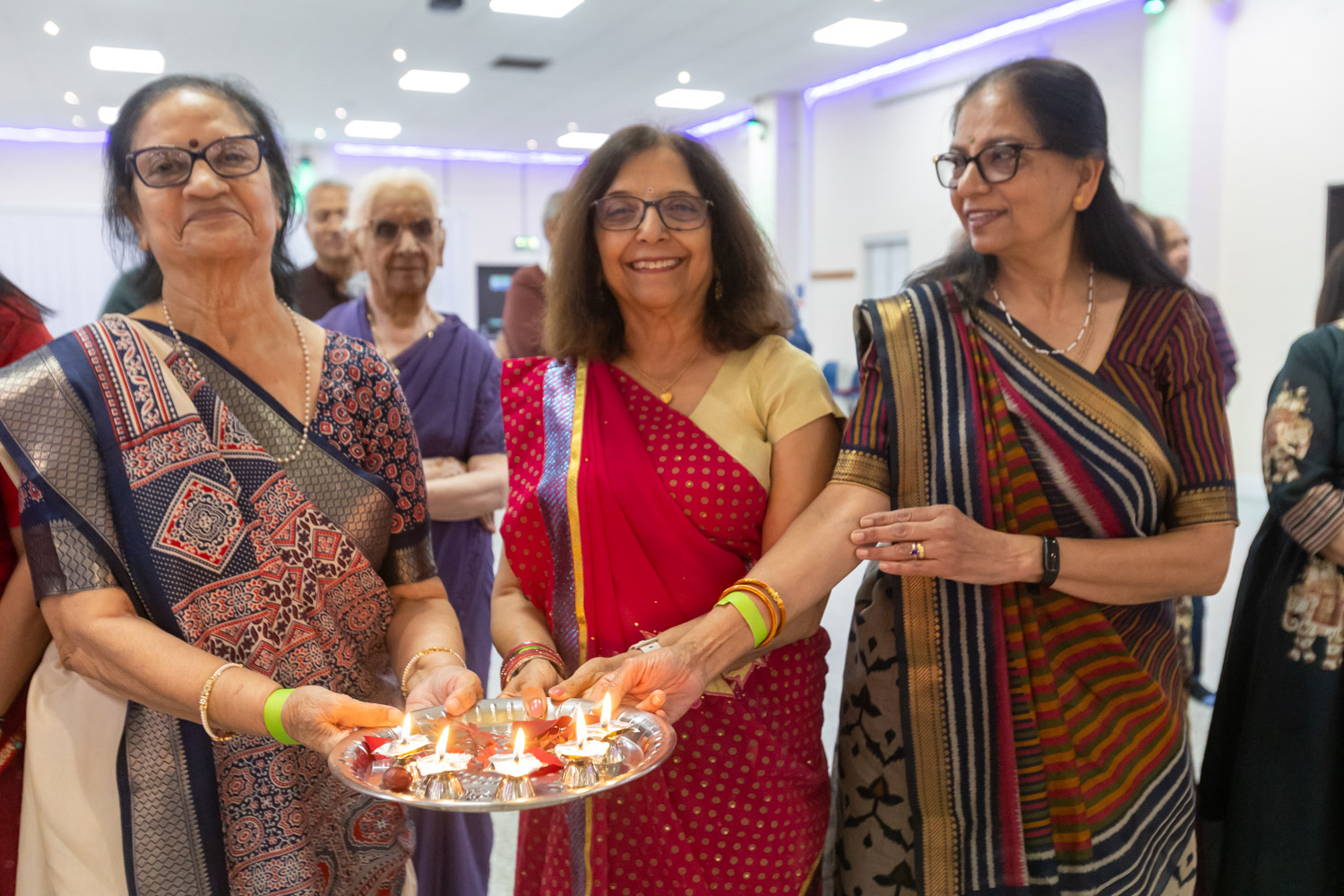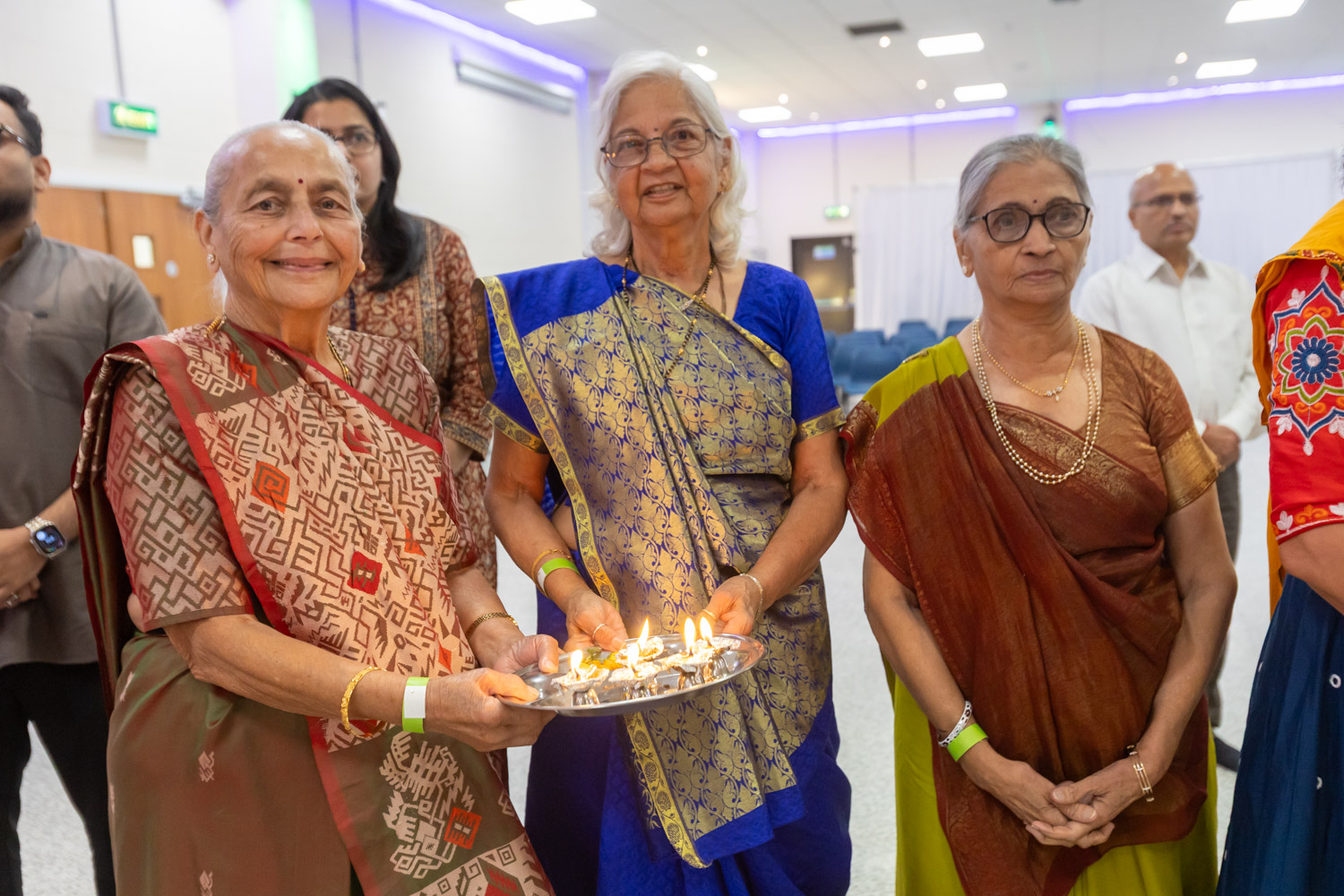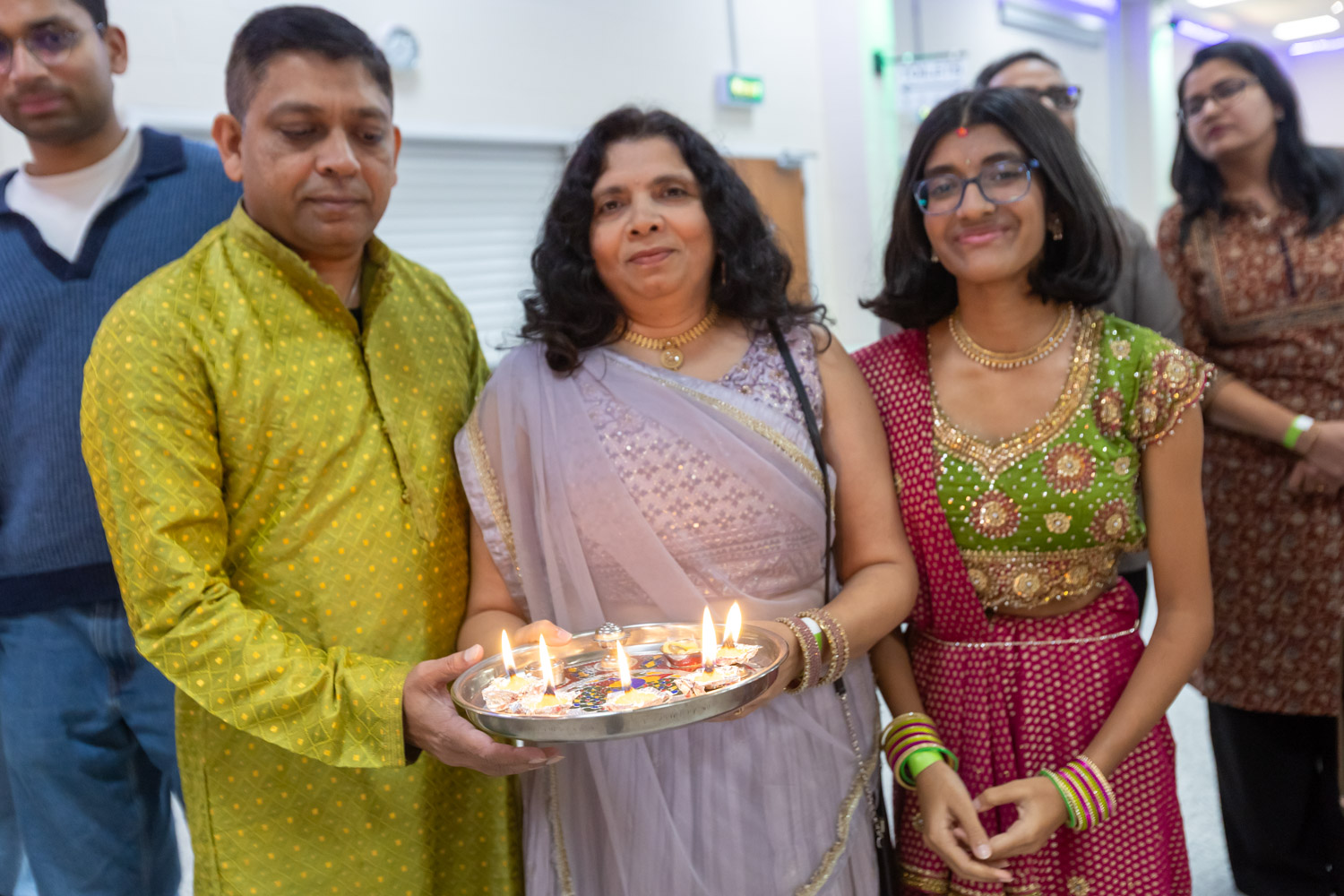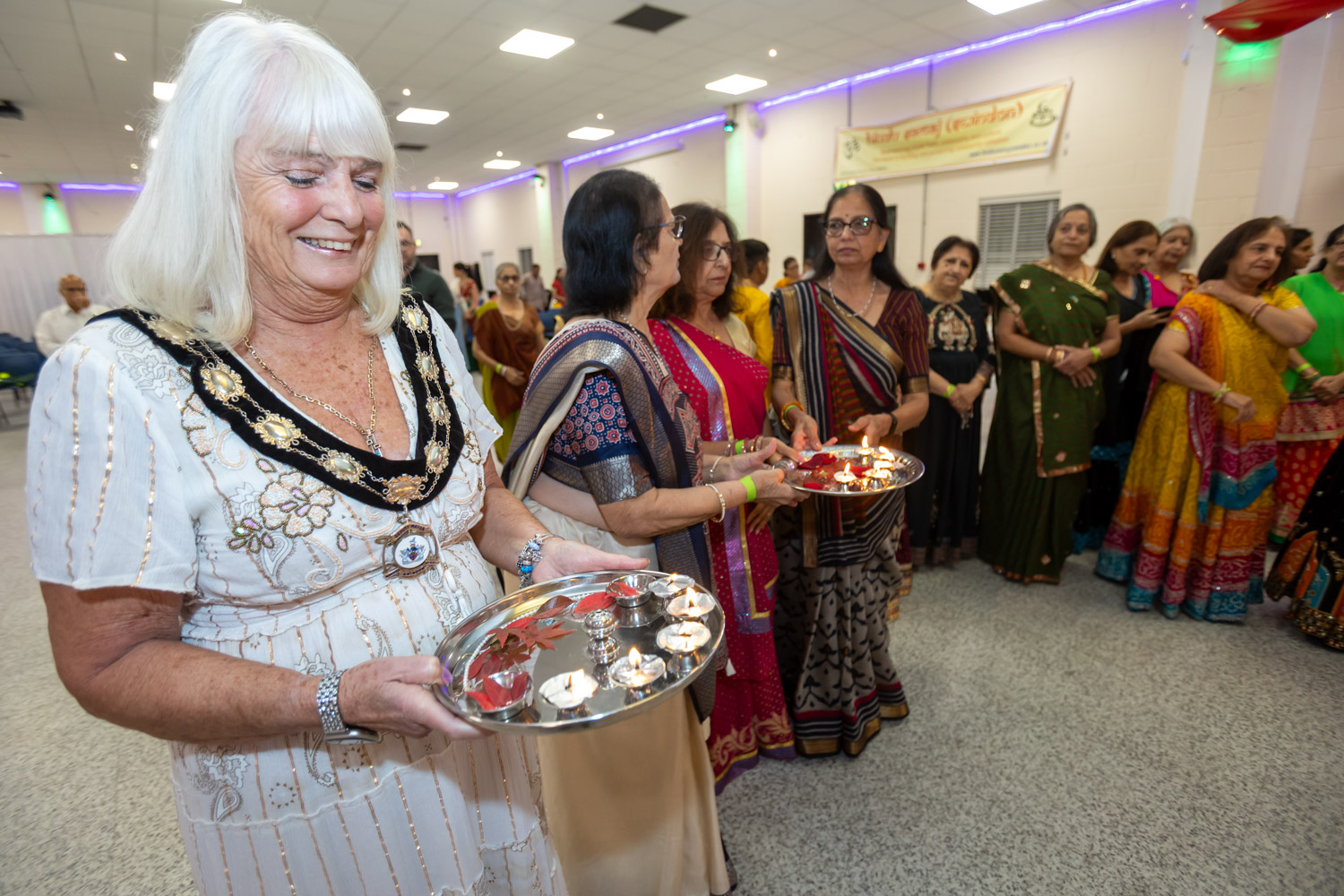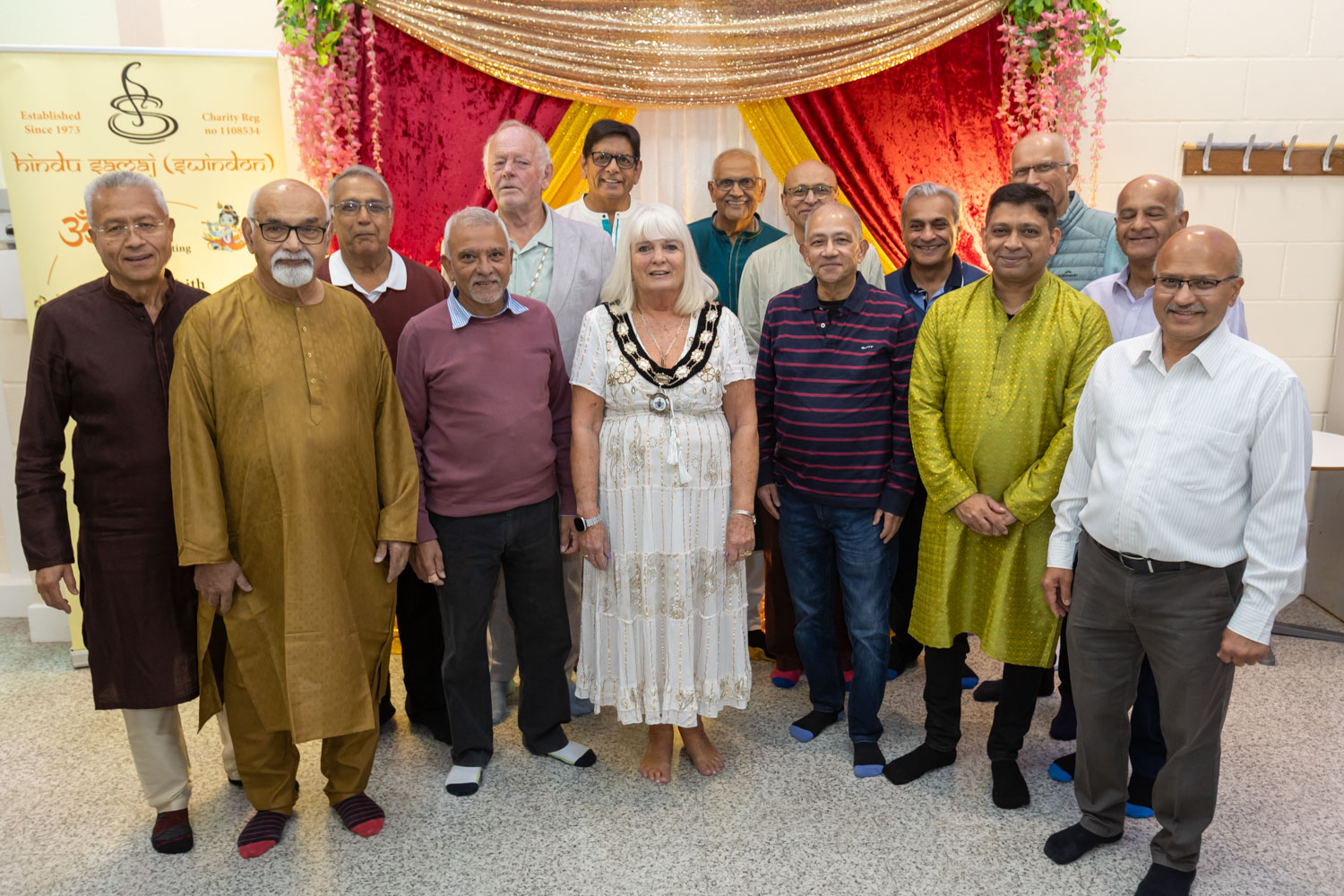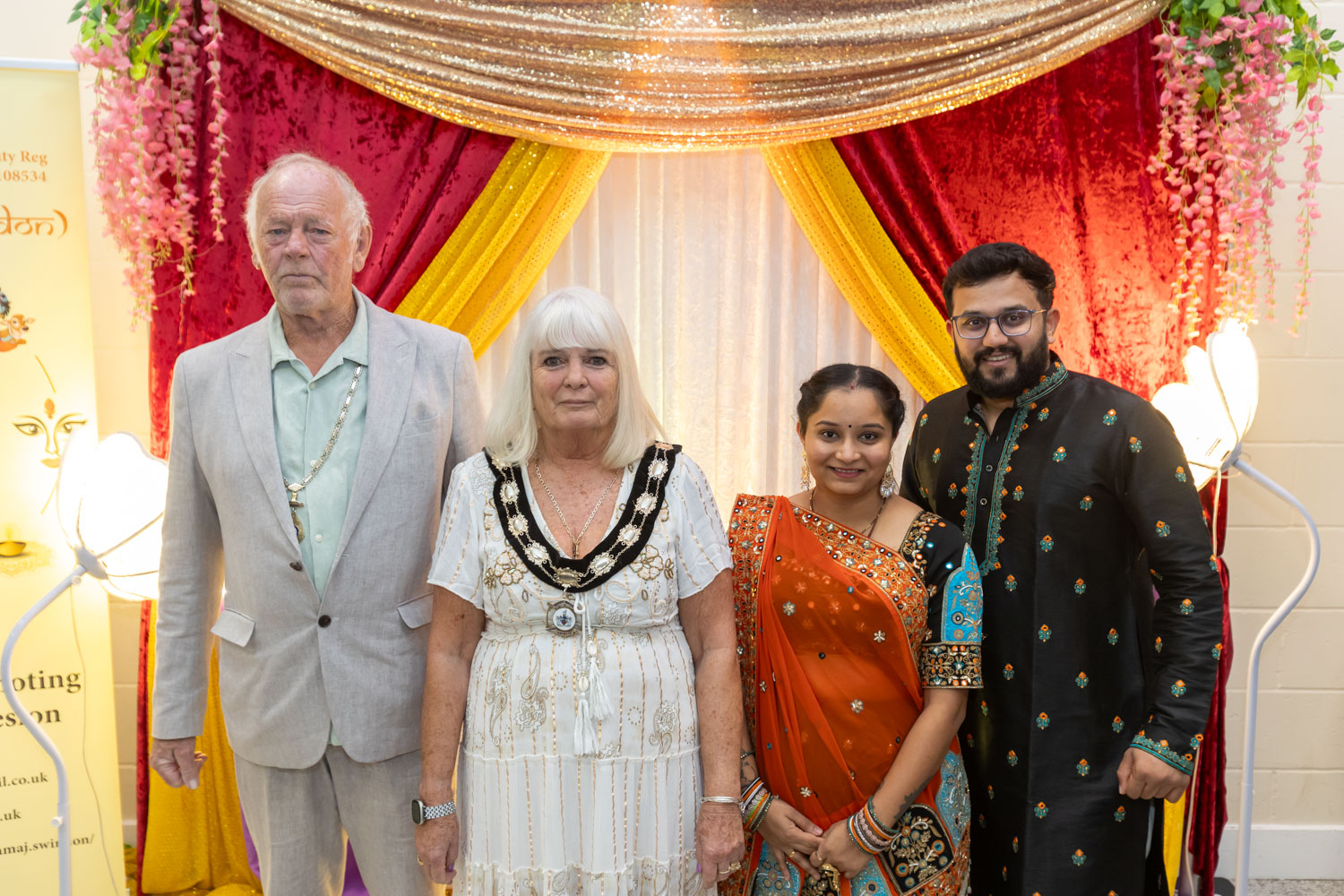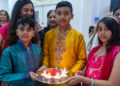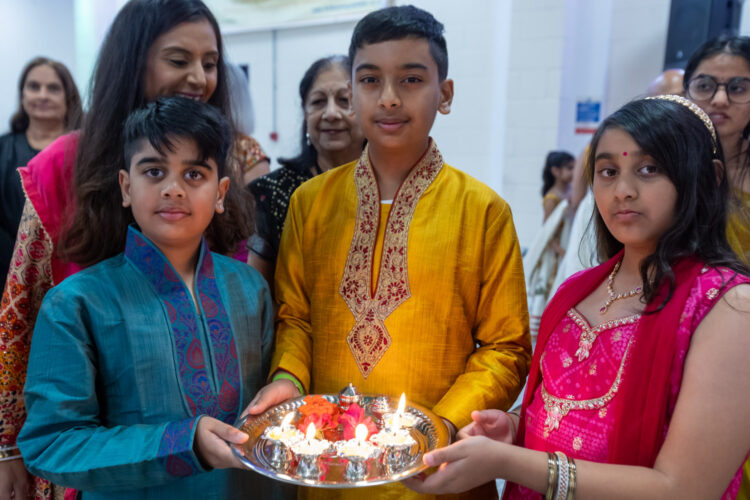

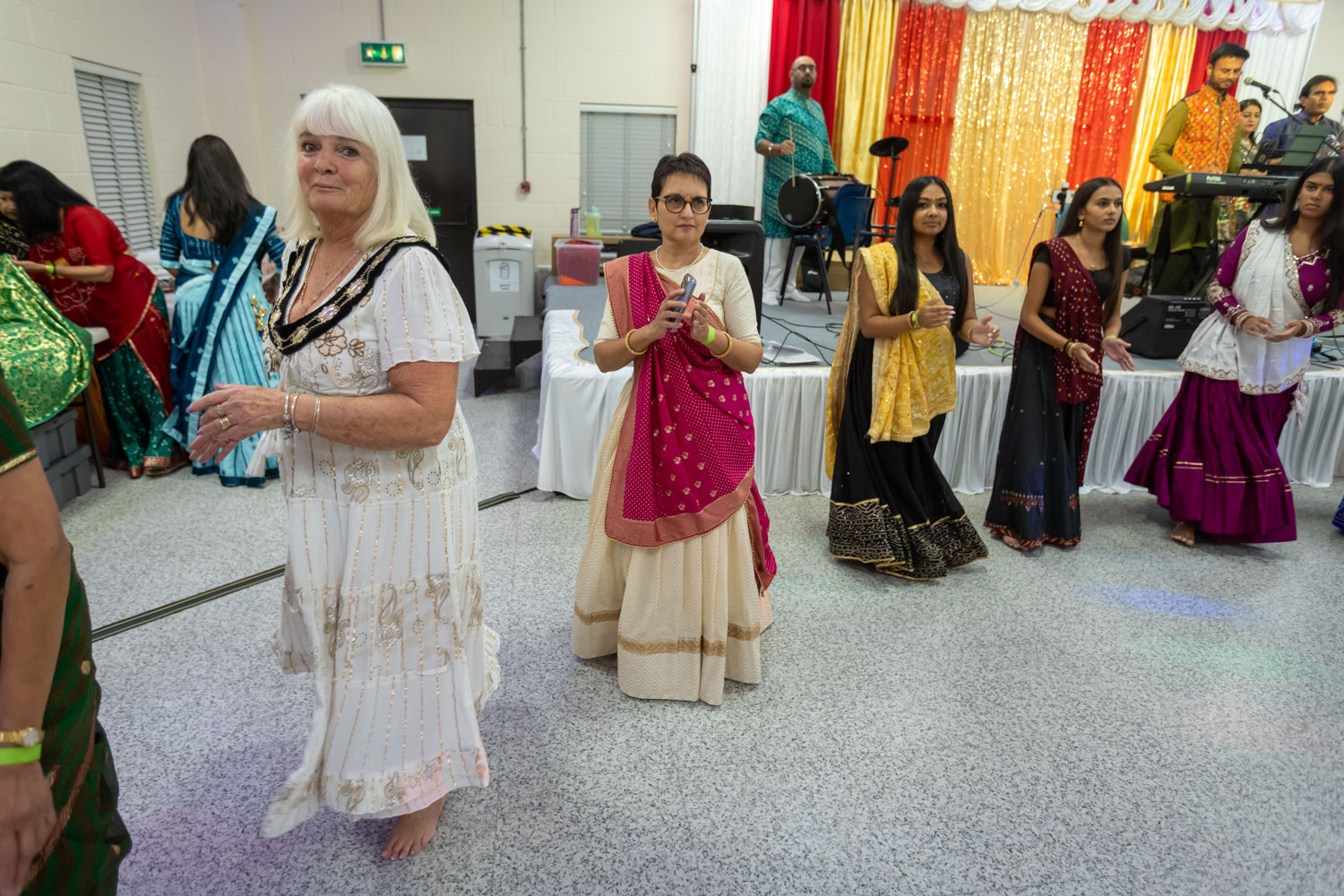
The Punjabi Community Centre hosted another evening of celebrations on Friday (16th October), with members of the community taking part in Garba, a traditional Indian dance performed during the religious festival.
Organised by Hindu Samaj Swindon, the celebrations are dedicated to the worship of Goddess Durga, with each of the nine nights carrying its own religious significance and associated colour.
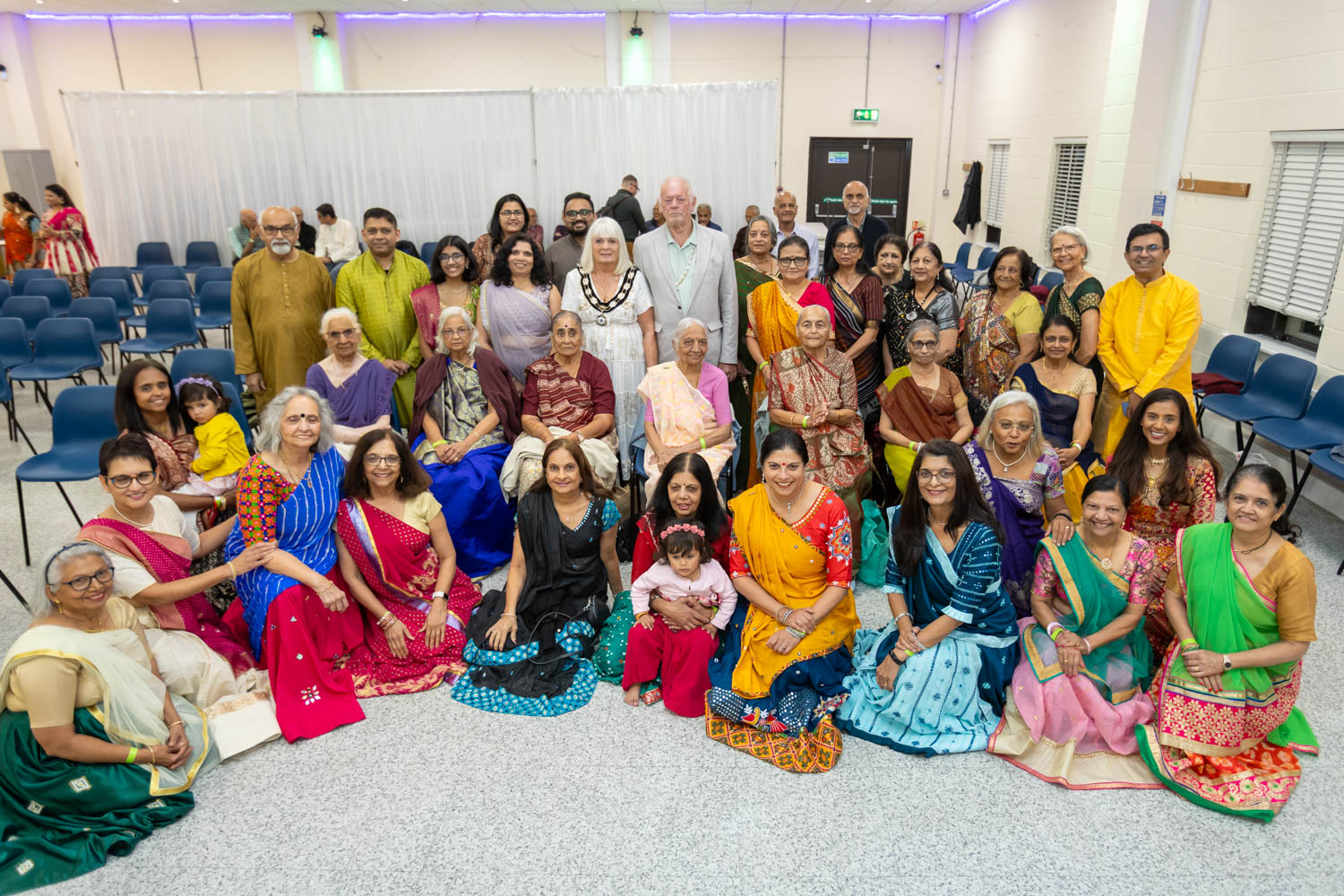
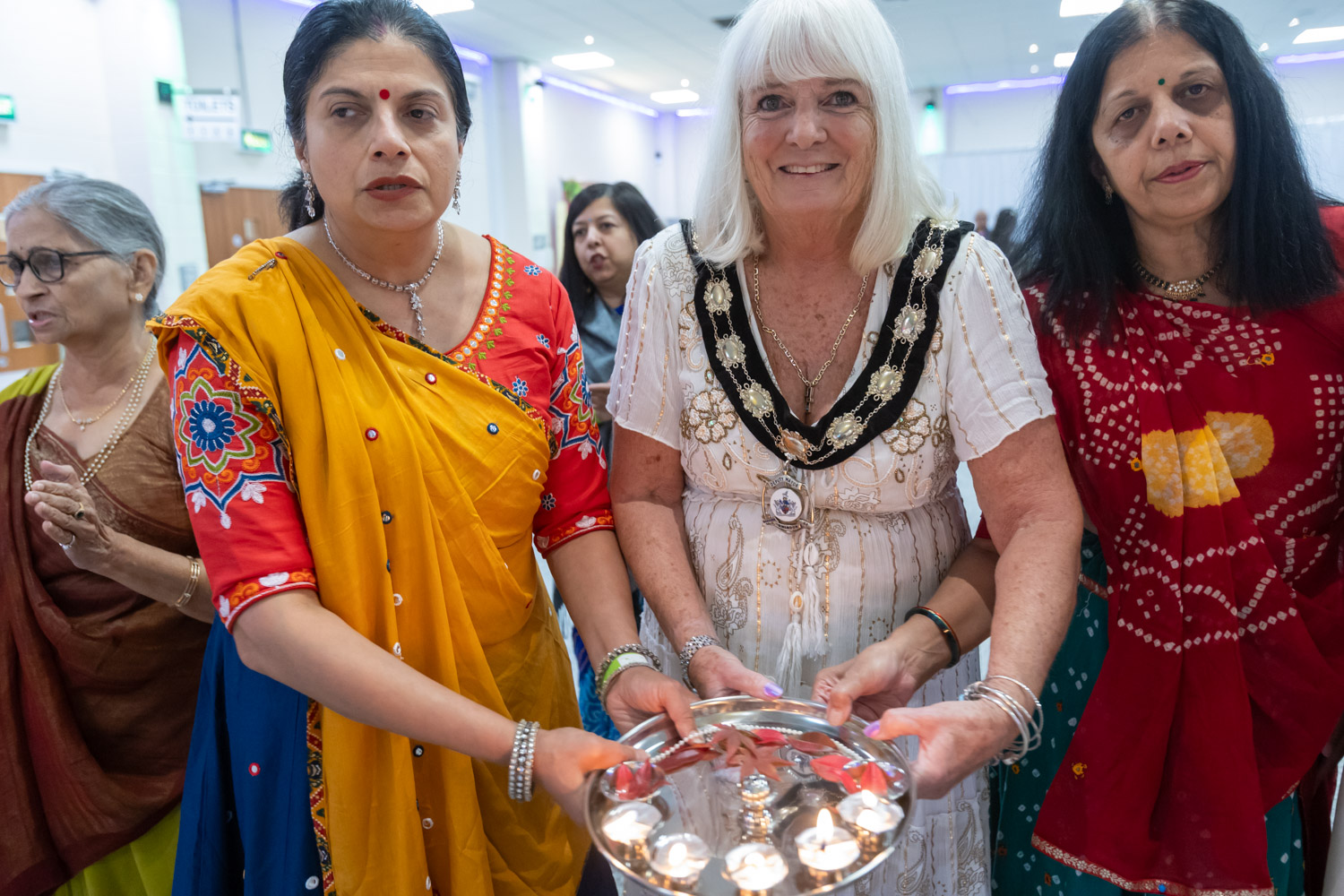
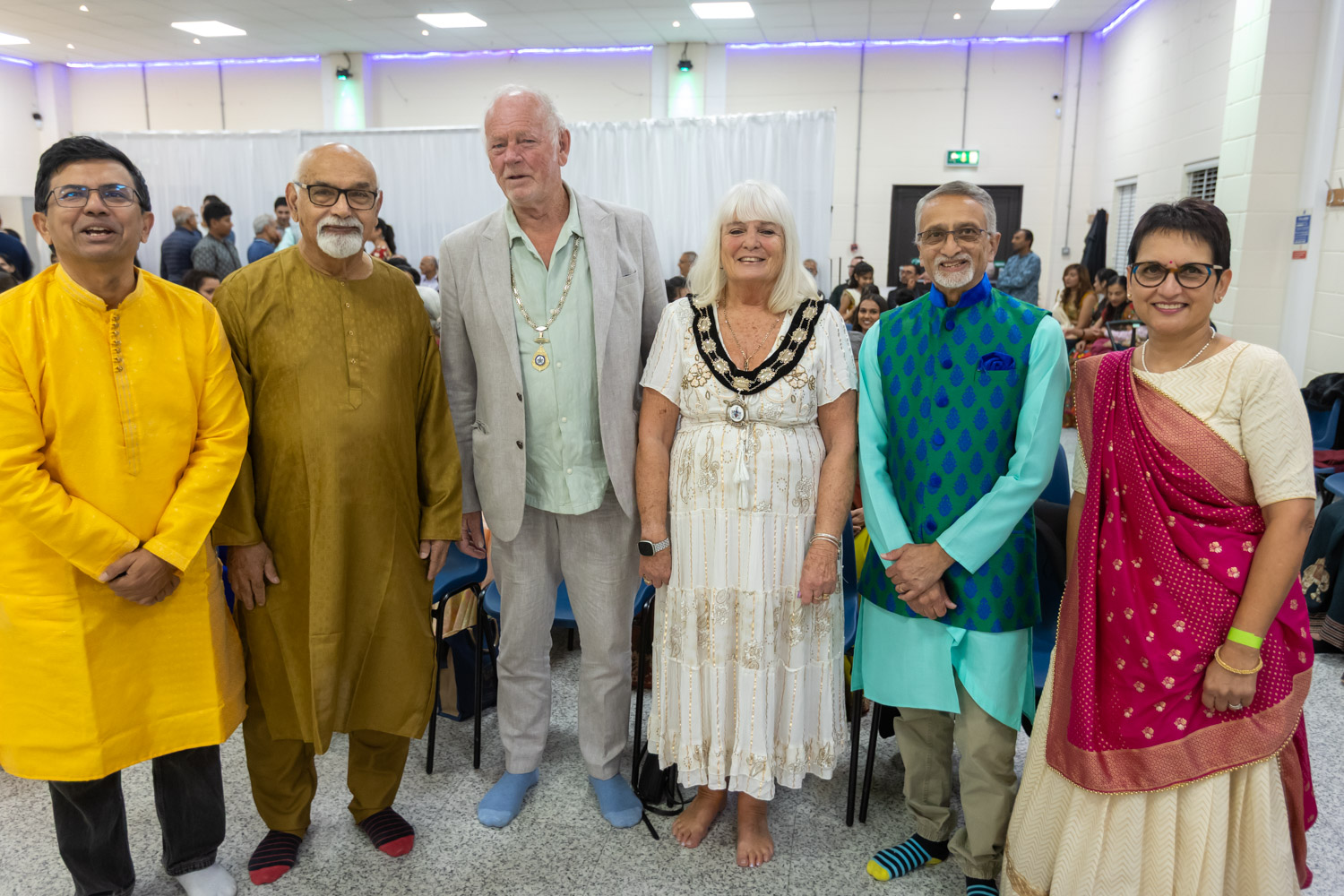
Councillor Gayle Cook, the Deputy Mayor of Swidnon and her consort Adrian were invited to experience one of the most important festivals in the Hindu calendar.
The visit gave Councillor Cook an opportunity to experience the music, dancing and traditions of Navratri first-hand, while meeting members of a community whose presence in Swindon has grown significantly over recent decades.
Figures from the Office for National Statistics show that the number of residents identifying as Hindu in Swindon more than doubled between the 2011 and 2021 censuses, rising from 2,597 to 5,865. The proportion of the borough’s population identifying as Hindu increased from 1.2% to 2.5%.
Speaking to Swindon24 during Friday’s celebrations, Hindu Samaj Swindon chairman Siddharth Patel explained the meaning behind the festival.
“It’s basically a nine nights festival, and today is the sixth night,” he said.
“Today, the significance is basically we devoted to Ma Durga, which is our goddess, and every day there is a different significance.
“Today’s colour is green, that means growth, nature and new beginnings.”
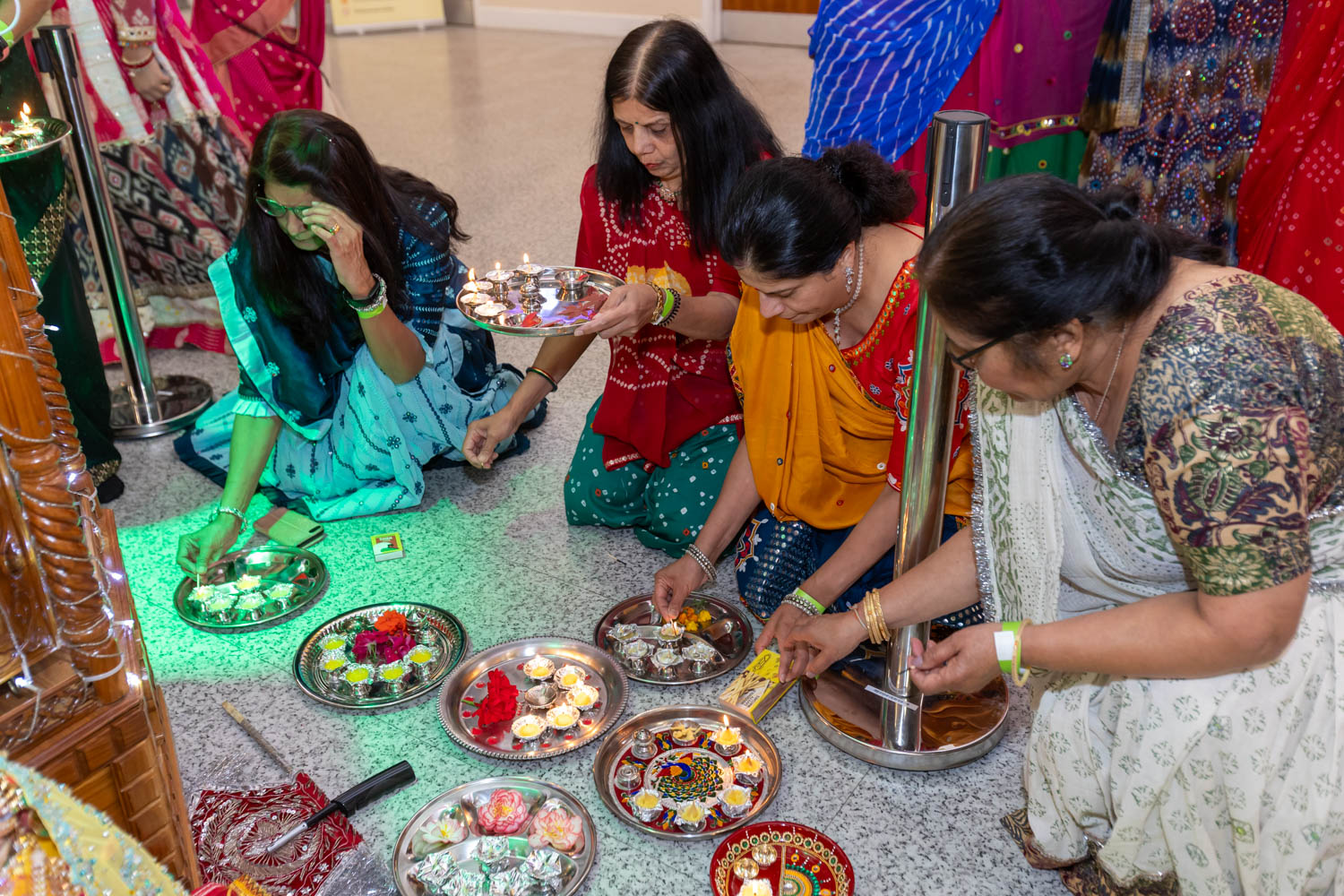
He explained that other colours carry different meanings, including white, which represents purity.
The celebrations involve Garba dancing, followed by Dandiya, another traditional dance in which participants use decorated sticks.
“People have fun, and it’s celebrated in India. It is celebrated mostly all night,” Mr Patel said.
Mr Patel, who moved to Swindon in 1972, believes the town’s employment opportunities, particularly in the technology sector, have played a major part in attracting families from India.
“I think the majority of the increase in the Hindu community has come around because of the industry,” he said.
“A lot of people have come from India, and it’s the IT companies that are actually pulling them.”
He also described how established family connections have encouraged more people to settle in the town.
“If a relative is in Swindon, then the others follow,” he said.
“I came to Swindon in 1972, and then five of my relatives came here.”
Hindu Samaj Swindon has a long history of supporting the town’s Hindu population.
According to its website, the voluntary organisation has been active since 1973, promoting Hindu faith, culture and community cohesion through religious celebrations, educational activities, sport and charitable work. It became a registered charity in March 2005.
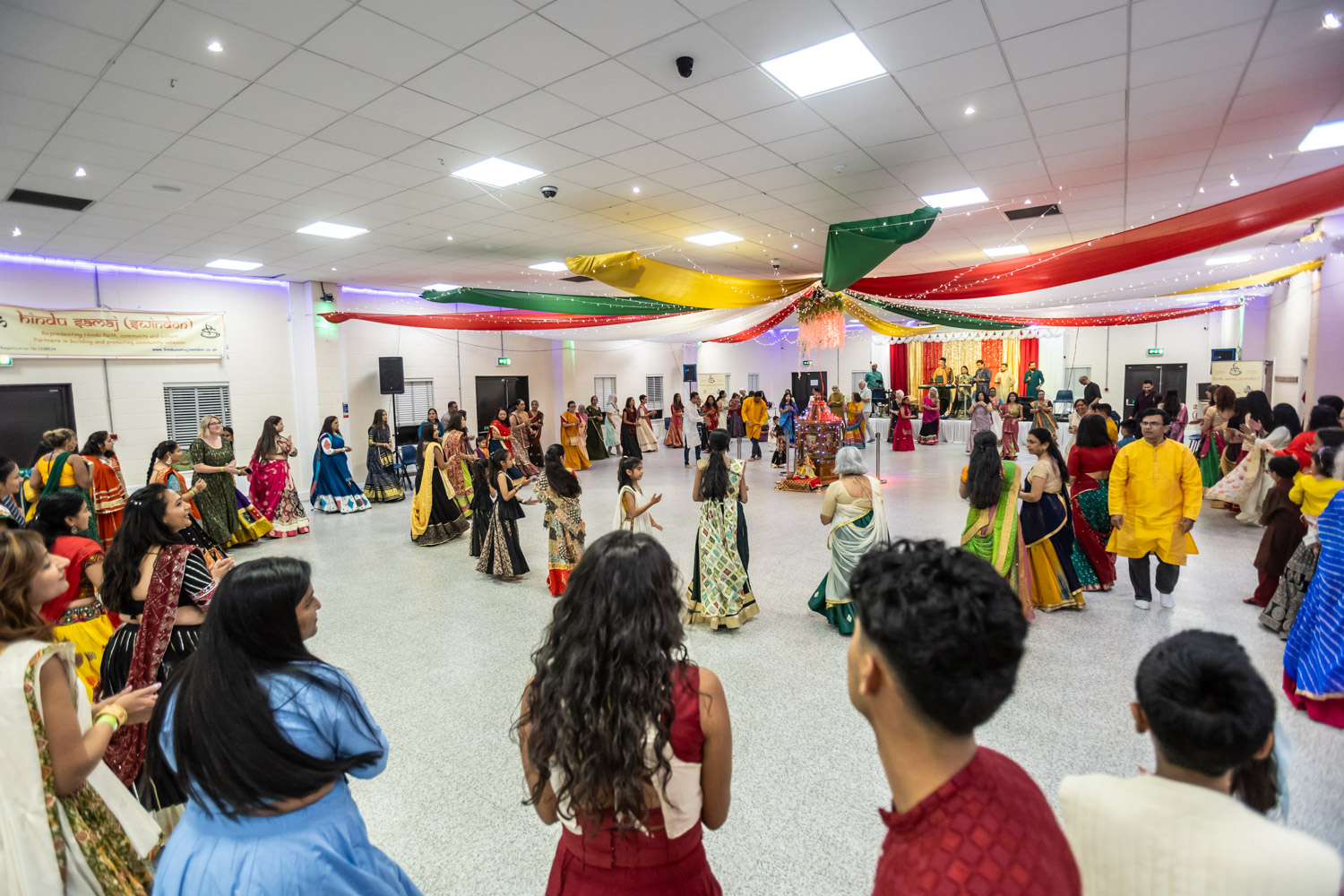
The Garba dancing taking place in Gorse Hill is also part of an internationally recognised cultural tradition. Originating in Gujarat, India, Garba was added to UNESCO’s Representative List of the Intangible Cultural Heritage of Humanity in December 2023.
The traditional dance involves participants moving together in circles, often around a representation of the goddess Amba, with rhythmic clapping and music forming an important part of the celebrations.
This year’s Navratri began on Sunday, 11th October, with the nine nights of worship continuing towards the festival of Dussehra on Tuesday, 20th October.
For Hindu Samaj Swindon, the celebrations provide an opportunity to continue traditions that have been passed down through generations, while bringing together a community whose presence in the town has grown significantly since Mr Patel first arrived more than five decades ago.
Full gallery: