
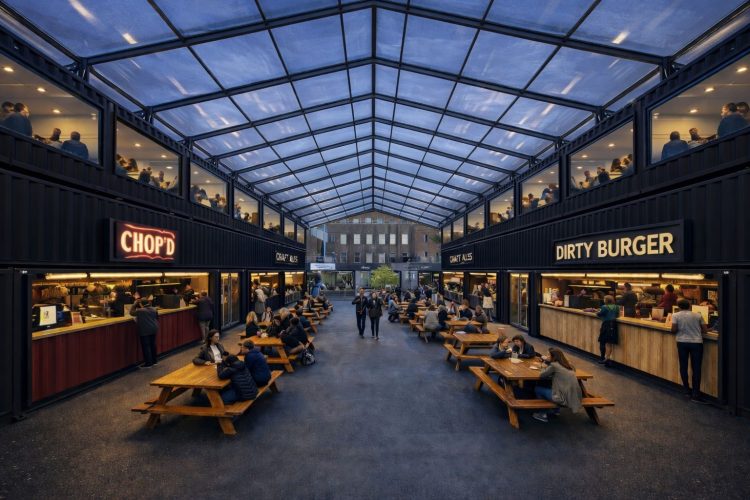

The idea being discussed is modest: could a small, underused piece of council land just off Swindon’s Regent Street be reimagined as a compact container park mixing food, drink and leisure, as a catalyst for a changing high street.
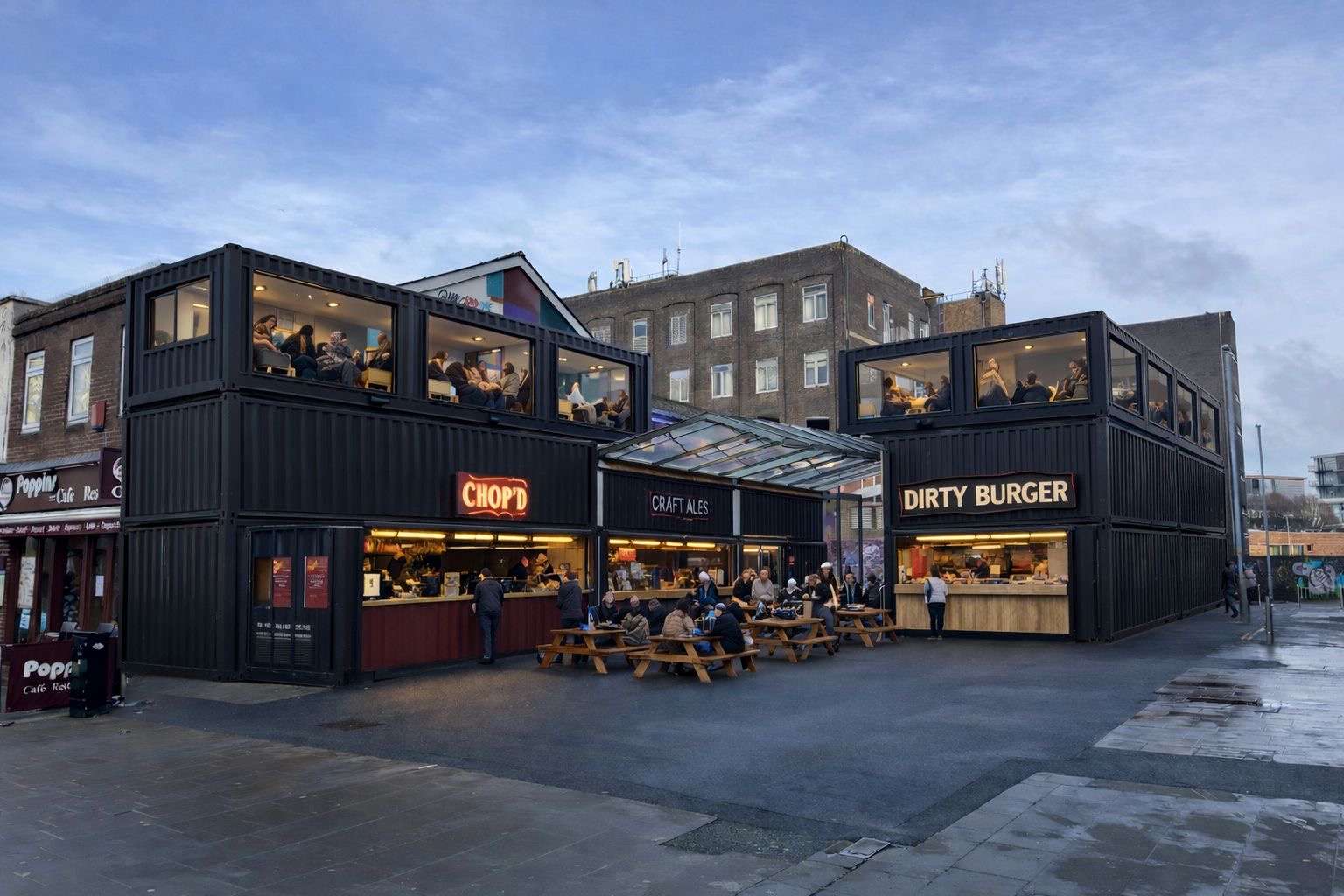
A new concept image showing a container-led food, drink and leisure venue is prompting fresh discussion about how underused spaces in Swindon town centre could be used.
The land in question sits just off the Regent Street and is currently unused. The idea is being framed as a way to ask how visible, incremental change could begin to shift confidence and perceptions around the town centre.
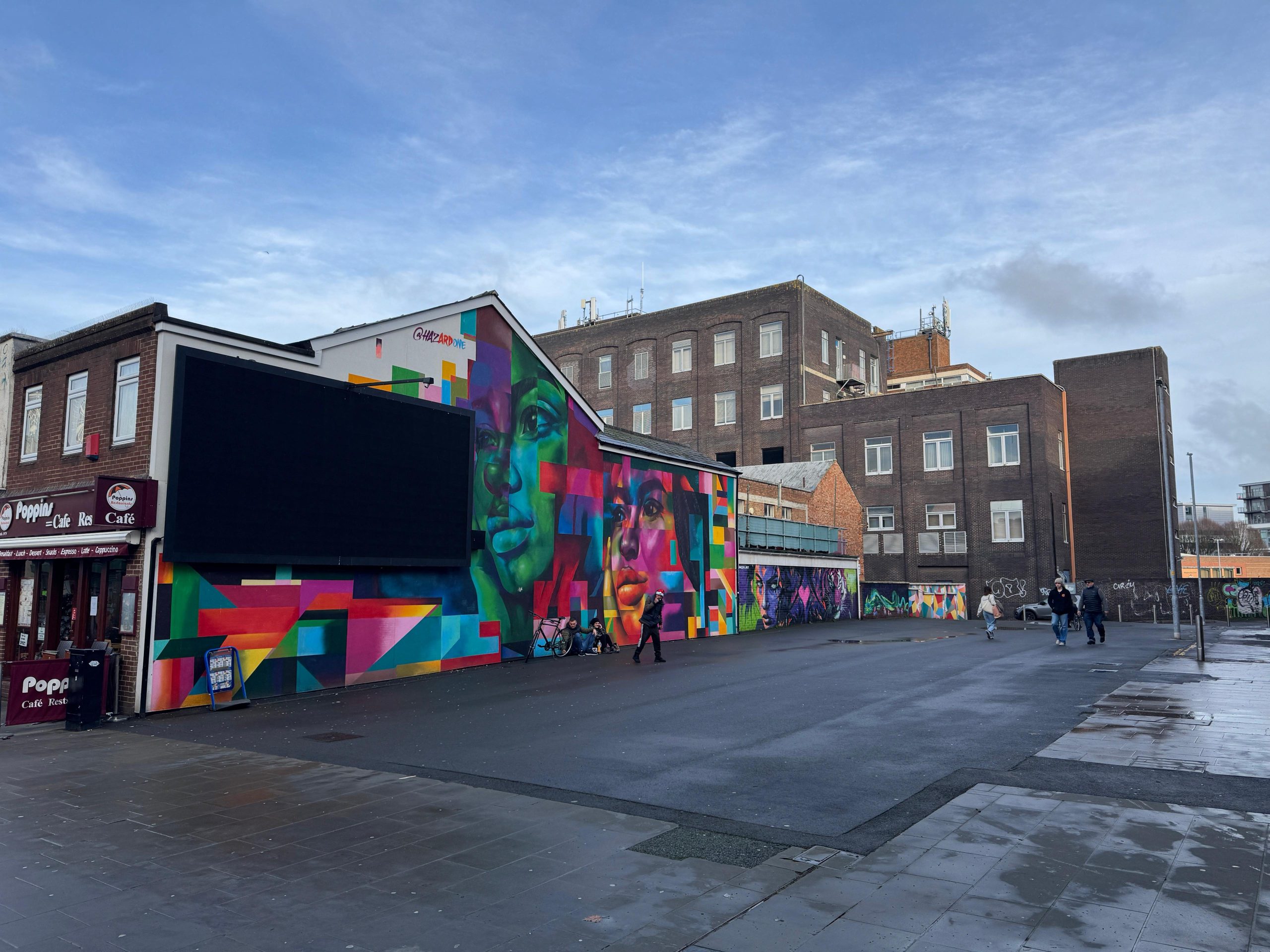
Crucially, the visual is not a planning submission. Instead, it is part of an early-stage conversation about how small pockets of land could be activated quickly and creatively, rather than remaining dormant while larger regeneration schemes are worked through.
The concept leans into a growing recognition that town centres are no longer sustained by retail alone. Across the UK, places that combine food, drink and leisure, supported by regular events, have proven more resilient and better at drawing people back into urban centres, particularly in the evenings.
In Swindon, the idea being discussed is whether a micro version of this approach could act as a catalyst, creating energy, footfall and confidence in an area that has struggled with negative perception.
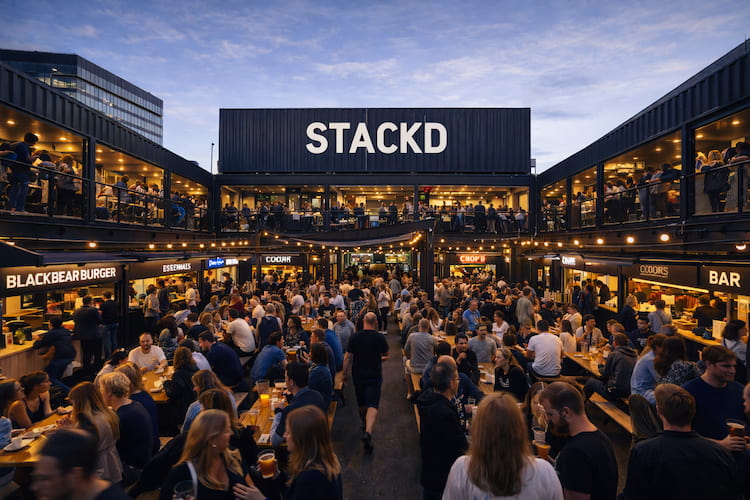
Places like Boxpark, Pop Brixton and STACK have shown that modular, container based meanwhile spaces can activate underused land and shift perception, particularly when food and drink are combined with leisure and a strong events programme.
The concept for Swindon under discussion is intentionally small and urban. Stacked containers forming a narrow, covered lane, more market street than open plaza. Food and bars at ground level. Seating, lounges or small leisure uses above. A glass canopy to make it work year-round.
Crucially, for it to be successful a calendar supporting entertainment, screenings, live sport, DJ nights, takeovers, are being discussed and would follow suit for other container parks.
Whether this specific concept ever becomes reality remains to be seen. But as a way of rethinking regeneration in smaller, more human-scale steps, it suggests that Swindon’s next chapter may start not with a grand plan, but with smaller well-used spaces.












It may work, it may not but nothing will be lost by trying to find a use for this plot & with Summer on its,’ way it’s a good time to try with nothing to lose.