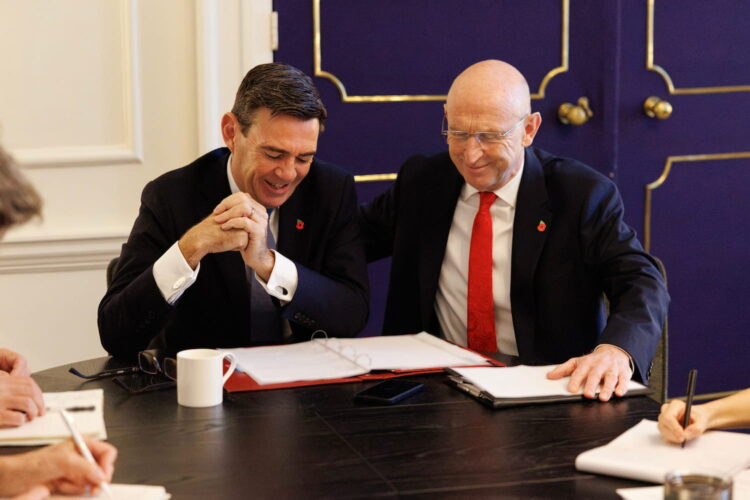

Chancellor John Healey unveiled his first Budget on Wednesday (28th October), announcing a package of measures aimed at easing the cost of living, supporting businesses and encouraging economic growth.
The announcements also included a major development for Swindon, with the Government confirming plans for a new Thames Valley mayoral authority, potentially bringing greater investment and decision-making powers to the region.
But while the Government says the Budget will provide some financial breathing space, the economic outlook remains challenging, with household spending power expected to fall this year and inflation forecast to remain high into 2027.
So what does the Budget actually mean for people living and working in Swindon?
One of the biggest announcements for residents is a £100 Household Energy Payment for eligible households living in council tax bands A to D. The payments will begin in January 2027 and are intended to help families facing higher gas and electricity costs this winter.
Swindon North Labour MP Will Stone says approximately 37,730 properties in his constituency will benefit from the scheme. Households paying council tax by direct debit will receive the money automatically into their bank accounts, while arrangements will be made for eligible residents who pay by other methods.
The Government has also extended the temporary 0% VAT rate on domestic electricity until July 2027, which it expects to reduce the annualised energy price cap by approximately £50 in April compared with what it would otherwise have been.
There are further plans to remove standing charges from household gas bills by the end of 2027, although the costs would instead be incorporated into unit rates.
Pay rises for Swindon’s lowest-paid workers
Workers earning the National Living Wage will receive a 3.9% increase from April 2027, taking the hourly rate to £13.21. The Government estimates this will mean an additional £910 in gross annual earnings for someone working full-time on the National Living Wage.
The National Minimum Wage for workers aged 18 to 20 will also rise to £11.27 an hour, while the rate for 16 and 17-year-olds and eligible apprentices will increase to £8.31. These changes will affect eligible workers across Swindon’s retail, hospitality, care and other sectors.
However, the increases will also mean higher wage bills for businesses employing staff on minimum rates.
Relief for motorists and commuters
For Swindon residents who depend on their cars, the Government has extended the existing 5p-per-litre fuel duty cut until July 2027. The planned inflation-linked increase in fuel duty has also been delayed until that date.
This means motorists will avoid an immediate increase in fuel duty, although it does not necessarily mean petrol and diesel prices at the pumps will fall. Workers who use their own vehicles for business will also benefit from improved tax-free mileage allowances.
The temporary 55p-per-mile allowance for the first 10,000 business miles is being made permanent, while the allowance for mileage above that threshold will rise from 25p to 35p. The Government has also confirmed that the £2 bus fare cap will remain in place during 2027.
Support for Swindon’s shops, pubs and restaurants
Businesses across Swindon could benefit from changes to business rates, particularly those operating in retail, hospitality and leisure. The Government is increasing the rateable value threshold for full Small Business Rates Relief from £12,000 to £18,000 for qualifying businesses from April 2027.
A two-year real-terms freeze will also apply to qualifying retail, hospitality and leisure business rates bills, meaning increases will generally be limited to inflation rather than stopped altogether. Will Stone estimates that around 790 properties in Swindon could benefit from the measures.
Nationally, the Government says approximately 70,000 additional retail, hospitality and leisure properties will pay no business rates following the changes.
Douglas Ure, CEO of Business West, welcomed the announcement.
“This was a Budget delivered against a backdrop of significant fiscal constraints, but it’s good to see support for businesses through measures on energy costs and business rates relief.”
He also welcomed the continued focus on investment in sectors including AI, defence and life sciences.
Help for first-time buyers
People in Swindon hoping to purchase their first home could benefit from a new Government-backed scheme called Your First Home. Eligible first-time buyers will be able to purchase qualifying new-build properties with a deposit of just 2.5%, supported by a Government equity loan worth 20% of the property’s value.
The equity loan will be interest-free for the first five years, although it must eventually be repaid under the scheme’s terms and interest charges will apply thereafter. The scheme will be available to eligible households earning £110,000 or less outside London, with applications expected to open in February 2027.
However, it will only apply to participating new-build developments, and local property price limits will apply.
The Budget also includes an additional £1.5 billion nationally for social and affordable housing, although no specific allocation for Swindon has been announced.
Major development for Swindon’s future
Perhaps the most significant long-term announcement specifically affecting Swindon is the Government’s decision to progress plans for a new Thames Valley Mayoral Strategic Authority. The proposed authority would bring together Swindon, Berkshire and Oxfordshire, giving local leaders greater control over transport, infrastructure, skills, employment support and economic development.
The announcement includes a proposed £9.1 million allocation from the Government’s Good Growth Funds for the wider Thames Valley region as the authority is developed. It forms part of a broader Government commitment to give local leaders more control over spending decisions, backed by £285 million in transitional funding nationally in 2027-28.
Of that amount, £120 million is intended to support areas moving towards devolution, while £165 million will support places with mayors in place during 2027. The Government is also developing a £1.5 billion borrowing facility for mayoral strategic authorities from 2028.
Prime Minister Andy Burnham said the changes would end the practice of local leaders having to seek permission from Westminster for investment in their communities. Locally, Labour and Co-operative Group leader Councillor Jim Robbins welcomed the shift towards greater decision-making powers.
Reflecting on recent discussions at Swindon Borough Council, he said:
“We saw at Full Council last week a succession of calls for the leader of the Council to write to Government on a range of issues.
“Hopefully, this can stop as the Labour Government allows us to move to be able to make more decisions locally and really manage our own affairs.”
He added: “With a breakthrough on devolution as well, we should be able to really power forward.”
However, the Thames Valley deal is not yet finalised. The 13 councils involved must develop a detailed proposal, with consultation planned for early 2027.
If approved, a shadow authority could be established later next year, followed by mayoral elections in 2028.
Swindon Borough Council leader Councillor Gary Sumner also welcomed the announcement.
“Today’s announcement is a landmark moment for the Thames Valley and recognition of what can be achieved when councils come together with a shared ambition for the future of our region.”
He said the proposed authority could unlock opportunities for investment in transport, housing, skills and infrastructure. Existing councils would continue to run everyday services, including waste collections, social care and schools.
What about council services?
Despite welcoming the devolution announcement, Swindon’s Conservative administration has raised concerns about the wider Budget’s failure to adequately address the financial pressures facing local authorities.
The council continues to face challenges involving children’s services, special educational needs provision and its wider financial position. Councillor Keith Williams, Cabinet Member for Finance, Recovery and Transformation, said:
“Without a sustainable settlement for local government, our council is left trying to balance rising demand against limited resources. That is not fair on residents, council taxpayers or the vulnerable people who need our services.
“Residents rightly expect Government to address the growing funding gap to enable councils to deliver essential services.”
The Conservatives argue that greater local powers must be accompanied by sufficient funding to make them effective. While the Government’s national devolution package offers new funding opportunities, the amount Swindon itself will ultimately receive remains unclear.
Changes for pensioners, savers and landlords
The Budget also contains changes that could affect Swindon residents beyond the headline cost-of-living measures. The State Pension triple lock will remain in place until April 2029, with a revised system planned from April 2030.
A new Pension Tax Allowance will also be introduced from April 2027 to help pensioners whose income is at or below the full new State Pension avoid small income tax liabilities. Meanwhile, income tax rates on taxable savings income and property income are set to increase by a further two percentage points from April 2027, affecting some savers and landlords. The annual cash ISA allowance will remain at £20,000.
Will Swindon residents be better off?
The Budget provides some financial relief for Swindon households, particularly those eligible for the £100 energy payment and workers benefiting from the higher minimum wage. There is also support for first-time buyers and businesses facing pressure from operating costs, but the wider economic outlook remains difficult.
The Office for Budget Responsibility expects inflation to average 3.4% in 2027, while real household disposable income per person is forecast to fall by 0.8% in 2026 before growing by just 0.1% in 2027.
For Swindon, the longer-term opportunity could be the proposed Thames Valley authority and the additional investment powers it could bring.
Labour argues that giving local leaders more control over funding and decisions will allow communities to pursue their own priorities, while the Conservatives warn that existing council services still need sustainable financial support.
Whether the changes translate into better transport, more homes, stronger businesses and improved local services will depend on the decisions made in the coming years. For now, the Budget offers some short-term financial breathing space, but it does not remove the wider cost-of-living pressures facing Swindon residents.