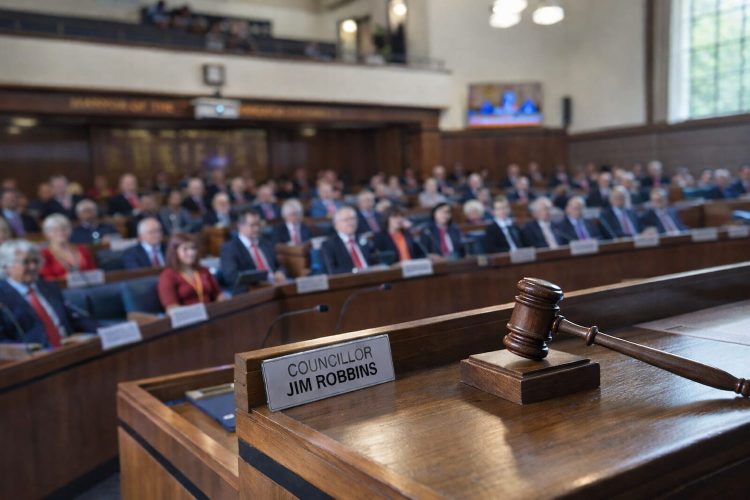

On paper, the agenda is ambitious. Its success will depend on how effectively long-term strategic intent can be aligned with the council’s ongoing work to manage financial pressures and increasing demand for essential services.
The first motion would formally declare Swindon a Cooperative Council, embedding cooperative values into procurement, service design and community asset ownership.
Councillor Abdul Amin, who is proposing the motion, described it as a values-led shift rather than a technical change. He said:
“Today we choose cooperation over competition. By prioritising people over profit, and harnessing local talent and innovation, Swindon has a chance to unlock sustainable, shared prosperity.”
The motion draws on examples from other parts of the country where community wealth building has been used to support local employment and keep public spending within local economies.
Councillor Junab Ali said:
“Imagine a Swindon where every pound we spend strengthens our local economy, where communities have the power to protect the assets they love, and where the Council works alongside residents, not above them.”
The political importance of the motion is heightened by the fact that the Leader of Swindon Borough Council, Jim Robbins, is serving as Chair of the Co-operative Councils’ Innovation Network, the national body that promotes the cooperative council model.
That national role will increase Swindon’s profile within the cooperative council movement, but it would also bring greater scrutiny. Declaring cooperative values locally while helping to shape them nationally leaves limited room for the approach to remain symbolic.
The motion does not remove the need for council savings or resolve immediate funding pressures. However, if combined with clear benchmarks, transparent reporting and visible examples of change, residents may begin to see how the declaration translates into improved services in the short and medium term.
The second motion calls on rail operators and government to introduce a daily direct train service between Swindon and Oxford, following a weekend trial.
Councillor Kevin Small described the proposal as a practical intervention. He said:
“This is about connectivity and opportunity. The Saturday trial proved the demand is there. With no new infrastructure required and strong economic benefits, a daily service is a win for residents, businesses, and the environment.”
Councillor Claire Crilly said the link would strengthen Swindon’s economic position, describing it as “practical, affordable, and green”.
The motion carries little direct financial risk for the council and aligns with wider Thames Valley and East-West Rail ambitions. It commits the authority to lobbying rather than delivery.
The third motion seeks an urgent review of primary care provision across Swindon, amid ongoing concerns about GP access and waiting times.
Councillor Jim Robbins said the motion reflected repeated feedback from residents.He said:
“Residents across Swindon are telling us the same story, long waits for GP appointments, difficulty accessing care, and growing frustration.”
“I don’t know if we need a new hospital, better urgent care options, more doctor’s surgeries or more flexible appointments. That is why we need to do the research and analysis.”
The review is intended to support lobbying for national NHS investment rather than commit the council to solutions it cannot fund or directly control.
Councillor Marianne Le Coyte Grinney said:
“Healthcare should never feel like a postcode lottery.”
Taken together, the three motions articulate a shared direction of travel for the council during a period of sustained financial pressure.
They focus on longer-term priorities, including economic resilience, transport connectivity and health outcomes, alongside the ongoing work required to manage immediate pressures on statutory services.
Approval at Full Council is expected, with success ultimately measured by the extent to which residents see these ambitions reflected in day-to-day improvements across the borough.