
New rules introduced across England on Wednesday 21st October mean certain EV charging installations involving public pavements no longer require planning permission.
The changes could save homeowners around £300 in planning costs and make home charging more accessible to households currently relying on public charging points.
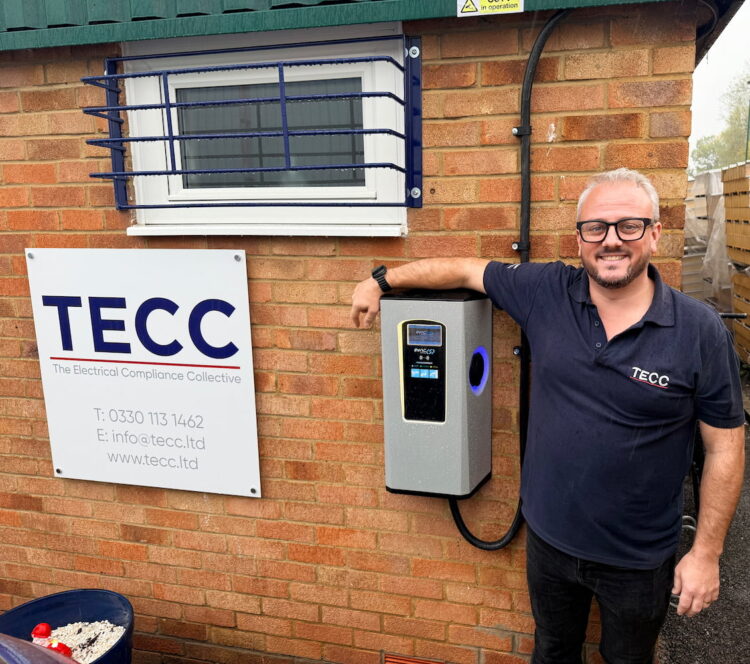
Peter McCallum, joint managing director of Swindon-based electrical contractor The Electrical Compliance Collective Ltd (TECC), has welcomed the reforms.
He said:
“There’s a great benefit to the removal of this red tape for Swindon and Wiltshire businesses and homeowners.
“We really welcome this change in legislation. Until now, many people who don’t have a driveway have faced significant barriers to accessing or installing a home EV charger, so this opens opportunities for homeowners who previously wouldn’t have had that option.”
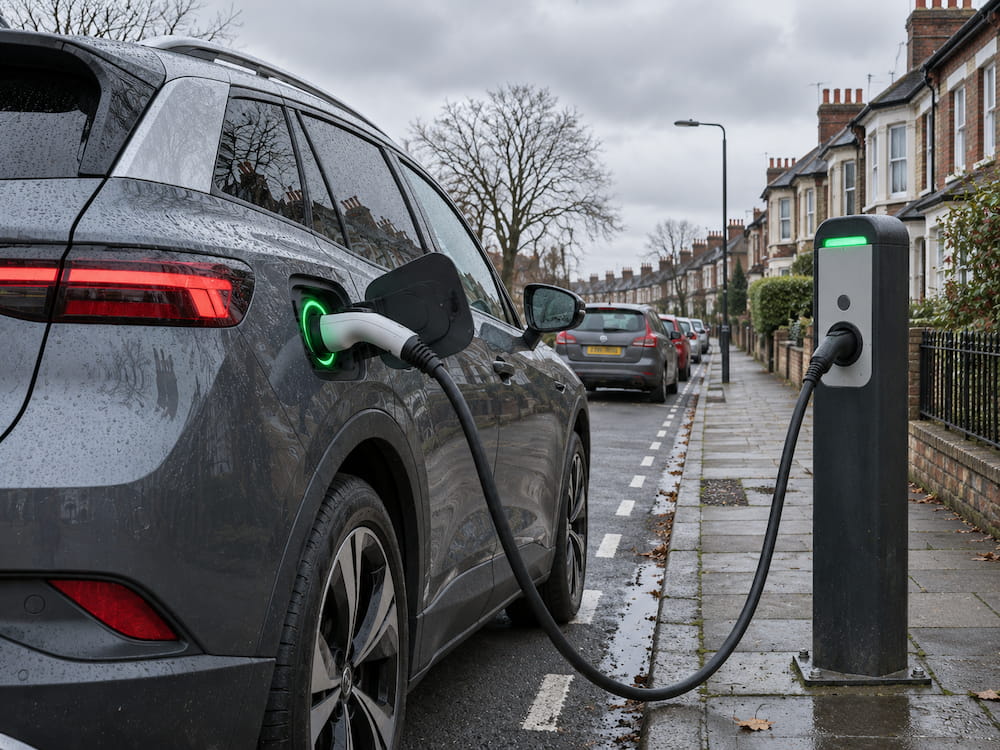
Previously, homeowners looking to install charging infrastructure across a public pavement faced planning requirements that could increase costs and delay installations.
The new permitted development rights remove some of these barriers, although permission from the relevant highways authority is still required for works crossing public footpaths.
Restrictions also remain in place for listed buildings and conservation areas.
Peter believes the changes could make a significant difference to households without off-street parking, particularly those paying more to use public charging facilities.
He said:
“The changes to permitted development rights will make it easier for homeowners without driveways to install EV charging points. It will open home charging to many households that rely on public charging facilities.”
Businesses across Swindon and Wiltshire could also benefit from simplified planning requirements for charging infrastructure in commercial car parks.
The changes are intended to make it easier for employers to provide charging facilities for staff, customers and company vehicles.
Peter said:
“The new rules will simplify certain planning requirements for EV charging infrastructure in commercial car parks and make it easier for businesses to expand their charging facilities.
“This eases the pressure for employees, customers and company vehicles.”
However, the reforms do not give homeowners automatic permission to run charging cables across public pavements.
Approval from the relevant highways authority remains necessary, meaning residents will still need to meet applicable requirements before installing cross-pavement charging infrastructure.
Peter added:
“It’s a positive step for the electrical industry as it creates more opportunities for qualified installers all while making electric vehicle ownership more accessible.
“It’s also a step in the right direction environmentally.
“If we’re serious about encouraging more people to switch to electric vehicles and reduce transport emissions, we need to make charging at home a realistic option for as many households as possible.”
TECC is a family-run electrical contractor established in 2006 and led by Peter and Maria McCallum.
The Swindon-based business provides domestic, commercial and industrial electrical services, including EV charger installations, solar panels, battery storage and electrical compliance testing.