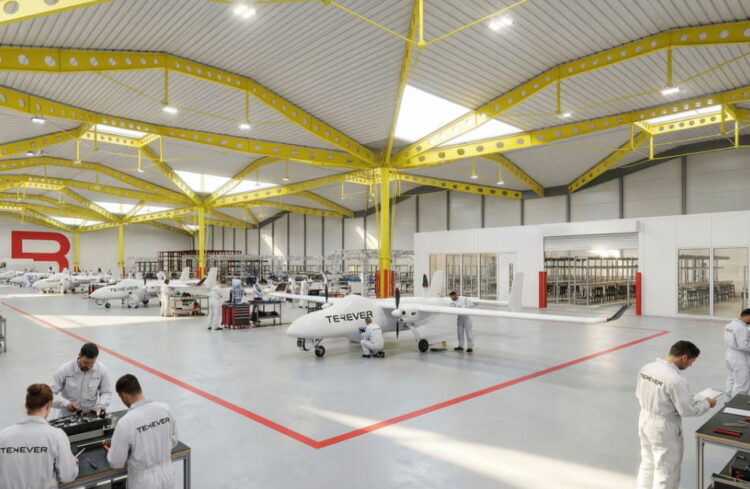
Portuguese technology company Tekever has applied to redevelop the Grade II* listed Spectrum Building on Mead Way. The site spans around 24,000 square metres and was originally constructed in the 1980s for car manufacturer Renault.
If approved, the proposals would see the landmark structure returned to active industrial use, focused on unmanned aerial systems production.
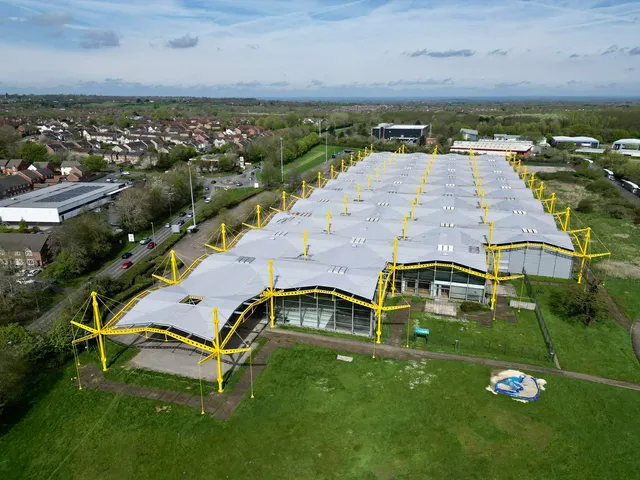
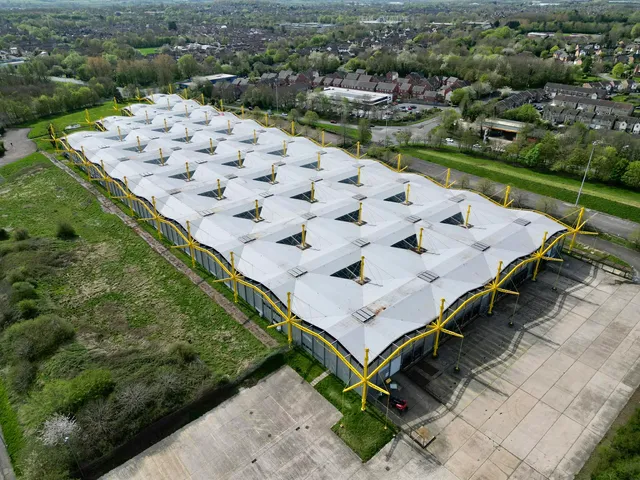
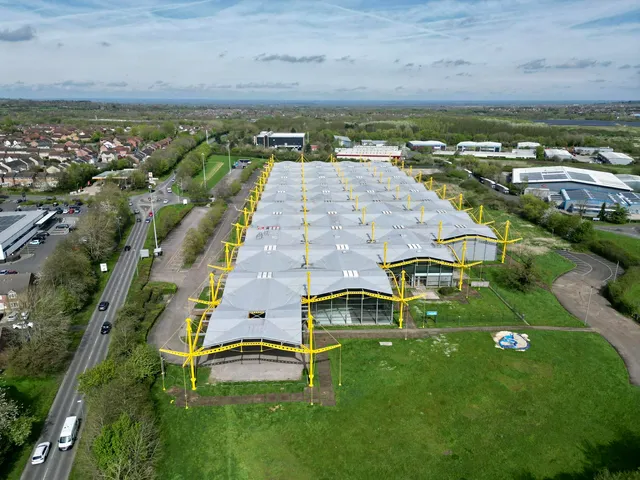
The current Spectrum Building from the outside: (Credit: Jason Spickett – Swindon From The Air)
The building, widely regarded as one of the United Kingdom’s most distinctive examples of high-tech industrial architecture, was designed by Foster Associates. Its exposed yellow steel frame and open-plan interior were created to combine showroom, office and production space under one roof.
Planning documents show Tekever intends to remove later additions and restore key architectural features, while installing modern manufacturing and engineering facilities.
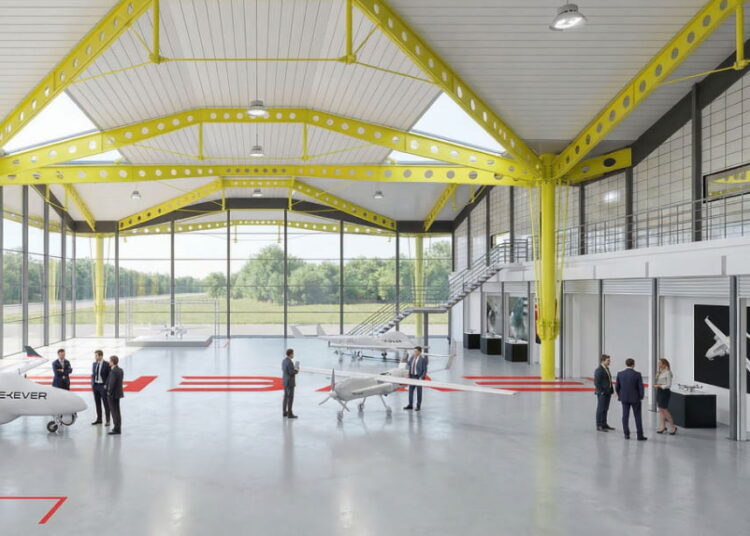
This includes stripping out non-original mezzanine floors, reopening sightlines between office and production areas, and reinstating the central showroom space.
The company says its approach relies on modular and reversible changes, aimed at preserving the building’s historic significance while enabling advanced industrial use.
Documents submitted with the application also acknowledge structural issues and areas of disrepair following years of fragmented occupancy.
The proposals aim to bring the building back into full use rather than redeveloping the site entirely.
The plans come at a time when much of Swindon’s recent commercial growth has centred on logistics and warehousing.
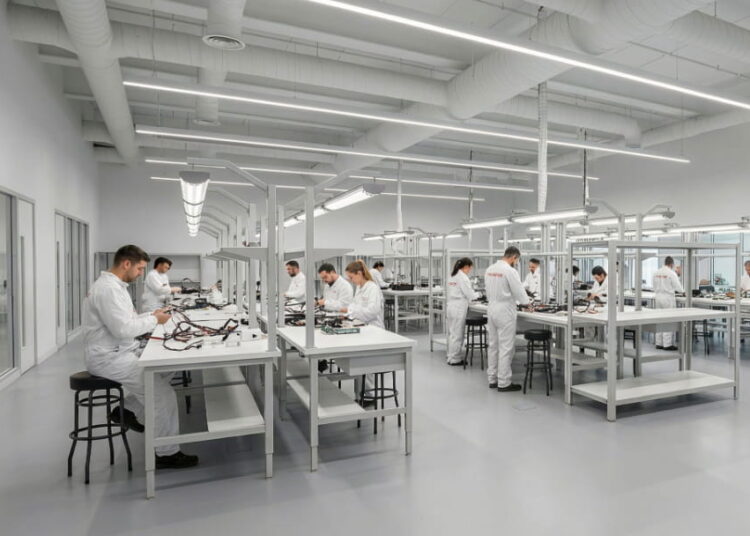
Advanced manufacturing in aerospace and defence represents a different segment of the economy, typically associated with highly skilled roles and research-led activity.
The Mead Way site sits within an established employment area with strong road links and access to public transport, approximately three kilometres from Swindon town centre.
Its large-span internal structure makes it particularly adaptable for modern production requirements without substantial structural alteration.
The scheme is subject to planning approval and further regulatory processes.
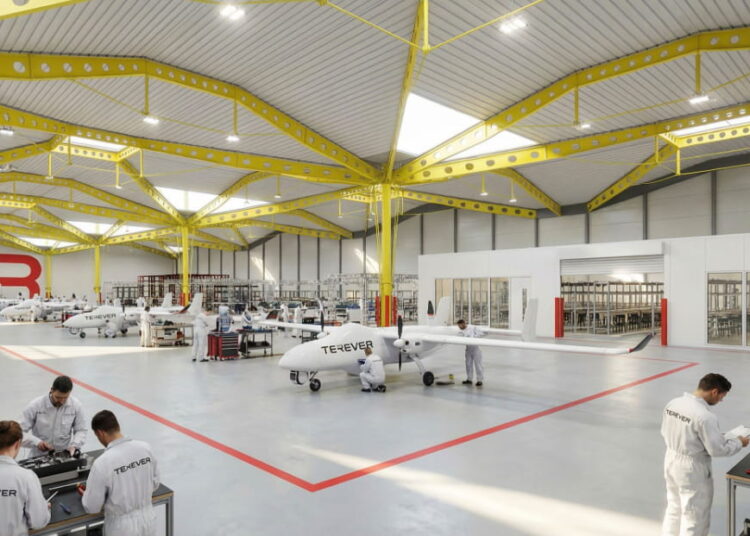
If granted, the development would mark a significant shift for the building, returning it to the type of design-led industrial use for which it was originally conceived.
For Swindon, the decision could signal renewed confidence in high-value manufacturing within the town.