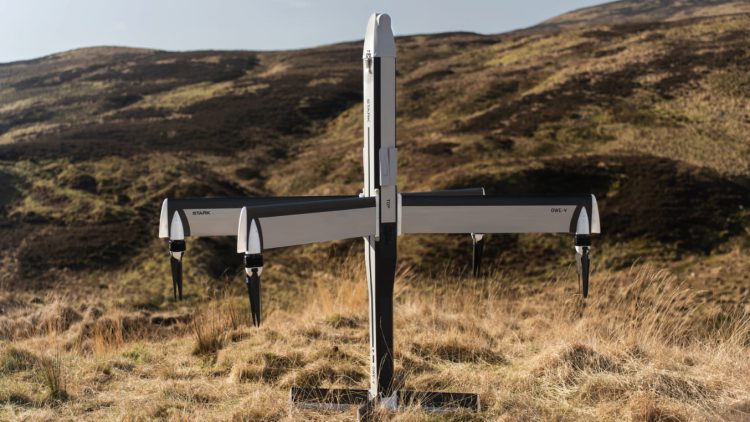

STARK confirmed it will open a 2,000 square metre research and development hub in Ukraine as leaders gather for the Munich Security Conference and the UK Government pledges further support for munitions.
The firm, founded in 2024 in response to operational demands from Ukraine, said the move will strengthen its European footprint. A new regional office will also be established in Greece.
The announcement follows STARK’s decision in November to open a 40,000 sq ft manufacturing facility in Swindon.
The site is designed to produce next-generation, AI-enabled loitering munitions and has capacity for up to 2,400 systems each year.
More than 100 highly skilled jobs are expected to be created during its first year of operation. Roles span engineering, software development, advanced manufacturing and systems integration.
STARK’s network now includes operations in Germany, Ukraine, Sweden, Greece and the UK. Its headquarters are based in Berlin.
The new Ukrainian research and development hub will support more than 200 specialists. It will focus on research, integration, training and technical support.
The company said it also intends to establish a local production site in Ukraine. This would enable the use of domestic supply chains and allow systems to be updated quickly as battlefield conditions change.
Uwe Horstmann, CEO of STARK, said:
“STARK is becoming a key pillar and partner in the defence of Europe, with local defence tech R&D and production across the continent. By leveraging innovation from the frontline and across Europe, we are helping ensure that proven unmanned systems can be produced at speed and kept relevant as operational needs evolve.”
Maksym Cherkis, COO of STARK Ukraine, added:
“Russia’s war of aggression against Ukraine has fundamentally changed Europe’s security landscape. Deterrence depends on defence innovation as well as sustained production.”
STARK describes itself as Europe’s fastest-growing defence technology company, specialising in unmanned systems across multiple domains.
It says rising geopolitical instability has placed increased pressure on Europe’s defence industrial base. Modern conflict, the firm states, requires both advanced technology and the ability to produce and adapt systems rapidly.
For Swindon, the investment places the town within a strategically significant manufacturing sector at a time of heightened global security concerns.