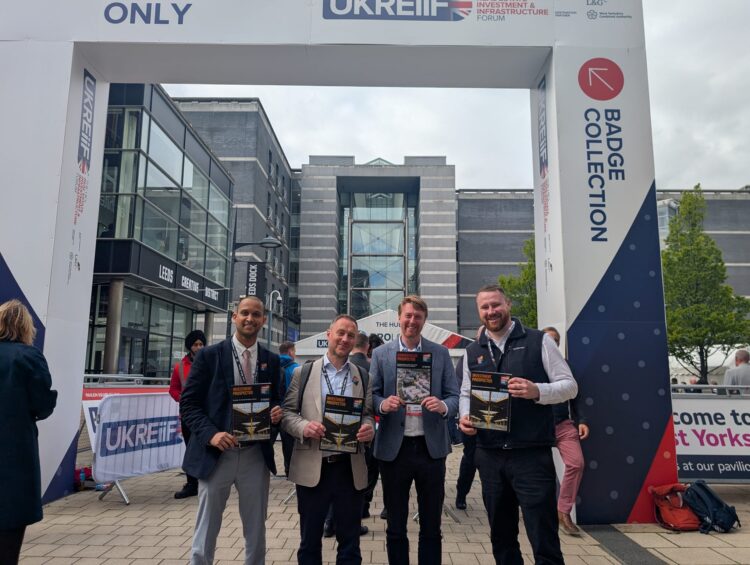

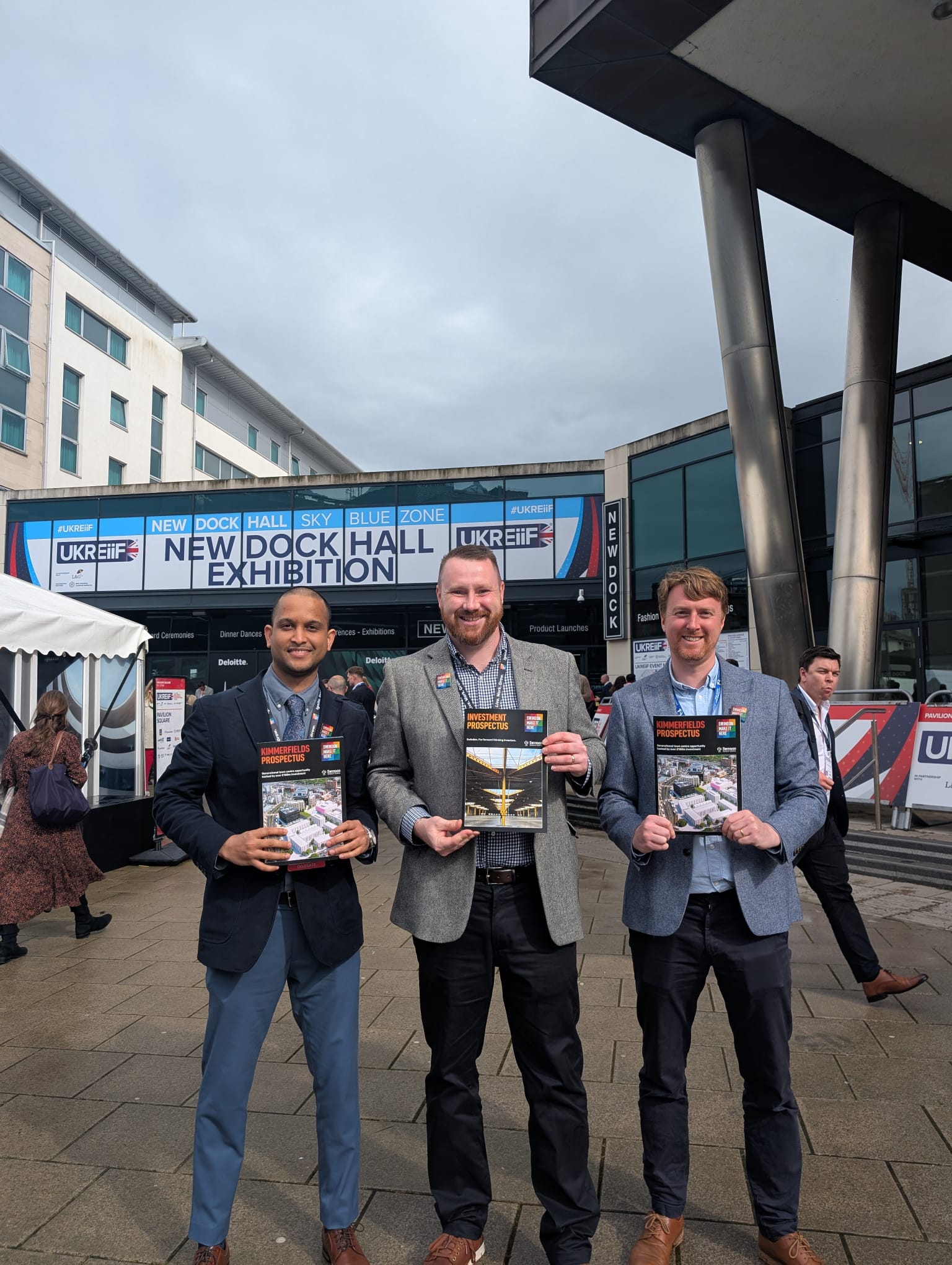
Speaking to Swindon 24 at the Carriage Works, the council’s Head of Inward Investment and Inclusive Economy, Andrew Wells, revealed that Swindon is now attracting growing interest from developers, investors and national organisations following a major presence at the UK’s largest property and investment conference, UKREiiF.
The event, held in Leeds, brought together around 16,000 representatives from local authorities, developers, sovereign wealth funds, government agencies and major businesses to discuss investment opportunities across the UK.
For Swindon, the significance of that is crucial. Outside of London, only a relatively small number of towns are genuinely competing for large-scale institutional investment. Cities such as Manchester, Leeds and Birmingham have dominated regeneration funding and private sector attention for years, while many medium-sized towns have struggled to attract major capital. Andrew said Swindon’s position is now changing.
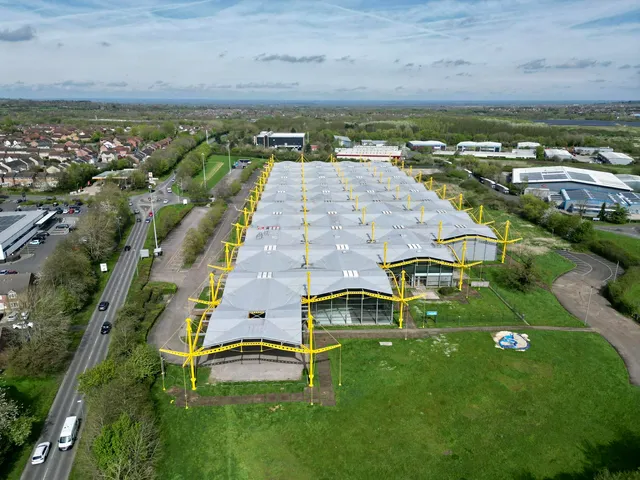
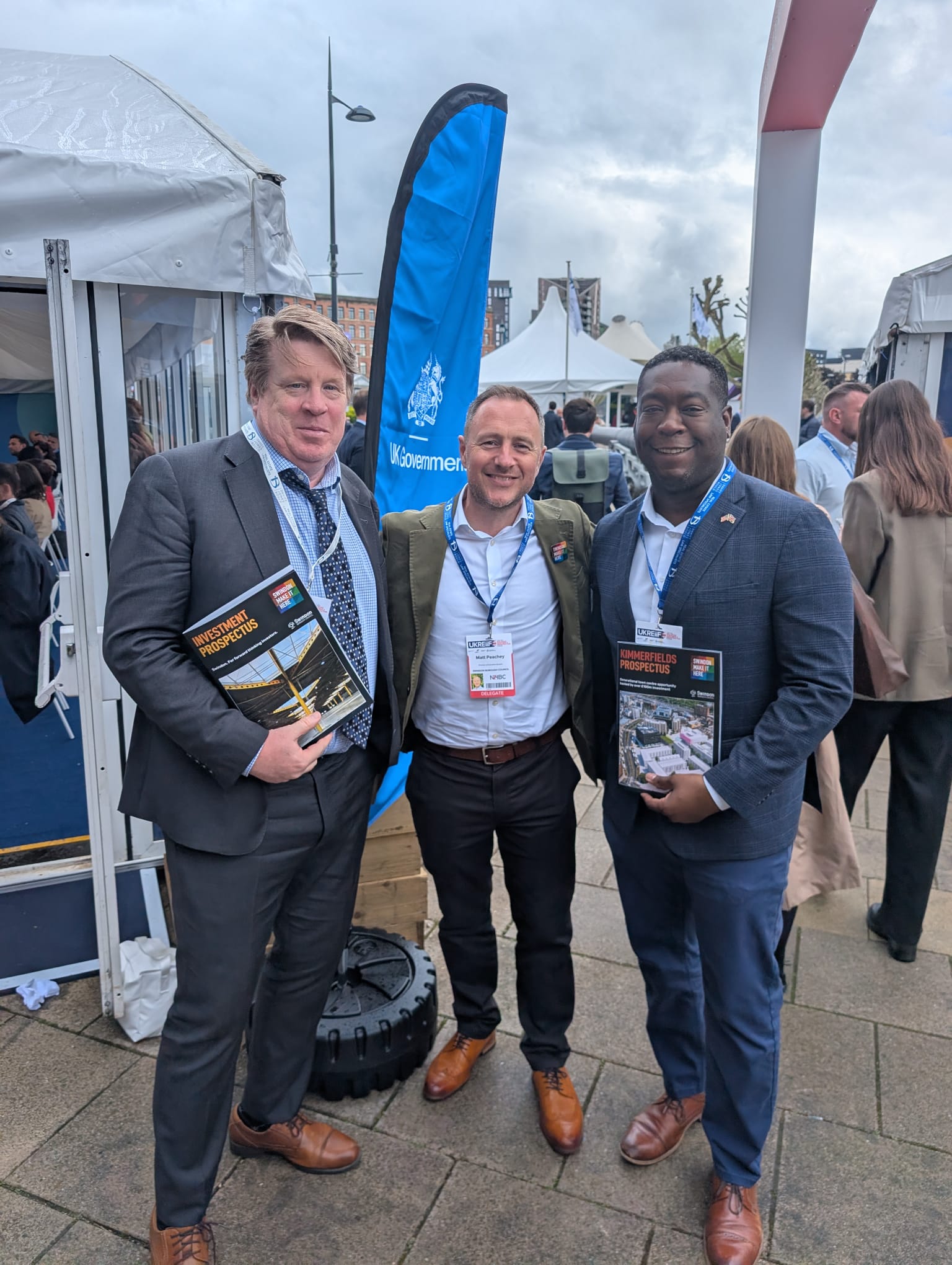
The council’s delegation used the conference to promote major regeneration sites including Kimmerfields, Knowledge Central and industrial development opportunities around the town, while meeting with government agencies, developers, investors and potential occupiers.
But behind the conference attendance lies a bigger story. Swindon’s economic team believes the town is finally beginning to overcome the biggest obstacle that has held regeneration back for years, viability.
In simple terms, developers have historically struggled to make town centre projects stack up financially in Swindon. Construction costs have often outweighed the rental income or land values schemes could realistically achieve, making large scale regeneration difficult to justify commercially.
Andrew said that situation is now starting to change.
“The rental values in Swindon are going up. They are improving. We’re closing that gap, and investors now are really keen because they know that gap’s closing,” he said.
According to Andrew, improvements such as the new Zurich offices, refurbishment projects at Newbridge Square and infrastructure investment planned around the proposed entertainment venue are all helping increase confidence in the town centre.
He said
“Swindon is increasingly being viewed as a place where investors can now see long term returns, particularly because of its rail links, available development land and comparatively lower entry costs than larger cities.”
While much of the public debate around regeneration focuses on the town centre, Andrew suggested some of Swindon’s strongest momentum currently lies in industrial and employment land.
He described Swindon as sitting in a “really good place” nationally because of the amount of available land and comparatively viable industrial development opportunities. That includes the rapidly expanding Panattoni Park development.
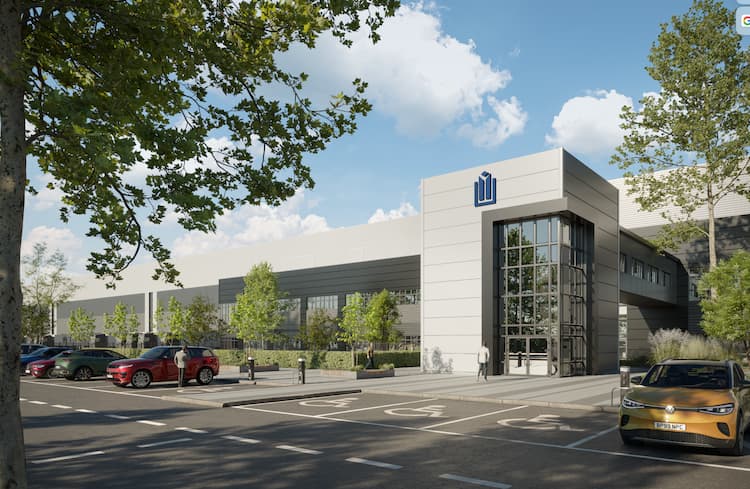
Andrew stopped short of naming incoming occupiers, but strongly hinted significant deals are progressing behind the scenes.
“We’re in advanced negotiations with more than just the two sites that are there,” he said.
“We would hope in the course of this year that we are able to announce some of those companies that are coming there.”
He also pushed back against perceptions that logistics and industrial developments only bring low value warehouse jobs. Perhaps the most striking part of the interview was Andrew’s frank assessment of the future of Swindon town centre.
He acknowledged the traditional retail-led model is no longer sustainable and said the town centre will need to become more mixed use, denser and more residential in future.
“Sadly, and having grown up in Swindon, we had a significant town centre, a good night-time economy, that is now too big,” he said.
“We need to consolidate, we need to change some of the use, we need to bring in dense, potentially, apartments, things like that.”
Rather than attempting to recreate the high street model of the past, Andrew described a future centred around mixed-use developments, office space, leisure and entertainment, build-to-rent apartments and young professionals living and working in the town centre.
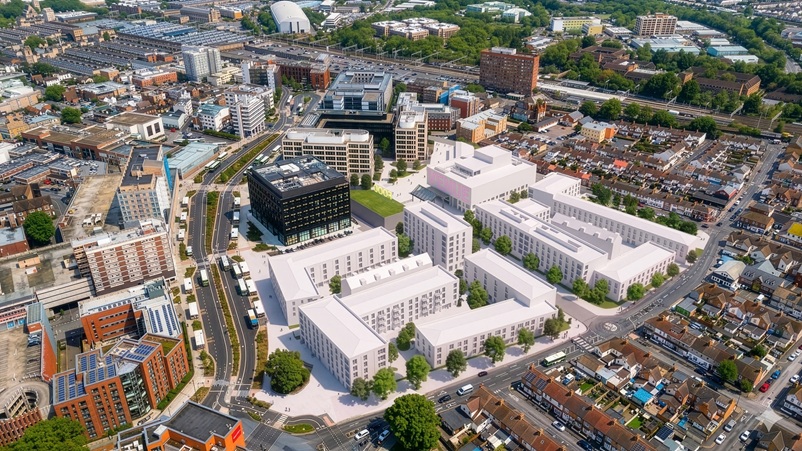
He also sought to challenge criticism that Swindon’s regeneration plans are becoming overly residential. While Kimmerfields is currently residential led, he said there remains flexibility for offices and commercial uses alongside housing.
He suggested the site could become attractive to graduates and professionals relocating to Swindon for major employers such as Zurich.
“We could put around 450 homes there and still have some space for offices,” he said.
One of the more surprising revelations involved Signal Point, the boarded up building above Swindon railway station that has long become a symbol of stalled regeneration. Andrew confirmed the council is actively working with Network Rail and its development arm Platform 4 on future options for the building.
He said discussions are ongoing around how the site could be brought back into use as part of wider regeneration plans around the station and Knowledge Central area
“They are alluding to the fact that that would be an opportunity they could consider,” he said.
Andrew repeatedly referenced examples such as Leeds and London’s King’s Cross as examples of the type of mixed-use regeneration Swindon could eventually move towards.
He also suggested devolution and joining a future combined mayoral authority could give Swindon greater access to funding and investment flexibility in coming years.
“We want to aim big, be a bit disruptive,” he said.
“It’s going to be a slow process, but if we can improve those public realm spaces, bring in things like an entertainment venue, bring more office back as well, if you can live and work in the town centre and have the full range of offerings, that’s how I feel it could be in the future.”