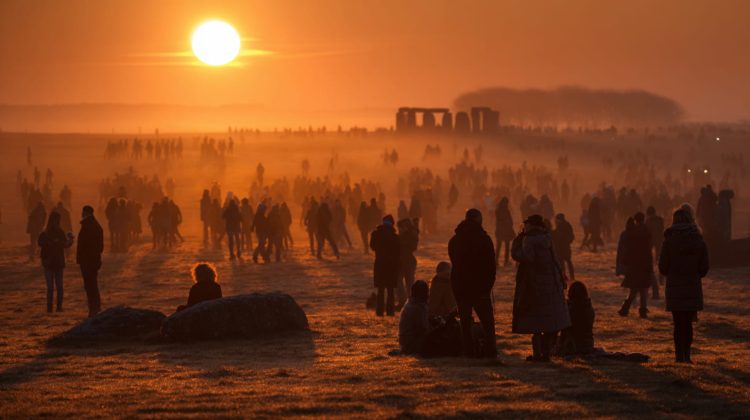

The prehistoric monument on Salisbury Plain lies less than an hour’s drive from Swindon, with many local residents making the early morning journey to witness the event.
The winter solstice marks the point when the Earth’s northern hemisphere is tilted furthest away from the sun, resulting in the least daylight of the year and the longest night.
In the UK, the solstice brings around seven hours of daylight, with sunrise in the early morning and sunset in the mid-afternoon.
At Stonehenge, crowds assembled in darkness and cold conditions to watch the sun rise in alignment with the ancient stones.
Some people marked the moment with chanting, singing and drumming, while others observed quietly, reflecting on the turning of the year and the return of longer days.
Stonehenge was deliberately designed to align with the sun at key moments in the solar calendar, including the winter and summer solstices.
This alignment suggests the solstice held deep significance for the Neolithic communities who built the monument, linking seasonal change with survival, agriculture and renewal.
Today, the solstice continues to draw people from across the UK and around the world, blending spiritual practice, historical interest and personal reflection.
For many Swindon residents, attending the winter solstice at Stonehenge has become a yearly ritual close to home, offering a moment of pause and connection at one of Britain’s most iconic ancient sites.