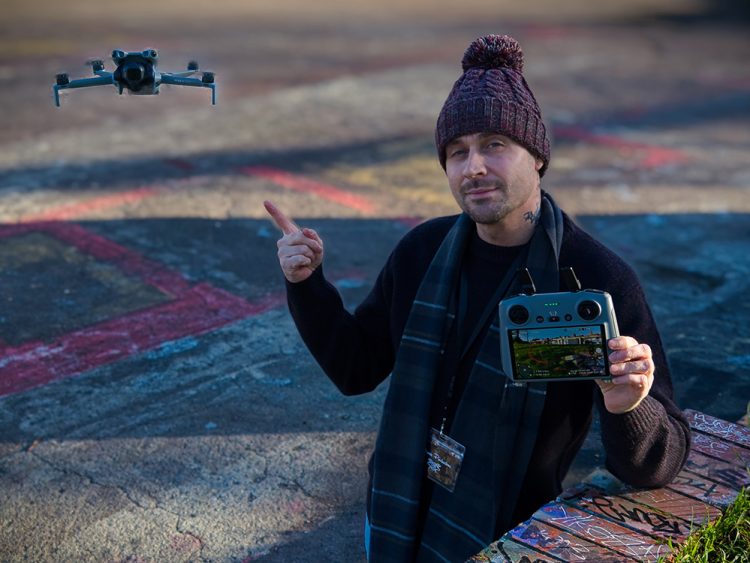

A Swindon-born performer who once toured internationally as a professional breakdancer is now capturing the town from the air, using drone photography to show its landmarks in a more positive light.
Ross Bisley began dancing at the age of six, copying Michael Jackson routines before discovering breakdancing and joining local crew Scarecrows. By fifteen, he had turned professional. His early years in Swindon led to a career that took him to Cambridge and then London, working on stage, screen and major commercial productions.
Bisley’s credits include UK and international breakdance competitions, the Ali G film, CBBC’s The Slammer, Sky One’s Got to Dance, a Levi’s tour, nightclub promotions at Ministry of Sound and a flash mob with Diversity. He has performed or worked alongside artists and figures such as Davina McCall, Ashley Banjo, Robbie Williams, So Solid Crew, Adam Garcia, and Outkast during the promotion of Sorry Miss Jackson.
His long experience choreographing movement and understanding how bodies, space and rhythm work on camera now informs his work as a drone pilot and aerial videographer.
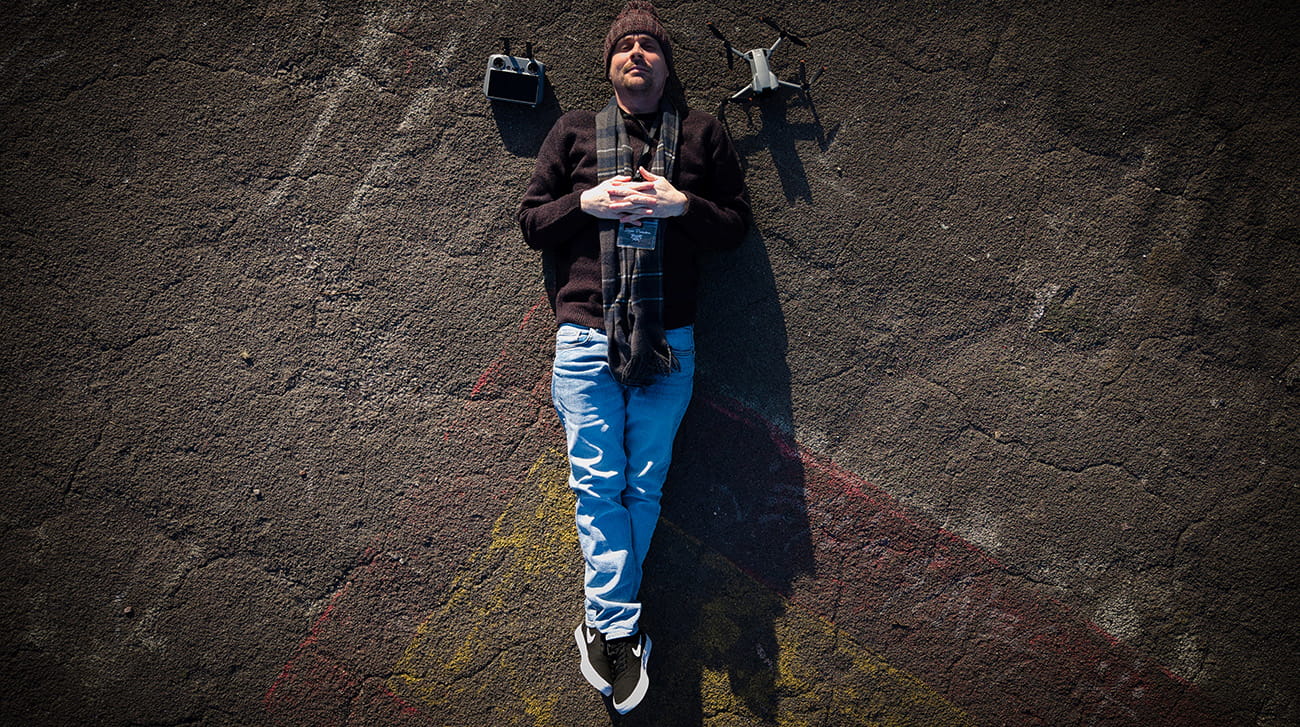
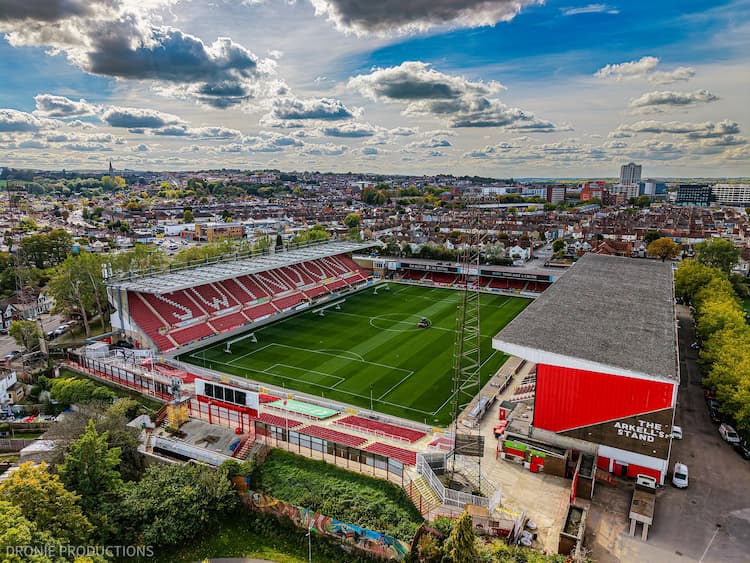
Bisley has been flying drones for around five to six years. In November 2024, he launched Dronie Productions, officially beginning his career as a commercial drone operator. He currently flies the DJI Mini 5 Pro and the DJI Air 3S, using both for a mixture of landscape work, commercial commissions and news footage.
Returning to Swindon, Bisley has shifted his focus from performing to visual storytelling. His footage has already been used by Swindon Borough Council, BBC News and international broadcasters. He provided aerial coverage of the Groundwell Industrial Estate explosion, which was subsequently distributed by an agency to outlets including Fox News and CNN. He has also contributed material to Netflix and worked on local campaigns such as BBC News’ anti-bullying feature.

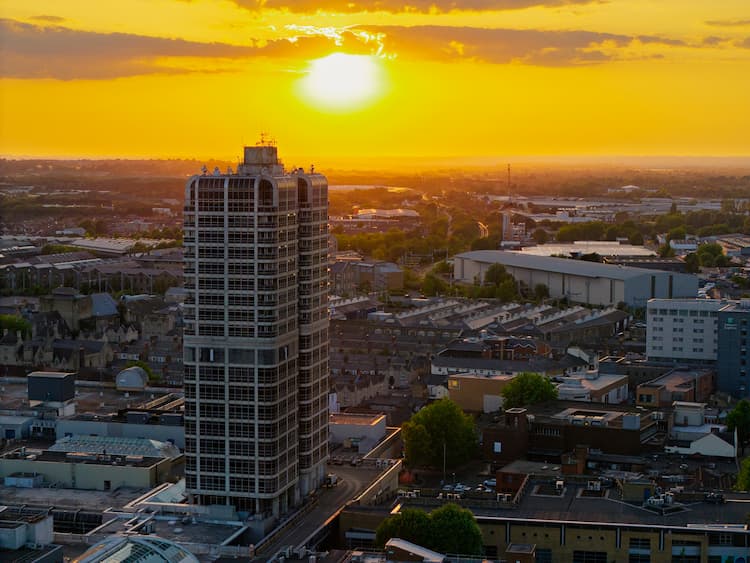
Despite the national and international audience for some of his work, Bisley says his priority is capturing Swindon’s landmarks and presenting the town from a different perspective.
“There’s a lot of talent and character here. Most people only ever see Swindon from street level or in headlines when something has gone wrong.
Aerial footage gives you a completely different sense of place. I want to show the town in a way people haven’t seen before.”
As the drone industry prepares for new regulations from January 2026, Bisley is paying close attention. He already holds an Operator ID, Flyer ID and an A2 Certificate of Competency. The upcoming rules will place many drones into the A1 category, allowing them to fly over people, and require Remote ID on newly marketed models.

Bisley supports clearer standards but has reservations.
“I like the direction of the new rules, but I’m a little concerned about larger drones being treated the same as smaller ones,” he says.
“There are irresponsible pilots out there and that could cause problems. I also don’t agree with Remote ID. It means the Civil Aviation Authority will have your data wherever you fly, and I have concerns about data protection.”
For now, his focus remains on building a visual archive of Swindon from above, ranging from heritage sites and industrial locations to green spaces and new developments.
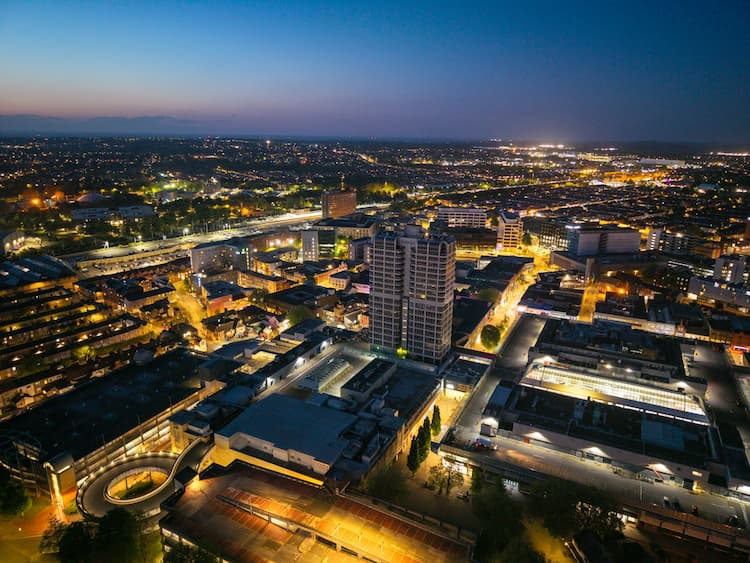
If his early work is any indication, Bisley’s shift from choreography to aerial film-making offers Swindon a rare combination: the eye of a performer, the discipline of a trained operator, and a commitment to capturing the town in a more thoughtful and encouraging light.