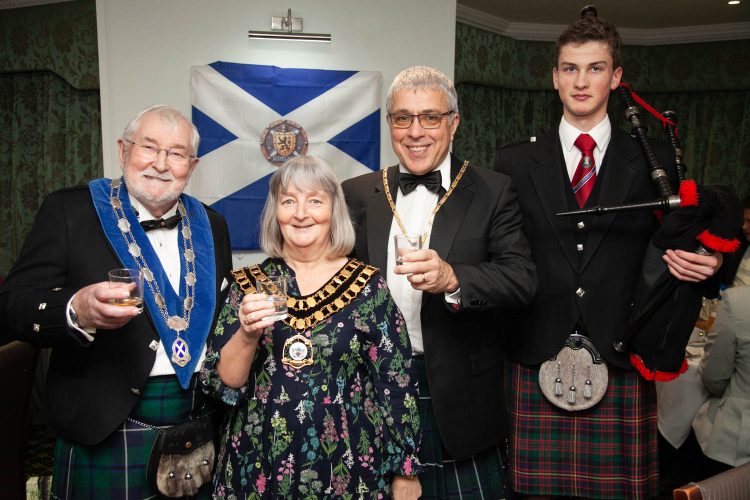

Burns Night is held each year to honour Scotland’s national poet, Robert Burns. In Swindon, the event has also become a reminder of how Scottish people and culture helped shape the town.
The Swindon Caledonian Society was founded in 1929 and has organised Burns Night almost every year since. Gordon Wilson, who has been involved with the society for decades, reflected on that history.
“It was founded, oh, a long time ago, 1929, yes, I’m not that old,” he said.
Wilson said Burns Night remains important because of the poet’s global reach. “Because he’s a bard who’s known all over the world and many, many, practically every country in the world,” he said.
“He seems to be able to talk to everybody, whether they’re high, low, speak the same language or not, he’s got a very general appeal, and we think it’s quite right that we should celebrate his birth.”
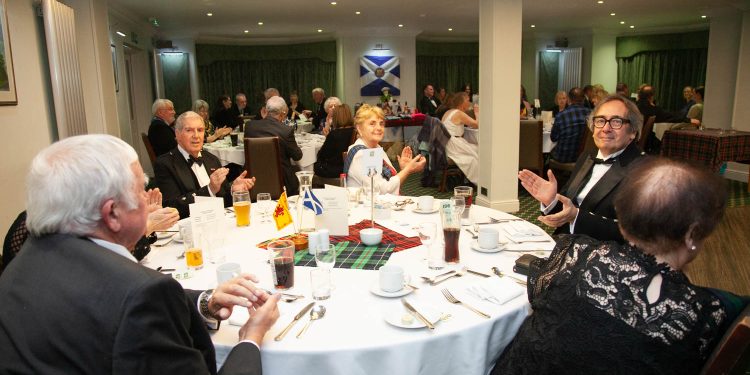
“It’s a gathering of people of Scots descent, or Scots association in the Swindon and district area. We get together, we do things together, and we invite lots of friends along, and we try and have a major celebration, both for Burns Night and for St Andrew’s Night.”
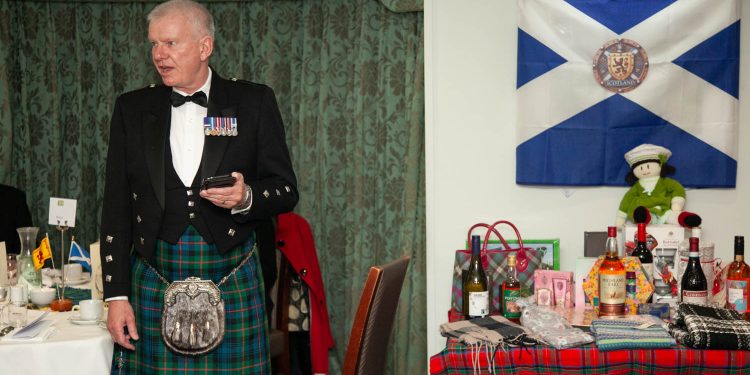
The evening followed the traditional Burns Supper format, including formal welcomes, the piping in of the haggis and readings from Burns’ work. Wilson explained that many of the words spoken during the ceremony were written by Burns himself.
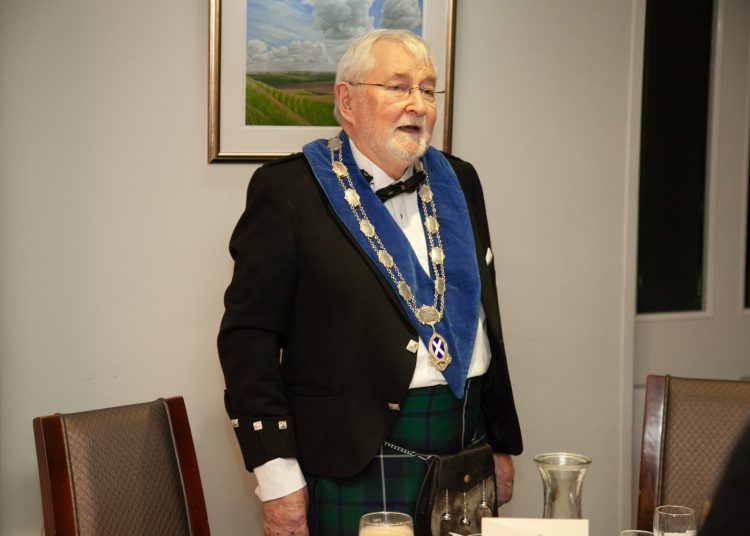
“The grace is always the grace written by Burns, and they address the haggis,” he said. “Before it’s all cut up and distributed, we have an address written by Burns himself, which addresses the haggis as if it were a living person.”
One of the central moments of the night was the Immortal Memory, a speech reflecting on Burns’ life and influence. “It tries to summarise where he was, where he came from, why his poems have had such widespread appeal right across the world,” Wilson said.
Beyond poetry and ceremony, the event highlighted why Swindon has a strong Scottish connection. Kate Stevenson, the society’s secretary, said migration linked to industrial change played a key role.
“One of the reasons for that was that a number of things happened in Scotland,” she said. She pointed to the decline of shipbuilding in Clydebank and the closure of coal mines across the central belt.
She said this coincided with expansion at Great Western Railways. “They needed steel fabricators, so they had them in buckets,” she said.
“They literally brought the whole families down.”
Stevenson said those movements still shape the town today. “That’s why there are so many Scots descendants still in Swindon.”
She added: “In Scotland at the moment, with 5.5 million, there is over 40 million Scottish descendants worldwide who have got Scottish DNA and can claim Scottish heritage.”
That sense of heritage was visible among guests at the event, including Swindon’s Mayor. She joked about discovering Scottish roots through a DNA test.
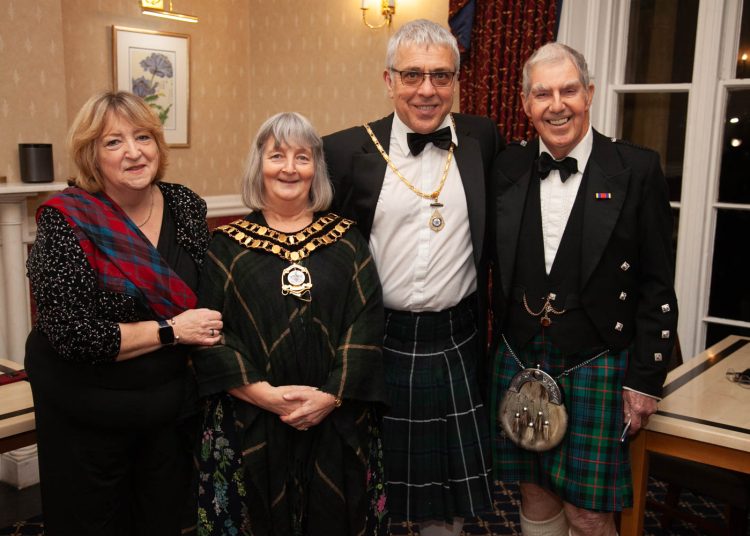
“I did a DNA test and I am 17% Scottish,” she said. Asked if that explained a taste for haggis, she laughed, “Well, I’ve yet to try haggis. Tonight is the night, so I’ll let you know.”
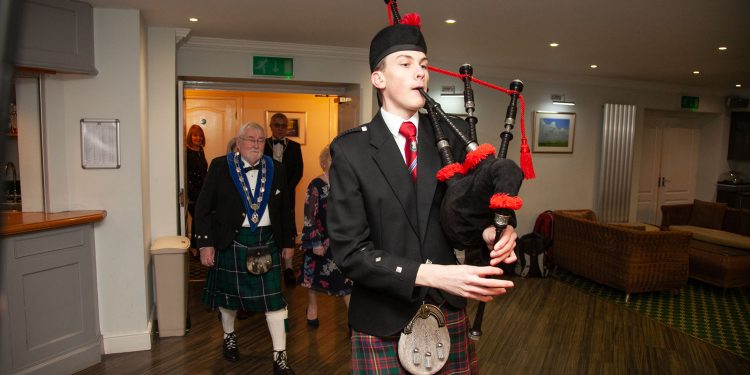
Music played a central role throughout the evening. Sixteen year old piper Ben Hopwood played as guests arrived and during the Address to the Haggis.
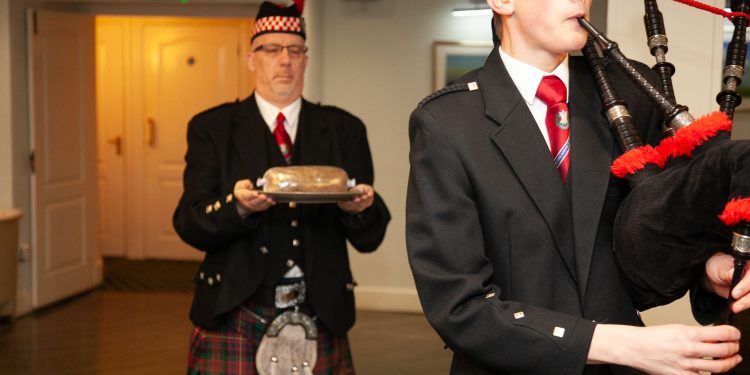
“He’s been playing since he was seven,” Stevenson said. “As you can hear, he’s an exceptionally good piper.”
Humour also formed part of the tradition, particularly during the Toast to the Lassies and the reply. The night ended with everyone standing together to sing Auld Lang Syne.
Stevenson said “He [Burns] was quite an extraordinary man… his poetry is as relevant today as it was when he wrote it.”
In Swindon, Burns Night continues to serve as both a celebration and a reminder. It reflects how Scottish workers, families and traditions helped build the town, and how that influence is still recognised today.