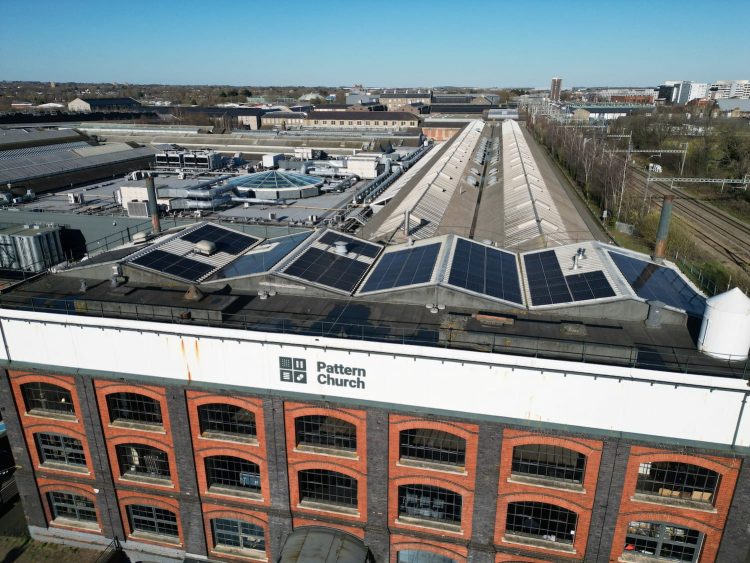

The system, fitted last autumn at Pattern Church on Penzance Drive, is now generating renewable energy for the site opposite the Swindon Designer Outlet.
The project is expected to cut carbon emissions and reduce long term energy costs for the church, which operates from the former Pattern Store building.
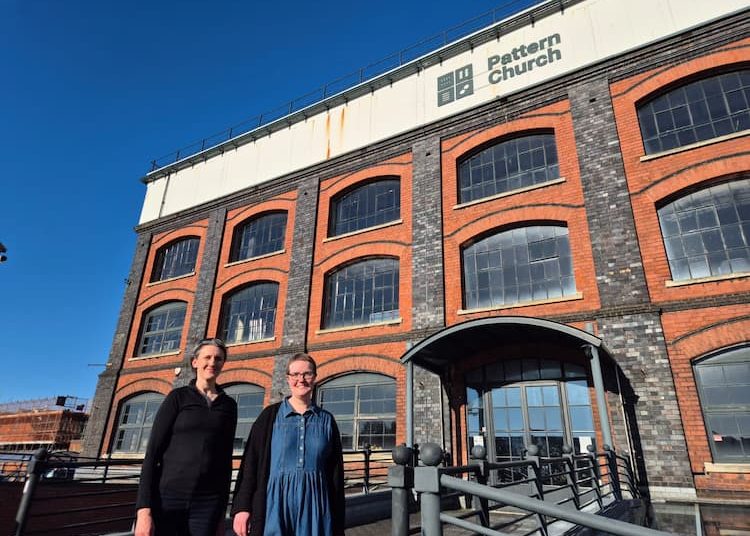
Councillor Emma Bushell, Deputy Leader of Swindon Borough Council and Ambassador for the Greener Swindon mission, visited the church this week alongside Rev Kaf Smith, Associate Minister at Pattern Church.
Cllr Bushell said: “Pattern Church is doing some impressive work, not just within the local community but also on sustainability.
“Adding rooftop solar panels proves that traditional buildings can be sensitively upgraded to meet modern sustainability standards without compromising their character or heritage.
“Also switching to renewable power gives the church energy independence at a time of increasing global energy security risks and price volatility.”
The council said the scheme demonstrates how older buildings can be adapted to meet modern environmental standards while supporting wider efforts to reduce emissions across the borough.
In December, the authority adopted a new decarbonisation framework setting out how Swindon aims to cut greenhouse gas emissions and improve quality of life through partnership working with organisations and businesses.
The building itself has significant historic importance. It was originally constructed as the Pattern Store within the Great Western Railway Works.
Pattern stores once housed thousands of wooden templates used to cast metal parts for locomotives and machinery. These were vital to maintaining precision during the height of Britain’s railway expansion.
Swindon Works was established in the eighteen forties by the Great Western Railway under the direction of Isambard Kingdom Brunel.
At its peak, the works employed thousands of people and played a defining role in shaping the town’s identity.
After the closure of the railway works in the nineteen eighties, much of the site was redeveloped, with large sections transformed into retail space. However, several historic structures, including the Pattern Store, were preserved and repurposed.
Today, the building serves as a place of worship and community activity, marking a stark contrast to its industrial origins.
The installation of solar panels represents the latest chapter in the building’s long history, combining heritage with modern sustainability measures as Swindon continues its transition towards a lower carbon future.