International investment falls, but Swindon bucks the trend
International investment into UK companies with overseas founders has fallen sharply in recent years, raising concerns about whether Britain is becoming less attractive to global entrepreneurs.
International investment into UK companies with overseas founders has fallen sharply since 2021, raising concerns about whether the country is becoming less attractive to global entrepreneurs.
New analysis by wealth management group Rathbones found that the value of equity investment into UK companies with non-UK resident founders has dropped by more than a third in that time.
The research shows the number of deals fell from 2,035 in 2021 to 1,086 last year, while the value raised declined from £10.3bn to £6.5bn.
However, a Swindon investment specialist says the shift reflects a wider set of global and policy changes rather than a sudden loss of the UK’s appeal.
Andrew Wells, Head of Inward Investment and Inclusive Economy at Swindon Borough Council and a former adviser with the Department for International Trade, said several factors have influenced where international investors choose to put their money in recent years.
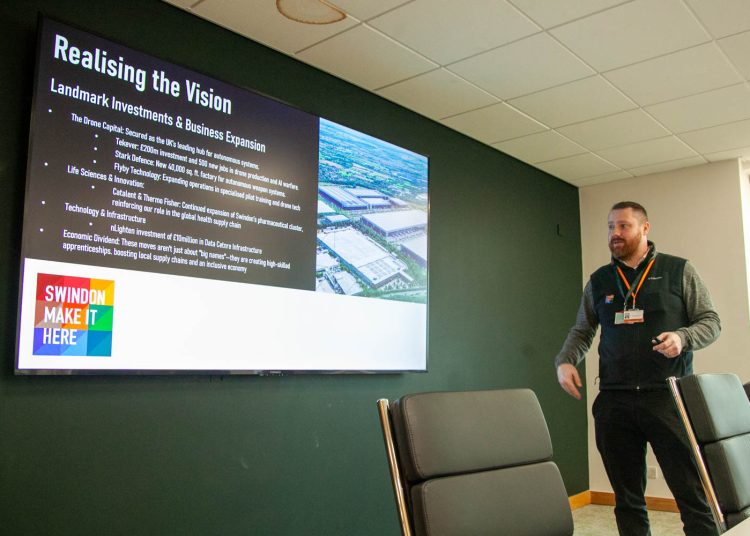
Andrew Wells delivering an update on Swindon’s economic development
Andrew said: “Investment decisions are rarely driven by a single factor. Global economic conditions, policy changes and sector competitiveness all play a role in where international entrepreneurs decide to locate their businesses.”
“Some investment has shifted towards European centres in recent years, and changes to tax policy and support programmes can also affect how attractive different countries appear to founders and investors,” he said.
Despite the slowdown, Andrew said the UK still holds advantages in several sectors.
“The UK continues to be strong in areas such as advanced technology, research-led industries and specialist manufacturing.
Companies also see the UK as a useful bridge into several major markets, particularly when they want access to the US, European and Asian markets from one base.”
He added that focusing on areas where the UK can be globally competitive may become increasingly important.
“There is growing recognition that the UK may need to concentrate more on sectors where it can be world-leading, rather than trying to compete across every industry.”
Despite the national trend, Swindon has continued to attract investment in advanced manufacturing and engineering.
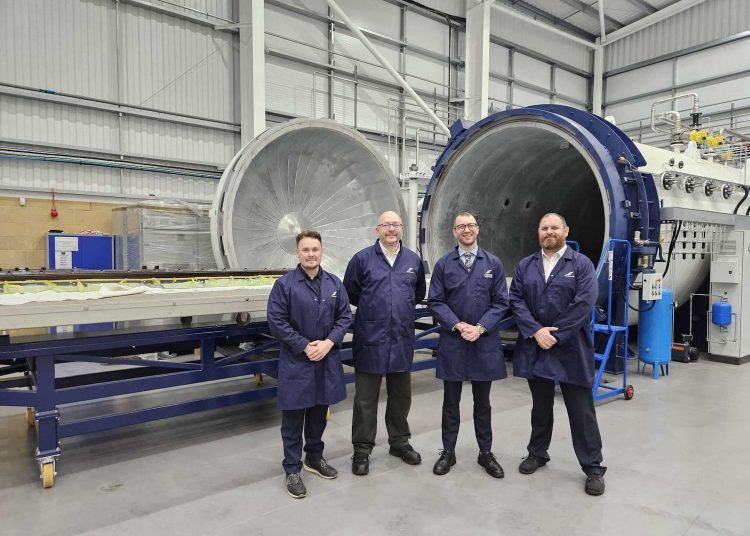
some of the iCOMAT team with Will Stone MP
Earlier this month, composite manufacturing company iCOMAT confirmed it is expanding into the town with a new production facility and joined a list of five other drone and advanced manufacturing companies that are shortly moving to the area.
Located along the M4 corridor between London and Bristol, Swindon has increasingly positioned itself as a hub for advanced engineering, logistics and technology businesses.
Andrew said towns like Swindon could still benefit from the UK focusing on specialist industries.
“For places like Swindon the opportunity is to build on sectors where we already have strong expertise, particularly advanced engineering, manufacturing and innovation,” he said.
“If we continue to develop those clusters and the skills that support them, towns like Swindon remain well placed to attract companies looking for talent, connectivity and a strong business environment.”
The Rathbones analysis also found that nearly 6,000 high-growth business owners left the UK between January 2024 and January 2026, highlighting increasing global competition for entrepreneurs and investment.
But with new companies continuing to expand into the town, Swindon’s growing reputation in specialist manufacturing and technology could help it remain competitive despite the shifting national picture.