
Cotswold Wildlife Park & Gardens is home to a new Bactrian Camel calf named Elsa. Her mother is called Maggie and was born at the Park in 1998. This is her seventh calf. Visitors can see the new arrival in the large paddock she shares with the rest of the herd.
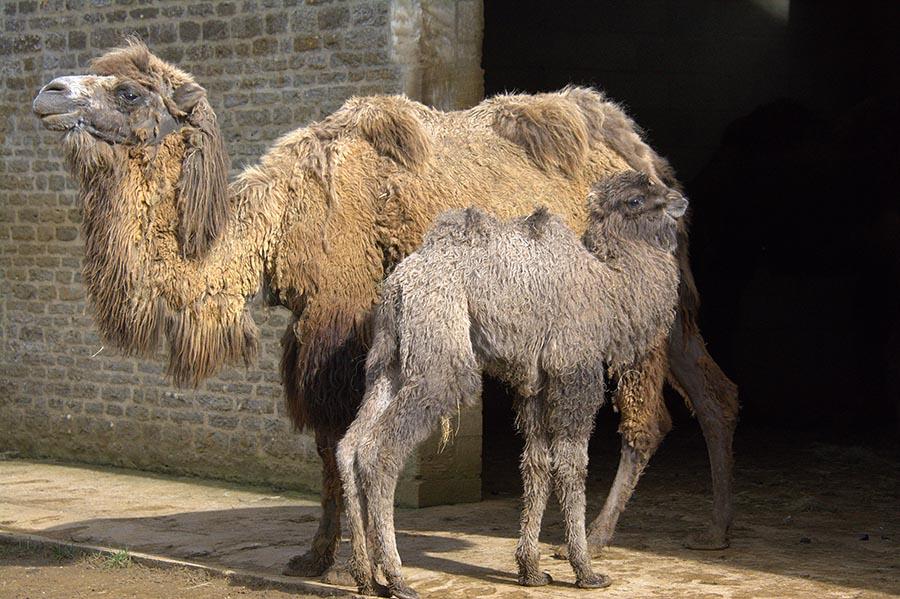
Jamie Craig, Curator of Cotswold Wildlife Park, said: “A baby Camel is always a welcome addition to the Park, both for the keepers and the visitors. Elsa is growing well and has finally managed to get to grips with the tricky issue of manoeuvring on such long and ungainly legs”.
The wild Bactrian Camel (Camelus ferus) is classified as critically endangered by the International Union for Conservation of Nature (IUCN) and is thought to be one of the rarest large mammals on earth. They were considered extinct in the wild until an expedition in 1957 sighted a small herd on the Mongolian slopes of the Altai Mountains. Today, it is believed that fewer than 1,000 wild Bactrian Camels exist. According to the IUCN, they are facing a population decline of at least 80% in the next three generations.
Wild Bactrian Camels are restricted to four small regions in China and Mongolia. The largest population lives in the Gashun Gobi Desert (Lop Nur) in the Xinjiang Uighur Autonomous Region of China (which was used for 45 years as a nuclear weapons test site). For centuries they were hunted for their meat and skin. They now face new threats including illegal mining (producing highly toxic waste), major habitat loss and hunting for food and sport.
Bactrian Camels are a prime example of environmental adaptation. They inhabit Central and East Asia’s rocky deserts where temperatures can reach over 100°F but can also drop to –20°F in winter. Their thick, shaggy fur can cope with the freezing temperatures and it moults as the seasons change, allowing them to survive in the unrelenting heat. They can close their nostrils and use their double row of long eyelashes to keep sand out of their eyes. The two large toes on each foot spread wide to help them walk across shifting sand.
Camels were one of 16 million animals that served in the First World War. Horse and Camel-mounted troops were used in desert campaigns and remained a crucial part of the war effort. The Imperial War Museum holds an impressive photographic archive of the roles these animals played – primarily for transport, communication and companionship. One such photograph shows them carrying wounded men to safety on the North West Frontier of India in 1917 (please visit https://www.iwm.org.uk/history/15-animals-that-went-to-war and https://www.iwm.org.uk/history/10-incredible-photos-of-the-imperial-camel-corps).
The iconic image of the Camel has been depicted in art throughout history. In 2017, archaeologists working in Russia’s Ural Mountains uncovered a Paleolithic painting of a two-humped Camel they believed could be up to 40,000 years old and may hold the secrets to early migratory patterns. The rock art was created when there were no Camels living in the southern Urals. The discovery suggests people living up to 50,000 years ago migrated vast distances, as far away as France and Spain. The cave is one of the most celebrated examples of Paleolithic art, filed with representations of stone-age fauna, such as Wooly Rhino, Bison, Horse and the Wooly Mammoth itself. In 2018, archaeologists exploring a site in northwest Saudi Arabia discovered about a dozen life-sized Camels carved into the stone*. The sculptures are believed to be “unprecedented” in terms of size and quality and are thought to be the first life-sized “camelids” carved in both low and high relief. Experts have dated the carvings at 2,000 years old.
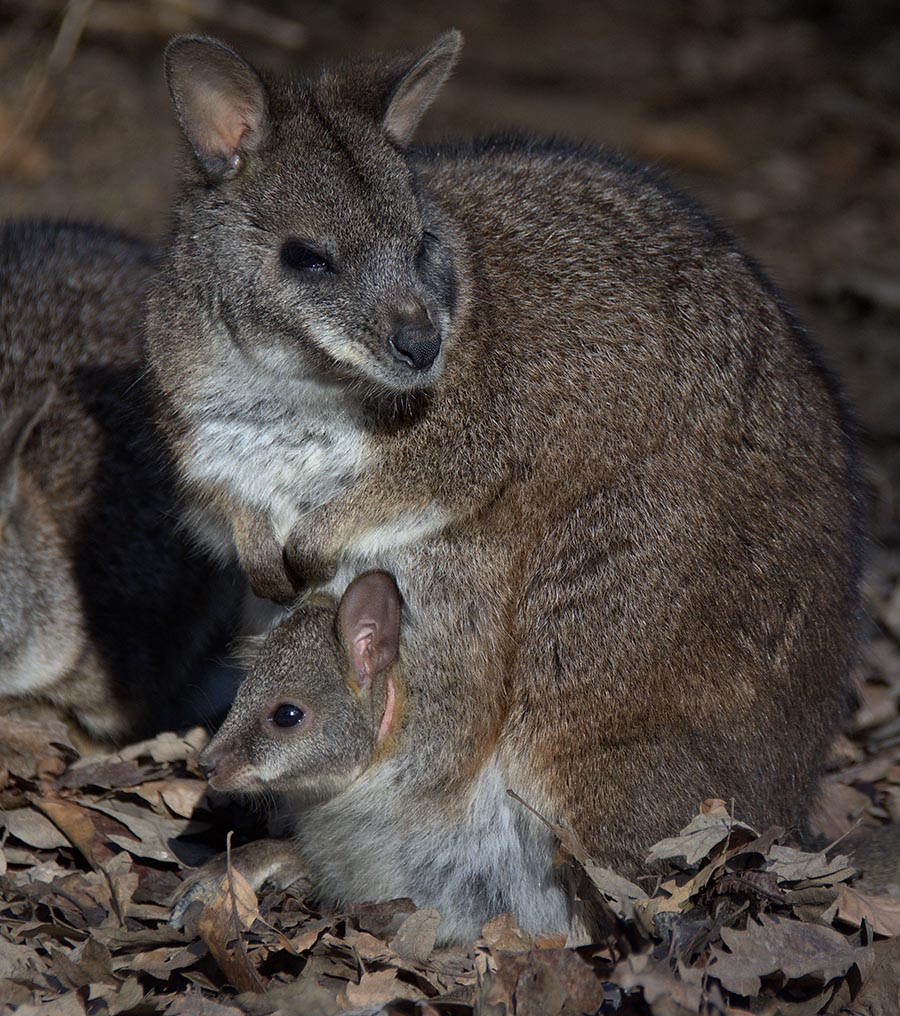
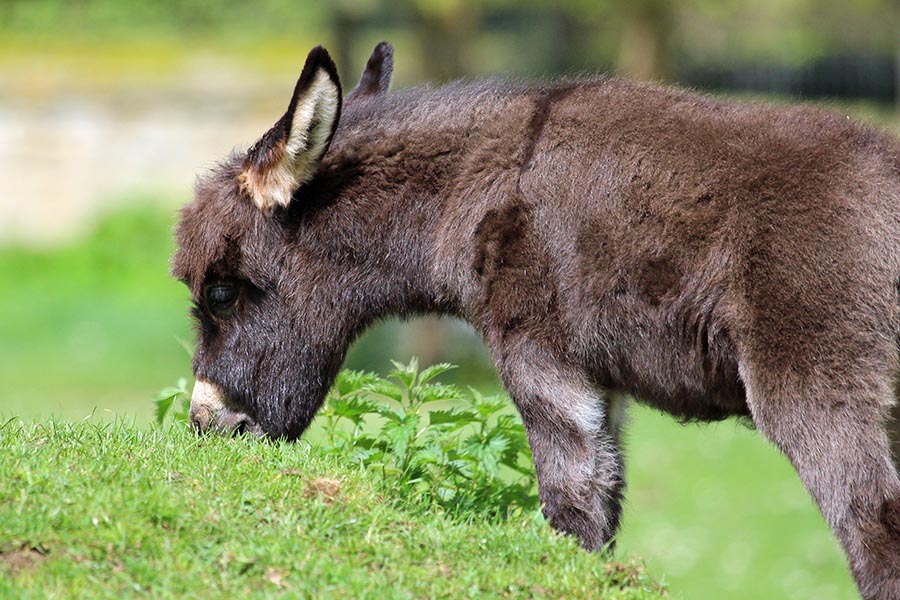
In addition to the new Camel calf, Miniature Donkey mare Skidaddle recently gave birth to a foal who has been named Penny by her keepers. Two Wallaby joeys have recently left the comfort of their mothers’ pouches and can be seen bounding around their enclosure near the lake area.
Additional information:
- Bactrian Camels have two humps rather than the single hump of their Arabian relatives. The humps function the same way—storing fat which can be converted to water and energy when sustenance is not available. These humps give Camels their legendary ability to endure long periods of travel without water, even in harsh desert conditions.
- Camels have one of the longest gestation periods for a land mammal. The Elephant boasts the longest of nearly two years, but Camels aren’t too far behind with a gestation period of approximately 360 to 440 days – similar to that of a Tapir.
- Camels are induced ovulators (they only ovulate when stimulated by mating). Females are capable of reproducing once every two years.
- Camel nostrils are extremely sensitive and can detect odours over long distances (up to 3 kilometres away).
- Ancient Greek philosopher Aristotle, who lived from 384 to 322 BC, was a keen observer of natural history. In his three texts that comprise De animalibus, he wrote: “Camels have an exceptional organ wherein they differ from all other animals, and that is the so-called ‘hump’ on their back”.
- In a recently published article in Forbes magazine**, new archaeological evidence suggests Bactrian Camels were common across the Roman Empire, including Britain, well into the early medieval period.
Cotswold Wildlife Park & Gardens proudly supports the Wild Camel Protection Foundation (http://www.wildcamels.com). Their sole aim is to protect the critically endangered wild Camel (Camelus ferus) and its habitat in the fragile and unique desert ecosystems in the Gobi desert in north-west China and south-west Mongolia. It is the only charitable environmental foundation in the world which has this exclusive objective.