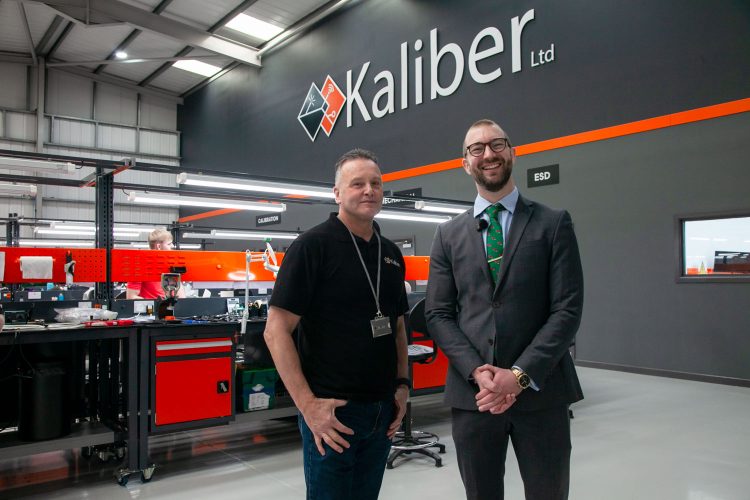

During a tour of Kaliber’s production facility in Rushy Platt, Managing Director Lawrence Ponting said companies building technology for the UK’s defence supply chain need consistent support if Britain is to maintain its industrial capability.
“We need to back British manufacturing,” Lawrence said during the visit. “Companies like ours are investing in people, technology and capability here in the UK, but policy decisions can have a big impact on whether that investment continues.”
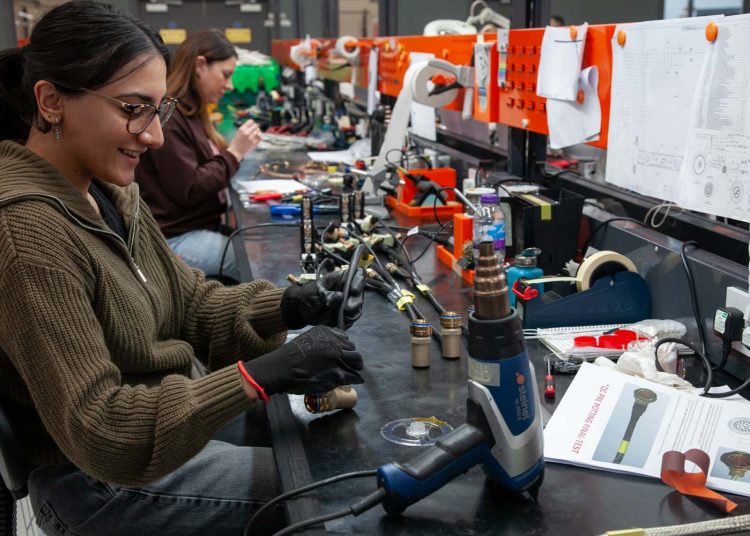
Kaliber has operated in Swindon for more than three decades and now employs around 100 staff, including about 60 operators on its production floor, including seven Ukrainians, and a team of nine engineers responsible for design and development work.
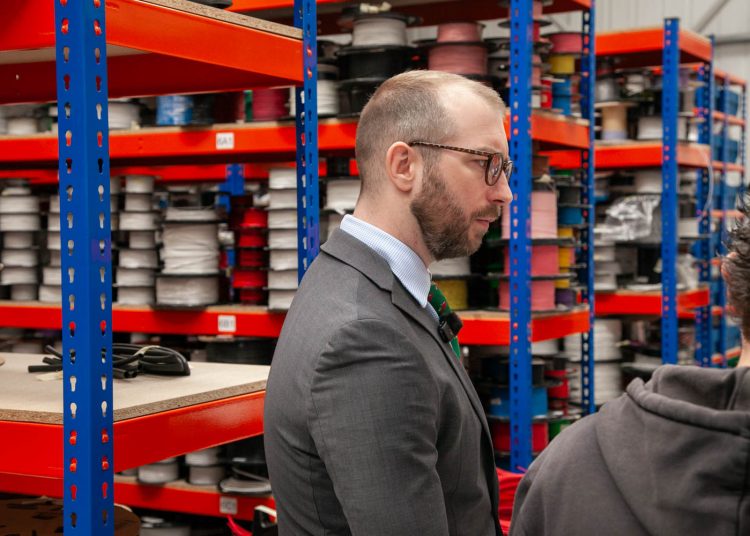
Lawrence explained that the company combines research, development and manufacturing under one roof, designing and producing electrical and electromechanical systems used across defence and aerospace platforms.
“We’ve always been based in Swindon,” Lawrence said. “This is our third move and we’re now in about 25,000 square feet. We employ roughly 100 people and we’re still growing.”
View this post on Instagram
A key part of the discussion during the visit centred on the importance of research and development investment for advanced engineering firms.
Lawrence said government R&D incentives allow companies like Kaliber to reinvest in new technology, equipment and staff training.
“That money goes straight back into the business,” Lawrence said. “We invest it in new technology, in training and in our people.”
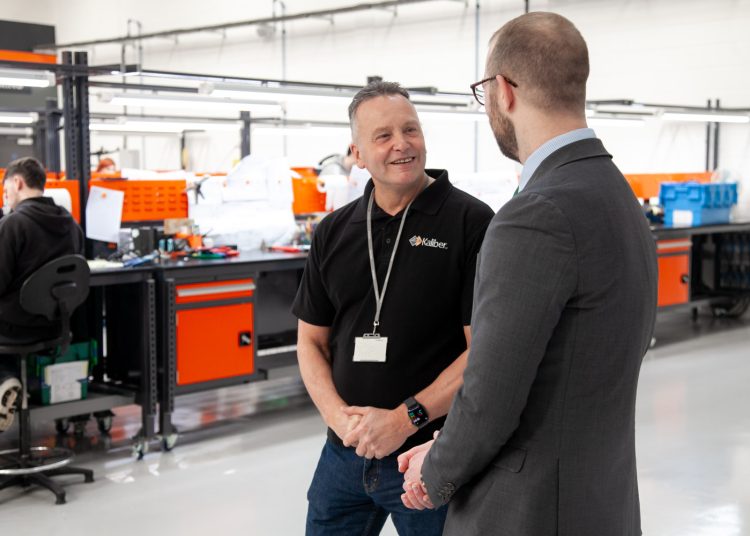
However, he warned that rising employment costs are creating additional pressures for manufacturers.
“The recent National Insurance rise alone costs this company £105,000 a year,” Lawrence said. “For a company our size that’s a big number, and we need to make sure the environment still encourages companies to invest and grow.”
Will said increased defence investment could create opportunities for British manufacturers supplying the sector.
“The more money going into defence from this government is going to ultimately help companies like this grow,” he said.
The visit also touched on how defence spending across Europe is expected to increase in the coming years as countries replenish equipment and invest in new technologies.
Will said the UK faces a dual challenge as the sector evolves.
“We’ve got to find the right balance between producing new technology while also replenishing the equipment that’s been used,” he said.
Both agreed that maintaining strong domestic manufacturing capability will be critical as defence investment grows.
“If the UK wants to remain competitive and secure its own supply chains, then backing British manufacturing has to be part of that strategy,” Lawrence said.