
Keepers at Cotswold Wildlife Park created more frozen treats than at any time in the attraction’s 56-year history as temperatures in Oxfordshire rose above 33C.
Animals across the Burford site were given specially prepared ice lollies and frozen blocks to help them cope with the exceptional conditions.
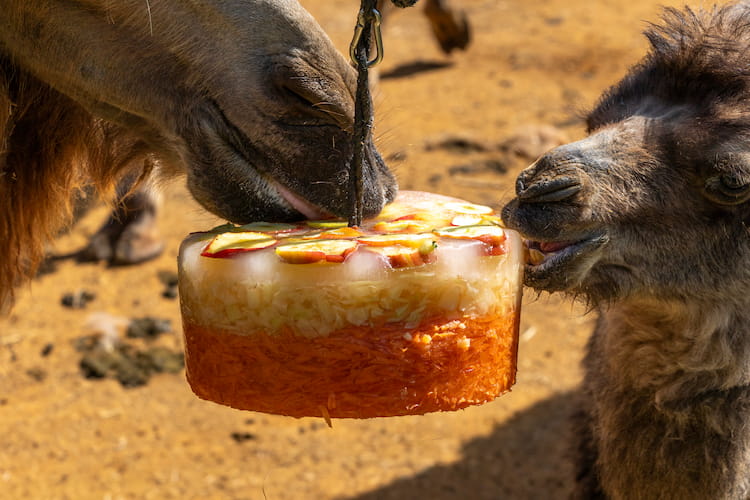
Four-week-old Bactrian camel calf Klaus was among those trying the cooling treats for the first time. The youngster quickly became a favourite with visitors as he explored and tucked into his ice lolly.
Chris Kibbey, Assistant Animal Manager at Cotswold Wildlife Park & Gardens, said: “With the hottest temperatures ever recorded for May, keepers have been working extra hard to ensure the animals they care for stay cool.
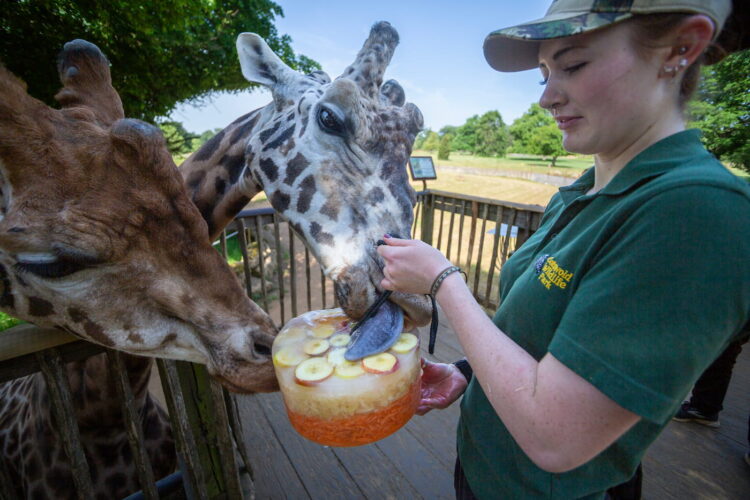
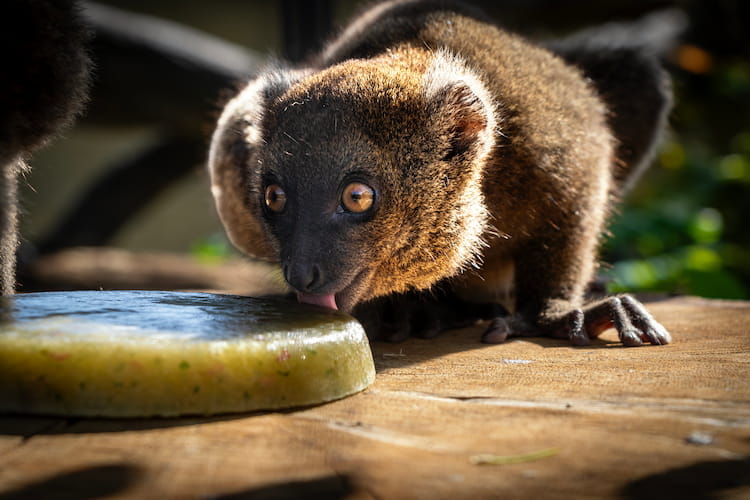
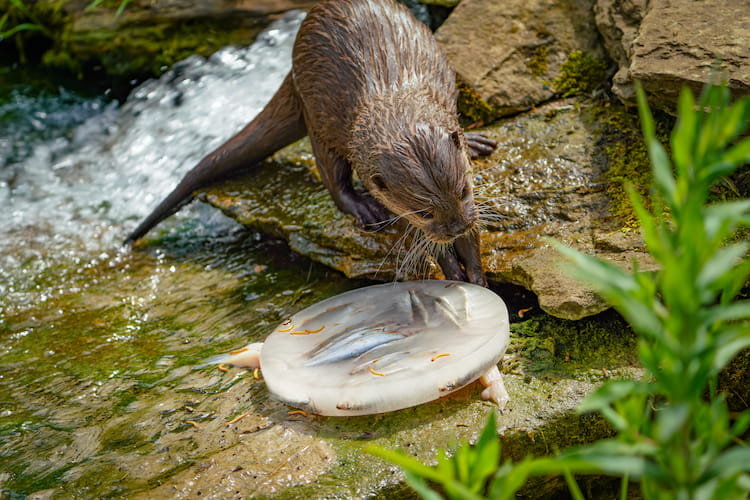
“As well as ensuring they have access to fresh drinking water, shade and cool indoor areas, keepers have been using their culinary skills to create unique flavoured ice lollies for some of the animals using all natural ingredients, many taken from their normal diet.”
The park’s critically endangered Bactrian camels were given a frozen mix of carrot, cabbage, watermelon and apple.
The large ice block took more than two days to prepare and was eaten by the herd in under two hours.
Giraffes, including the park’s oldest resident Century, were provided with frozen blocks filled with carrot, cabbage and apple.
Mabel the pygmy marmoset sampled an experimental frozen treat made from Arabic gum, a natural tree sap the species would usually eat in the wild.
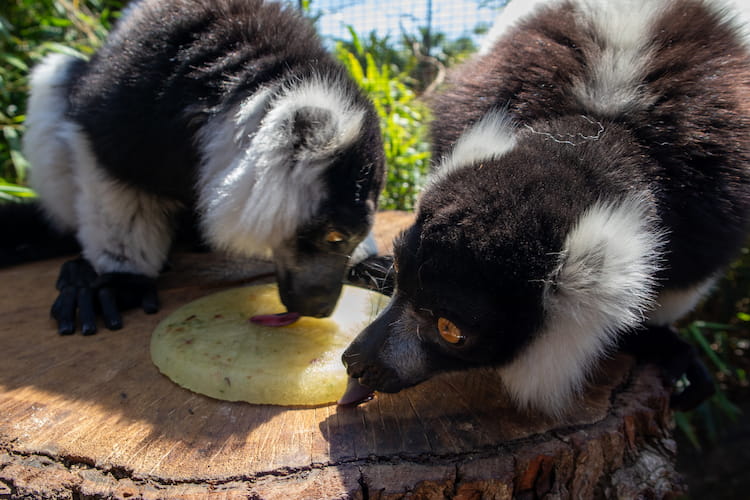
Several endangered lemur species were also given fruit lollies, including greater bamboo lemurs and black-and-white ruffed lemurs.
Cooling treats were distributed to dozens of other species, including clouded leopards, penguins, otters, tapirs, red pandas, wolverines, meerkats and siamangs.
Mammal Keeper Charlotte said Klaus attracted particular attention from visitors.
“It was really sweet to see Klaus enjoying his first ice lolly. He was one of the first over to investigate it and seemed to really enjoy nibbling on the cooling treat.
“Their ice lolly took about two days to make as I had to freeze it in different stages. It proved to be a great success and hugely rewarding to watch, and the visitors seemed just as delighted watching Klaus tuck in as he was enjoying it himself.”
Klaus is the first large mammal born at the park this year.
His birth is significant as only three other zoological collections in the UK have successfully bred Bactrian camels in the past 12 months.
The record-breaking effort came as much of southern England experienced unusually high temperatures for May, prompting animal care teams nationwide to take additional steps to protect wildlife.
The attraction, located just over an hour from Swindon, is home to more than 260 species and is one of the largest zoological collections in the South West.