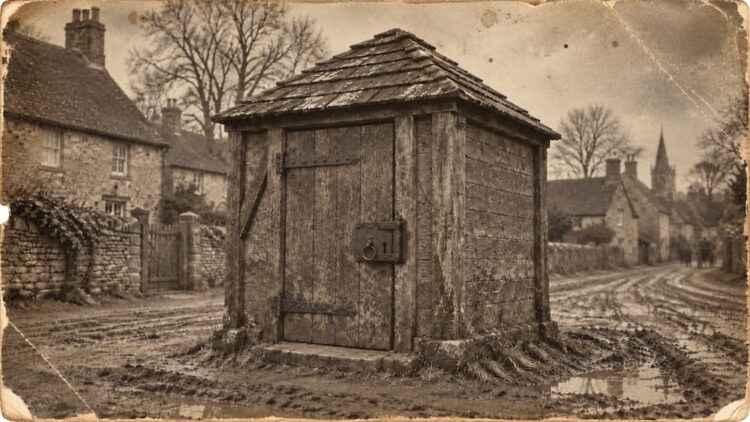

Long before modern police stations and custody suites, the building at the top of Newport Street was used to temporarily detain people including drunks, vagrants and those disturbing the peace.
The story has been highlighted for Day 23 of the Swindon-Wide History Festival, which is exploring the town’s past throughout September. Local historian Graham Carter provided information about the Black Hole following a talk earlier this summer on the history of Old Town.
A history of Wiltshire Constabulary describes the lock-up as a “dark and dingy” building measuring just eight feet square. It was a type of temporary prison known as a Blind House, examples of which could once be found in communities across the country.
Historic England describes such buildings as small temporary prisons used for “drunkards, vagrants and people disturbing the peace”.
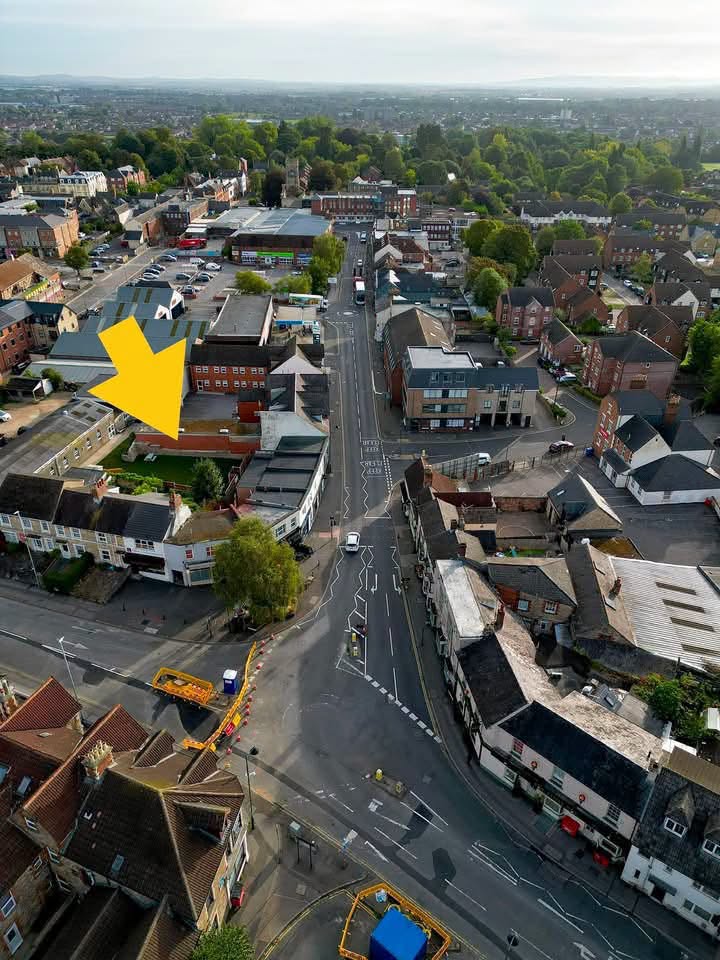
Their lack of natural light led to the name ‘Blind House’ being used in Wiltshire. People accused of relatively minor wrongdoing could be detained until they had sobered up, while more serious cases could be held before appearing before a magistrate or being transferred elsewhere.
Swindon’s Black Hole is believed to have stood close to what is now the junction of Newport Street and Devizes Road. One of the more dramatic stories surrounding the lock-up dates from the period when Swindon was beginning its transformation into a railway town.
Thousands of railway labourers, commonly known as navvies, arrived as the Great Western Railway developed its works in Swindon. According to the history of Wiltshire Constabulary, one navvy was detained inside the Newport Street lock-up, but his friends reportedly decided to free him.
They are said to have dug underneath the door, rescued the prisoner and then burned the Black Hole to the ground.
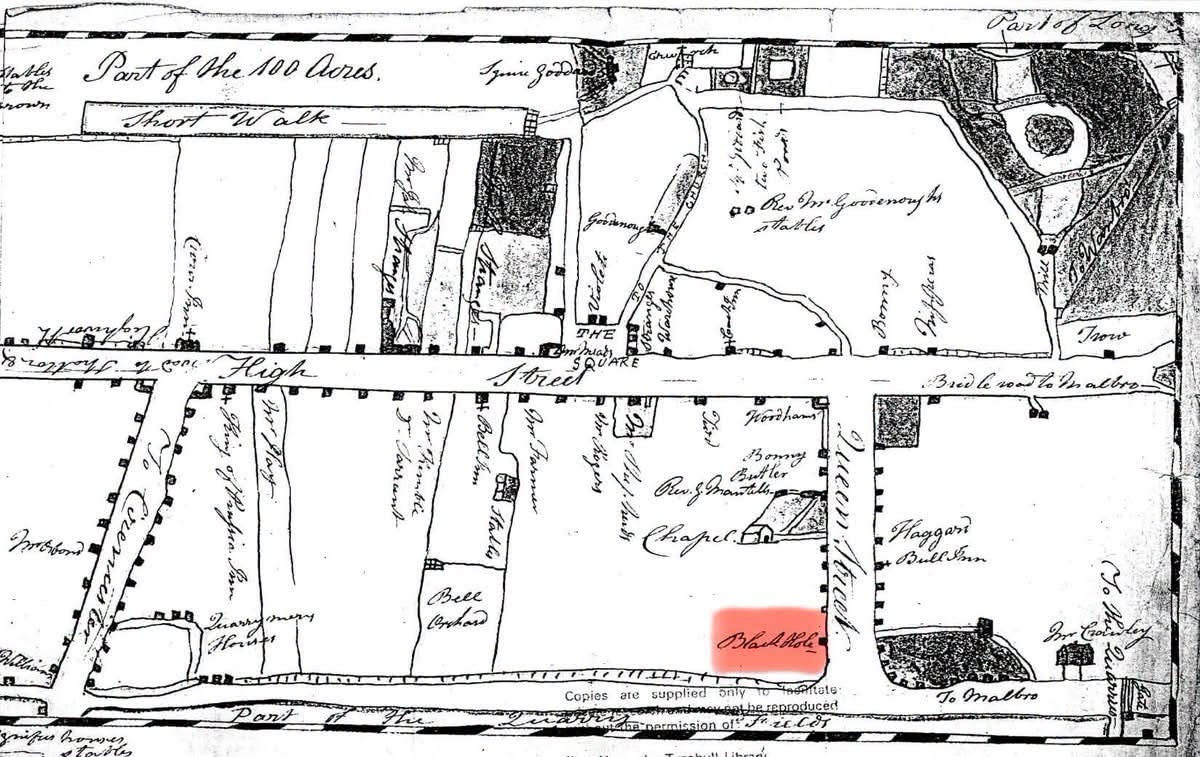
Information shared for the history festival says the map includes a reference to the Black Hole. It also labels what is now Newport Street as ‘Queen St’, although the reason for that name remains unclear.
Blind Houses and village lock-ups largely fell out of use during the mid-19th century as organised police forces developed and purpose-built police stations with cells became more common, according to Historic England.
Its story is among those being explored during the first Swindon-Wide History Festival, which features talks, tours, exhibitions, activities and stories throughout September.
Organisers are also sharing a piece of local history each day through the Swindon-Wide History Festival Facebook group. The Black Hole may have disappeared from Old Town, but its history offers a glimpse into how Swindon dealt with drunkenness and disorder more than two centuries ago.