
Nationally, Nigel Farage has triggered one of the most extraordinary by-elections in recent memory after resigning as MP for Clacton and immediately seeking re-election, arguing that voters, rather than Westminster, should decide his future.
Locally, Reform’s councillors are settling into life at the Civic Offices, where they can hold the balance of power on a council with no overall control.
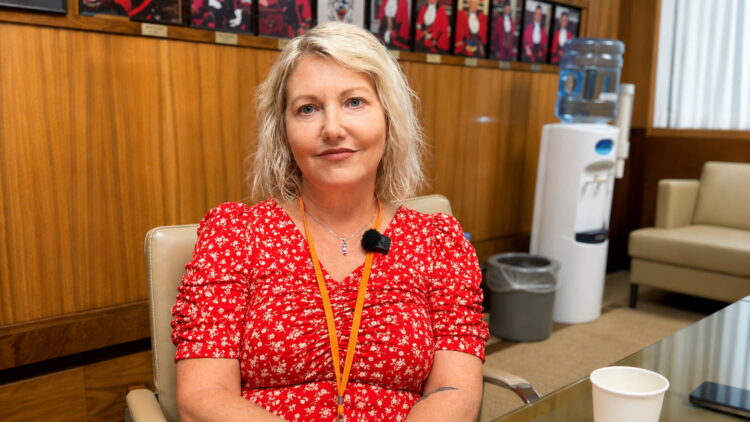
We sat down with Sarah Godwin, Reform UK’s leader in Swindon, to discuss Farage’s dramatic decision, allegations of abuse directed at local councillors, and whether the party’s ambitions now stretch as far as Westminster.
For Godwin, there was never much doubt that Farage had made the right call.
“I think it was a strong, bold move from Nigel,” she says. “He’s a strong leader, I expect nothing less from him.”
She argues that after years of public criticism, the decision became about something more personal.
“When your family starts being dragged into it, and your daughter is being targeted, I think he had to do something.”
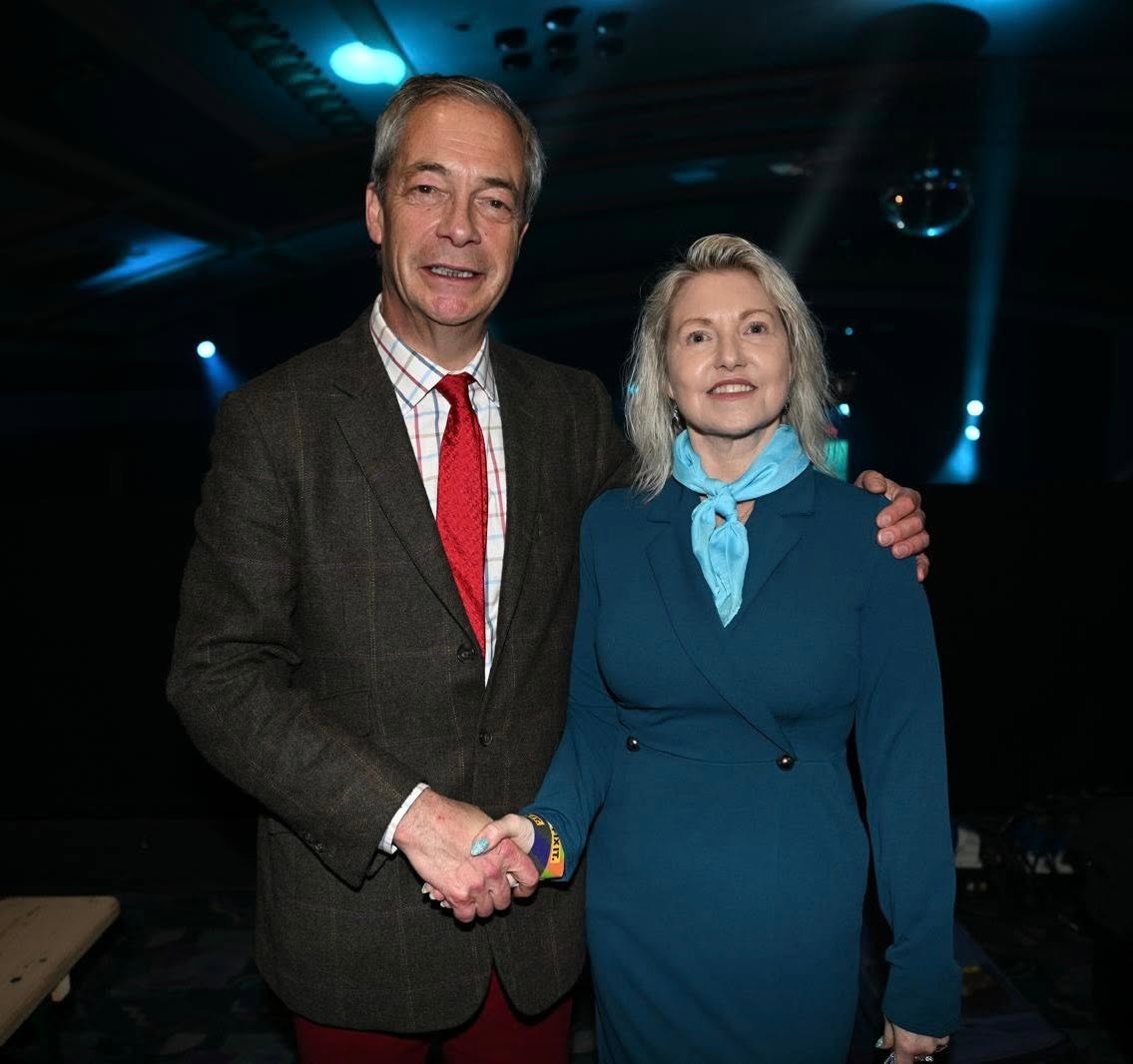
Farage’s critics have described the resignation as a political stunt, questioning why taxpayers should fund a by-election he chose to create. Godwin rejects that criticism.
“I don’t think they’re brave enough to stand against him at the moment,” she says. “If they genuinely believed they could beat him, I think they’d put a candidate up.”
She also insists Farage had no obligation to declare the reported £5 million gift that is currently the subject of a Parliamentary Standards investigation.
“If it’s a gift, and it was before he was elected as an MP, then no, he didn’t need to declare it.”
The investigation remains ongoing, and Farage denies any wrongdoing.
One of the most unusual developments since Farage’s announcement has been the decision by Labour, the Conservatives, the Liberal Democrats, the Green Party and Rupert Lowe’s Restore Britain not to contest the by-election. For Sara, that is telling.
“I think they’re saying it’s already won,” she says. “If they thought they had any chance of getting Nigel out, they’d stand.”

She even wonders whether the parties may have influenced one another’s decisions, although she offers no evidence that any agreement exists.
“My suspicious mind thinks there might have been something there, or maybe a couple of them got together and the rest just followed suit.”
Away from Westminster, however, Godwin’s attention is increasingly fixed on Swindon.
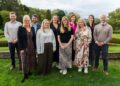
Reform’s 14 councillors do not control the council, but they now occupy an influential position on an authority where no party has an outright majority. That means they are likely to play an important role in shaping decisions over the next four years.
Despite Reform’s reputation nationally as an insurgent party, Godwin says life inside the council has been more collaborative than she expected.
“What surprised me most is actually how welcoming it’s been.”
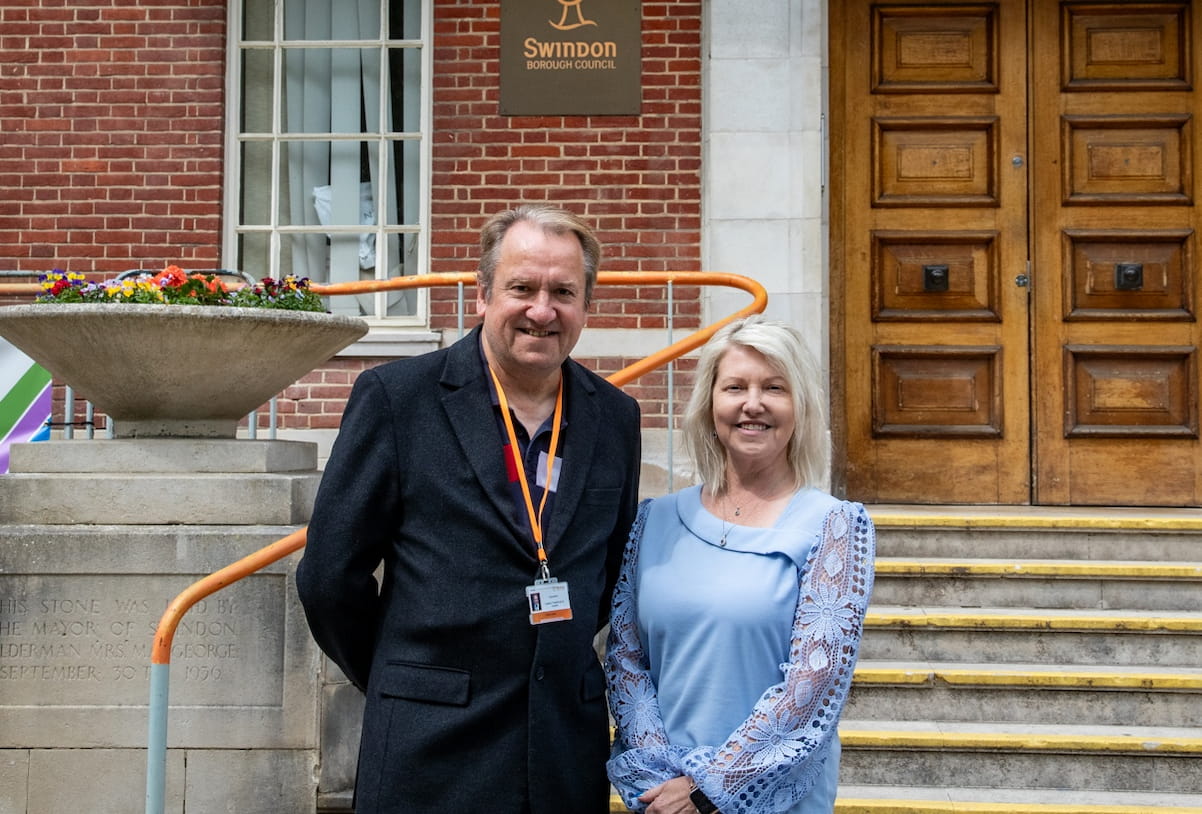
She is particularly complimentary about council officers, who she says have helped the new Reform group settle into local government.
“We’re here for the primary reason of helping the people and doing our ward work,” she says. “We’re getting our structure in place, getting our proposals ready and making sure we’re doing the best we can for residents.”
That measured approach appears to be deliberate. Rather than arriving with a barrage of headline-grabbing motions, Godwin says the group has focused on understanding how the council operates before bringing forward more ambitious proposals.
She expects residents to begin seeing more distinctive Reform policies later this year.
“We’re working on a couple of motions that are really for the residents of Swindon,” she says. “Then, by October, I think you’ll start to see some stronger Reform policy motions coming through.”
One issue she is keen to highlight is the abuse directed at politicians. Godwin says she personally witnessed serious verbal abuse during the local election campaign and claims an elected Reform councillor was recently subjected to both verbal and physical assault in Swindon.
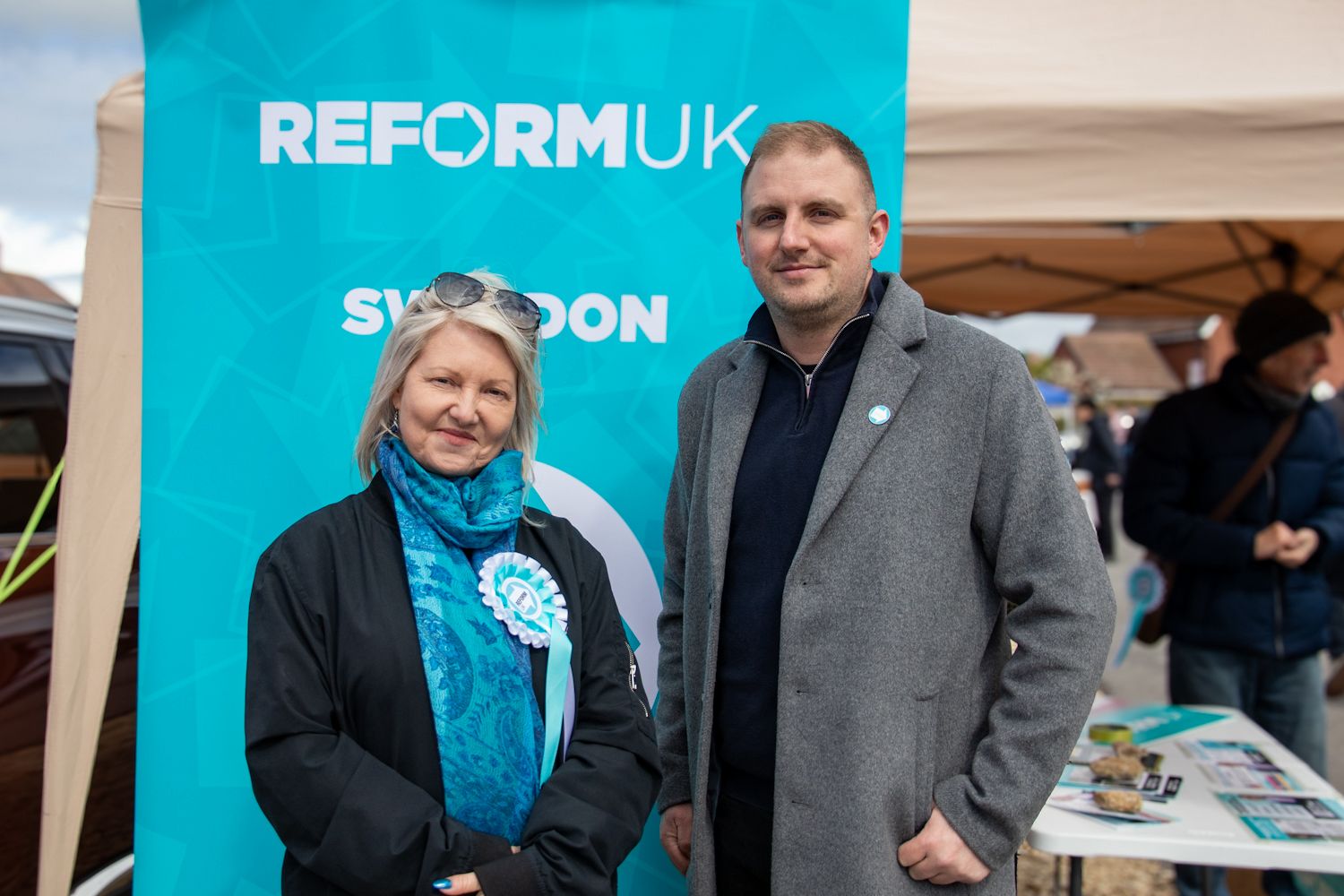
The matter has been reported to police and, she says, the party intends to ensure it is fully investigated.
“If this isn’t taken seriously, we will be taking it further.”
The interview also hints at Reform’s longer-term ambitions.
Asked whether Swindon could become a target constituency at the next General Election, Godwin answers without hesitation.
“Yes, I do.”
And when asked whether she herself would stand as Reform’s parliamentary candidate, she smiles before replying:
“I wouldn’t rule it out… potentially a yes.”
It is perhaps the clearest indication yet that Reform’s ambitions in Swindon extend well beyond the Civic Offices. For now, though, Godwin insists the focus remains on proving that Reform’s councillors can make a difference locally.
There is also a hint that she wants to challenge some of the assumptions people make about her party. Pointing to Reform volunteers taking part in a nationwide community litter pick, she rejects suggestions that Reform is uninterested in environmental issues.
“We’re not against looking after nature,” she says. “We’re about sensible decisions. Looking after our wards is part of what we’re here to do.”
Whether Reform can translate its local election breakthrough into further success will be evaluated over time. What is clear after half an hour with Sara Godwin is that the party sees its 14 councillors not as the end of its journey in Swindon, but as the beginning of it.