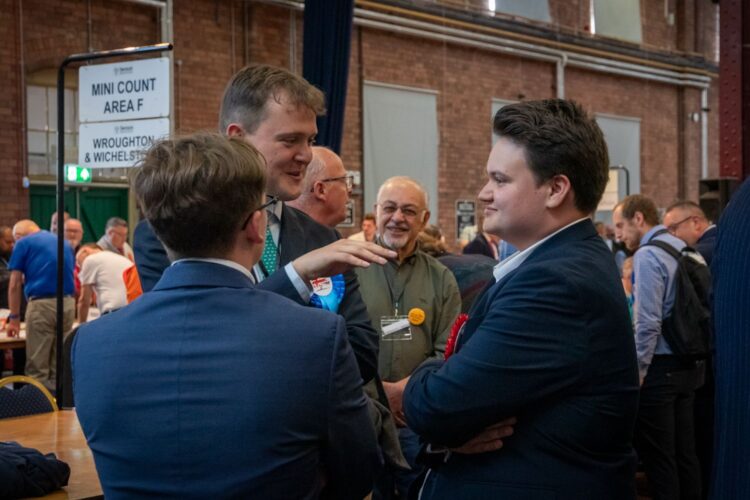

The numbers are not what was predicted. The Conservatives emerged as the largest party with 23 seats. Labour dropped to 19. Reform UK surged from nowhere to 14 seats in one of the biggest political shocks the town has seen in decades.
A working majority requires 29 seats and now comes the real question, who governs Swindon? And perhaps more importantly, who is willing to work with who?
Nationally, Britain’s political map is fracturing fast, with councils across England now falling into “No Overall Control” territory as the traditional two-party system weakens. But Swindon’s arithmetic creates some deeply awkward possibilities.
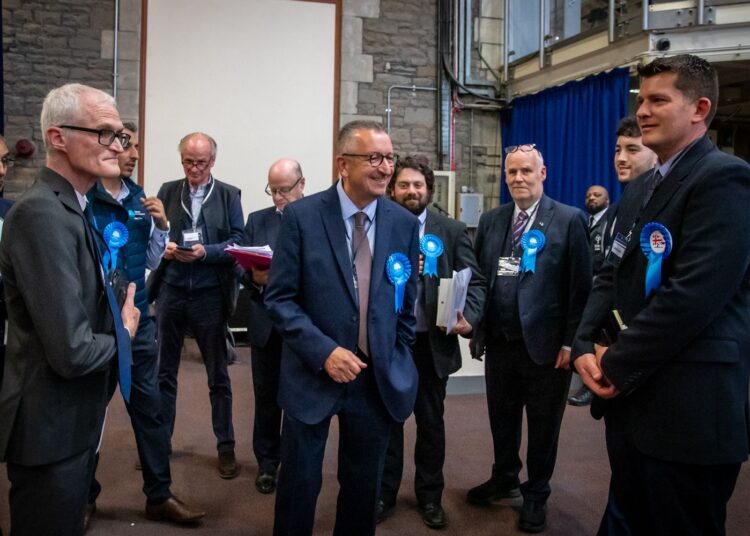
Labour and Reform UK, mathematically possible, politically explosive
On paper, Labour and Reform would comfortably clear the line. 19 Labour seats plus 14 Reform seats equals a 32-seat majority. In reality, it feels close to impossible.
Labour locally spent much of the campaign attacking Reform candidates and questioning why several remained largely absent from public campaigning and debates. Reform, meanwhile, built much of its momentum by targeting disillusioned Labour voters directly.
Nationally, Labour has repeatedly positioned Reform UK as a political threat rather than a potential partner. There is no major example of a formal Labour-Reform coalition arrangement in UK local government to date that mirrors what Swindon would require.
Jim Robbins would also face an enormous political and reputational challenge trying to convince Labour members and voters that such a partnership was acceptable.
A more realistic version of this arrangement would not be a formal coalition at all, but Labour attempting to run a minority administration while negotiating support from Reform on selected votes or policies.
Reform could demand concessions around council spending priorities or scrutiny of council waste in return for backing key votes.
But there is another major problem.
Reform now has 14 councillors, but very little governing experience locally. Across the country, analysts are already warning that Reform’s rapid expansion may create challenges around administration, cabinet management and local government expertise.
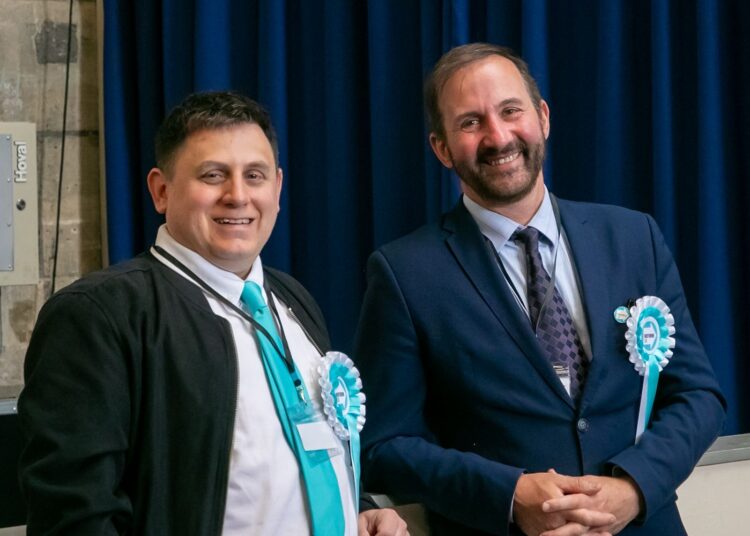
Conservatives and Reform UK, natural allies or political enemies?
Numerically, this is the strongest option. 23 Conservative seats plus 14 Reform seats creates a commanding 37-seat majority. Ideologically, there is obvious overlap.
Both parties lean right on taxation, business support and scepticism about parts of Labour’s agenda. Reform’s rise has also come from former Conservative voters.
But politically, relations are toxic.
Gary Sumner publicly stated during the election count there was “absolutely no way” Swindon Conservatives would work with Reform.
Nationally, Reform leader Nigel Farage has repeatedly said his party intends to replace the Conservatives entirely, not cooperate with them.
The Conservatives also face a strategic dilemma. Work with Reform and they risk legitimising the very party trying to destroy them electorally. Refuse to work with Reform and they may lose control of the council despite being the largest party.
Still, compared to Labour and Reform, policy alignment would arguably be easier.
The question is whether personalities and political survival matter more than policy overlap.
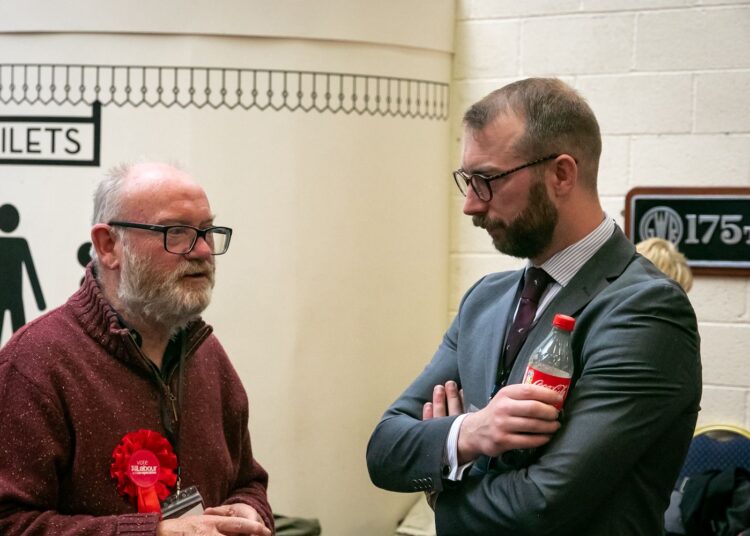
Labour and Conservatives, the once unthinkable option
This is the combination quietly being discussed most seriously in political circles.
Labour’s 19 seats plus the Conservatives’ 23 creates a huge 42-seat majority, more than enough to stabilise the council. Historically, it would be extraordinary.
The two parties have spent generations fighting each other in Swindon politics. Entire local campaigns have been built around stopping the other side, but Reform’s surge may have changed the calculation entirely.
Both Labour and the Conservatives now share one major strategic objective, preventing Reform from shaping or controlling the council, and unlike some voters might assume, there are areas where the two parties already have overlapping priorities.
Potential common ground could include:
* stabilising council finances
* highways investment
* tackling the children’s services crisis
* continuing Swindon’s growing defence and technology cluster
* economic growth
* building more council housing
* maintaining functional governance
This would not be a grand ideological coalition. It would likely be framed as a stability arrangement, but there would still be major fault lines.
The Oasis redevelopment could become one of the biggest flashpoints, particularly around how hard the council should push developers SevenCapital to come up with a solution. Support for small businesses is another dividing line, especially around parking charges and town centre business support.
Large development battles, including projects like Abbey Farm, could also expose sharp differences between Labour’s planning instincts around more housing and Conservative concerns around overdevelopment.
And then there is the broader political risk. Would voters see collaboration as mature leadership in a fragmented political era, or as establishment parties closing ranks to keep Reform out?
The minority administration option
There is another possibility, which is no formal coalition at all. Under no overall control councils, minority administrations are common across Britain.
That would likely mean the Conservatives, as the largest party, attempting to govern without a formal majority and negotiating support vote-by-vote, it can work, but it can also become unstable very quickly.
Budgets become political minefields, and every major vote becomes a negotiation. Swindon could end up entering an era of constant political bargaining unseen in modern local politics here.
The bigger picture, the end of two-party Swindon?
The deeper story may be bigger than any coalition. For decades, Swindon politics broadly operated as a Labour versus Conservative contest and that era may now be over.
Reform’s breakthrough mirrors what is happening nationally, where councils across England are splintering into fragmented multi-party systems and traditional loyalties are collapsing.
The uncomfortable truth for both Labour and the Conservatives is that neither currently has a route back to dominance on its own and that may force conversations that, just weeks ago, would have sounded politically absurd.