
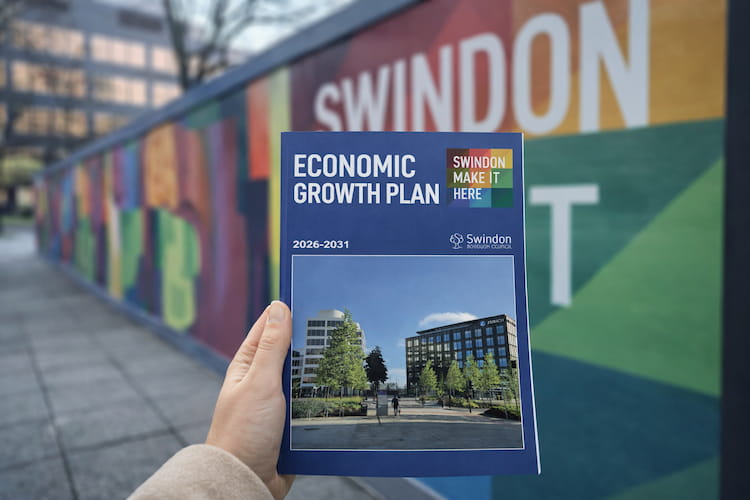

Swindon Borough Council has published a new five-year strategy aimed at accelerating economic growth and positioning the town as what it describes as “the most innovative, productive and fastest-growing town in England”.
The Economic Growth Plan 2026-2031 sets out a short to medium-term vision for what the authority calls “a Fairer, Better and Greener Swindon”, focusing on investment, regeneration and higher-value industries.
The plan document highlights Swindon’s £12.7bn economy and productivity of £48.7 GVA per hour worked, which it states ranks third nationally. Gross Value Added, or GVA, is the total value of goods and services produced in an area, after subtracting the cost of what was used to produce them, essentially measuring how much economic value a place creates.
However, the council acknowledges ongoing challenges. These include skills gaps, low higher education participation, pressure on electricity grid capacity and a town centre that “needs significant regeneration and investment”.
The strategy narrows its focus to three priority sectors: defence, advanced component manufacturing, and financial and professional services.
In defence, the council wants Swindon to play a larger role in the national supply chain. It proposes securing a regional Defence Growth Deal and increasing defence-related SME spending by 50 per cent by 2031.
The plan highlights opportunities in unmanned aerial systems and dual-use technologies, with the aim of embedding local firms more deeply in Ministry of Defence procurement networks.
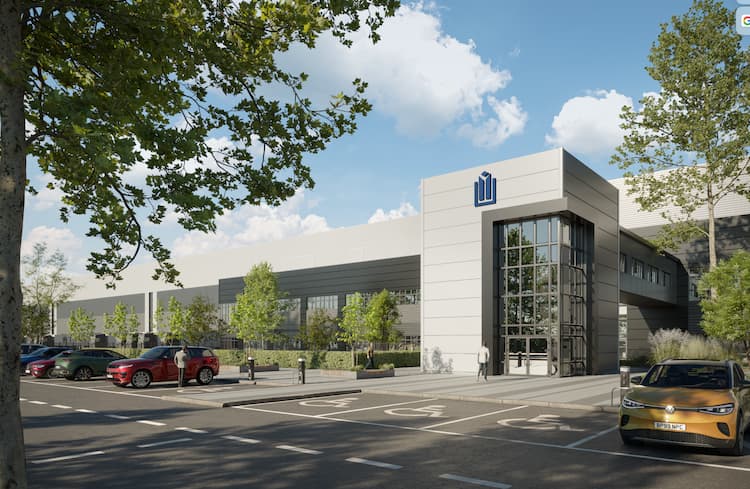
Advanced manufacturing is identified as a major opportunity, particularly at Panattoni Park, the former Honda site. The council has set a target of creating 2,500 high-skilled jobs in component manufacturing by 2031.
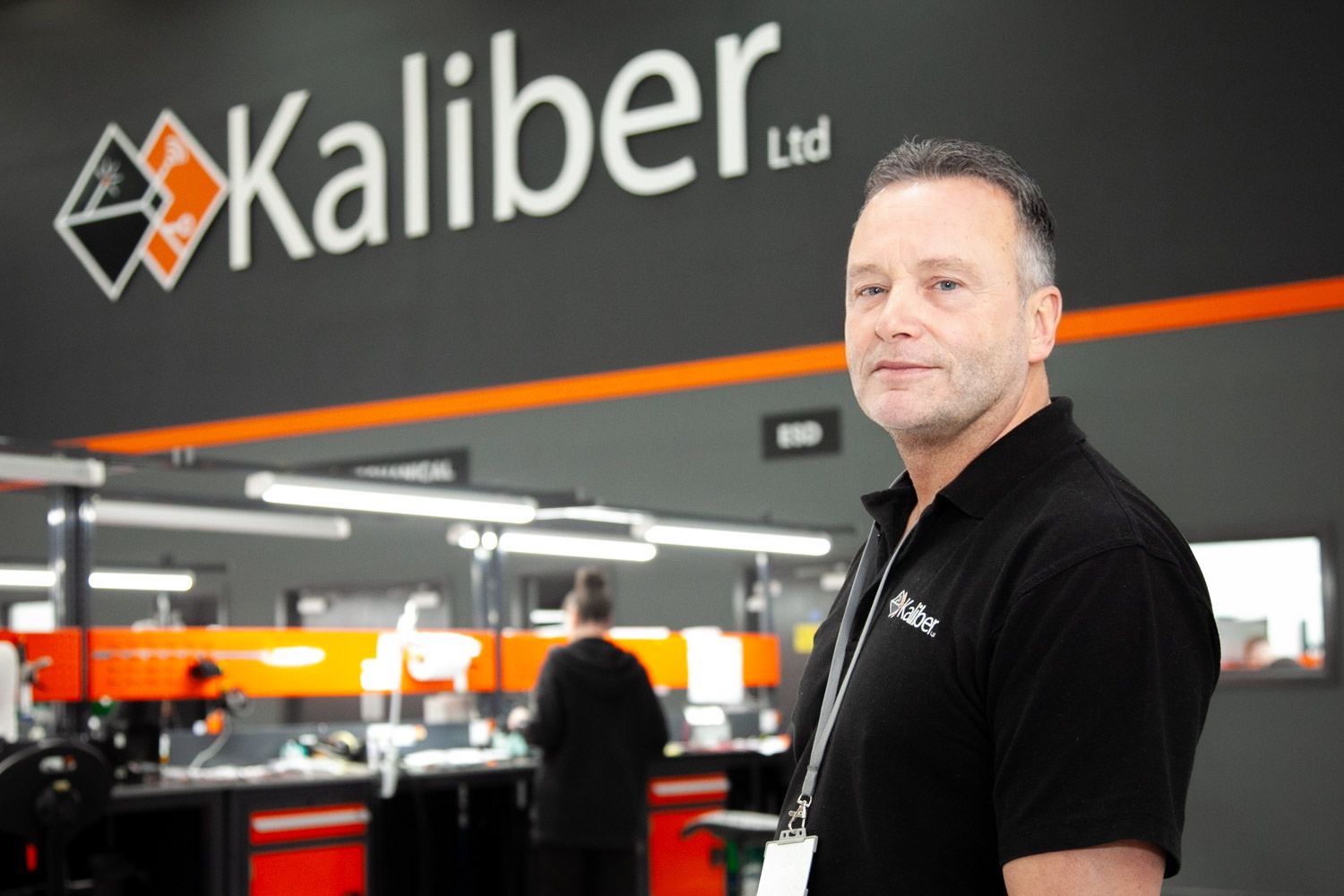
Lawrence Ponting MD of advanced manufacturing company Kaliber Ltd said:
“Swindon has always had strong engineering and manufacturing DNA. From a business perspective, clarity of the local authority’s direction is important.
A clear focus on growth sectors like ours gives companies the confidence to invest, recruit and expand here in Swindon.”
The focus is on producing dual-use components for clean energy and defence, rather than a return to large-scale automotive manufacturing.
Financial and professional services, already worth around £1bn locally and employing nearly 20,000 people, are also central to the strategy. The council says the ambition is to expand into areas such as fintech and sustainable finance.
Regeneration projects at Kimmerfields and Knowledge Central are described as key to delivering new Grade A office space and attracting higher-value employers.
The growth plan is closely linked to wider regeneration ambitions. The Heart of Swindon vision aims to deliver up to 8,000 homes in the town centre, including developments at Kimmerfields and Brunel Quarter.
Knowledge Central, next to the railway station, is described as a major mixed-use opportunity combining housing, education and employment space.
Panattoni Park alone is expected to deliver £918m of redevelopment and 7.2 million square feet of employment space.
The document also addresses infrastructure constraints. Electricity Bulk Supply Points in Swindon and Toothill are described as “constrained”, with grid capacity identified as a potential barrier to future growth.
The council says it will work proactively with network operators to secure necessary upgrades.
Transport proposals include bus priority corridors, active travel routes and improved rail connectivity, rather than a focus solely on road expansion.
A commitment to community wealth building also forms part of the plan. The council intends to review procurement practices to increase SME access to contracts and retain more spending within the local economy.

Business owner, Graeme Leighfield from GEL Studios said:
“With an almost £13 billion economy, it’s clear Swindon has the weight to achieve what’s in this plan, I’m rallying behind this 5 year strategy, and encourage others in and around Swindon to do so also!”
The strategy links economic growth to tackling deprivation and worklessness in specific wards, with performance indicators covering skills attainment, apprenticeships and green sector employment.
A new Swindon Economic Growth Forum will be established, bringing together businesses, education providers and public sector bodies. The council describes its future role as an “enabler, convenor and place shaper”.
The authority has committed to annual reporting against key performance indicators, including GVA growth, job creation and town centre investment.
The success of the plan will depend on securing national funding, unlocking grid capacity and delivering regeneration projects at scale over the next five years.












What about the retail offering. Swindon is almost a food desert. Tesco Express is a complete rip off. How do you propose to attract all those high wage / high skill businesses when you cannot secure a national retailer for the town centre?