

Dr Amit Srivastava, a GP at Abbey Meads Medical Group and part of private healthcare provider messageGP, has begun offering tests for lipoprotein(a), known as Lp(a).
Unlike cholesterol routinely measured in blood tests, Lp(a) levels are largely determined by genetics and high levels have been linked to an increased risk of cardiovascular disease. Crucially, HEART UK says Lp(a) is not routinely measured as part of cholesterol testing in general practice in Britain.
European guidance has gone further, with a 2025 update from the European Society of Cardiology and European Atherosclerosis Society saying Lp(a) measurement should be considered at least once during every adult’s lifetime.
Levels above 50mg/dL, are regarded as a cardiovascular risk-enhancing factor, a level estimated to affect at least one in five people. Dr Srivastava has been offering Lp(a) testing privately through his private business messageGP and says more than half of those tested so far have returned elevated results.
Dr Srivastava said:
“What concerns me is that somebody can be doing many of the right things and have what appears to be a fairly reassuring standard cholesterol result, while still having an inherited cardiovascular risk they simply don’t know about.
“The proportion of elevated results we are seeing has surprised me and reinforced my view that we need a much wider conversation about cardiovascular risk.”
Discovering high Lp(a) does not automatically mean a patient needs medication specifically to lower it.
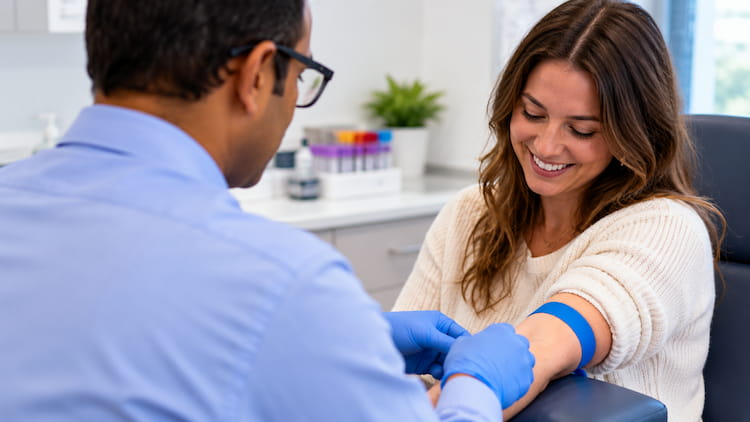
Instead, identifying elevated Lp(a) can influence how doctors assess someone’s overall cardiovascular risk and lead to closer management of factors which can be changed, including LDL cholesterol, blood pressure, smoking and diabetes. Because Lp(a) is largely inherited, an elevated result can also have implications for close relatives.
“This isn’t about frightening people with another number on a blood test. It is about having better information.
“If somebody has significantly elevated Lp(a), we can consider that alongside their cholesterol, blood pressure, family history and other factors and build a clearer picture of their cardiovascular risk.”
The issue has also helped inspire a wider push by Dr Srivastava to get Swindon residents thinking about their hearts before serious problems develop.
He is helping organise a public “Heart to Heart” evening in Old Town, bringing residents face-to-face with Great Western Hospital consultant cardiologist Dr Tom Hyde and registered dietitian Jasel Small.
Dr Hyde has spent almost 20 years treating heart disease and will discuss cardiovascular risk, warning signs and what heart scans can, and cannot, reveal.
Jasel will look at practical ways people can protect their cardiovascular health through food, while residents will be able to put their own questions directly to the experts.
“There is a huge amount of information about cholesterol, diets, scans and heart disease and it can be difficult for people to know what actually matters.
“We wanted to bring specialists and local residents into the same room so people can ask questions directly and leave with a better understanding of their own heart health.”
Heart to Heart takes place at Kenzo in Old Town on Thursday 19th November, from 7pm until 10pm and includes dinner, expert talks and a question-and-answer session.
Tickets and further information are available through the event’s Ticket Tailor page.