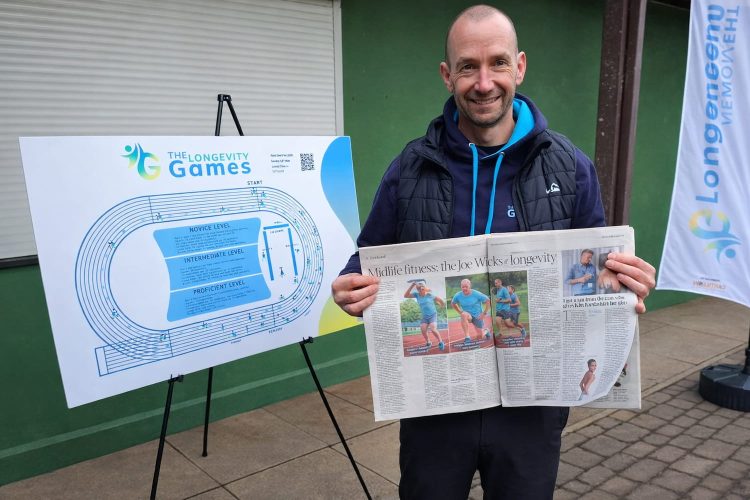
Tim Howe, founder of The Longevity Games, and Swindon 24 columnist was described as “slowly gaining a reputation as the Joe Wicks of longevity” as part of a feature on mid-life fitness and lifespan.
The national coverage comes as the initiative receives recognition closer to home.
The Longevity Games has been shortlisted for the Pride of Swindon Awards, while Howe and his wife Lee have been invited to attend a Royal Garden Party in May following a nomination through Swindon Radio.
“It’s a bit like buses,” Howe said. “It all comes at once. But I’m representing the whole group. This isn’t about me. It’s about everybody involved.”
According to the feature, the concept began during Howe’s 50th birthday trip when discussions turned to lifespan and functional health.
He returned to Swindon and began organising 6am sessions focused on simple, equipment-free exercises aimed at improving strength, balance and aerobic capacity.
In 2025, more than 700 people took part in festival-style Longevity Games events across the year, with participants ranging from beginners to more experienced individuals.
“There is no timing chip, no one counting reps, no one judging your squat,” Howe said in the national feature. “Everyone is on a different journey.”
The newspaper compared the model to the early days of Parkrun, highlighting the free weekly training sessions and low-cost entry fees for larger events.
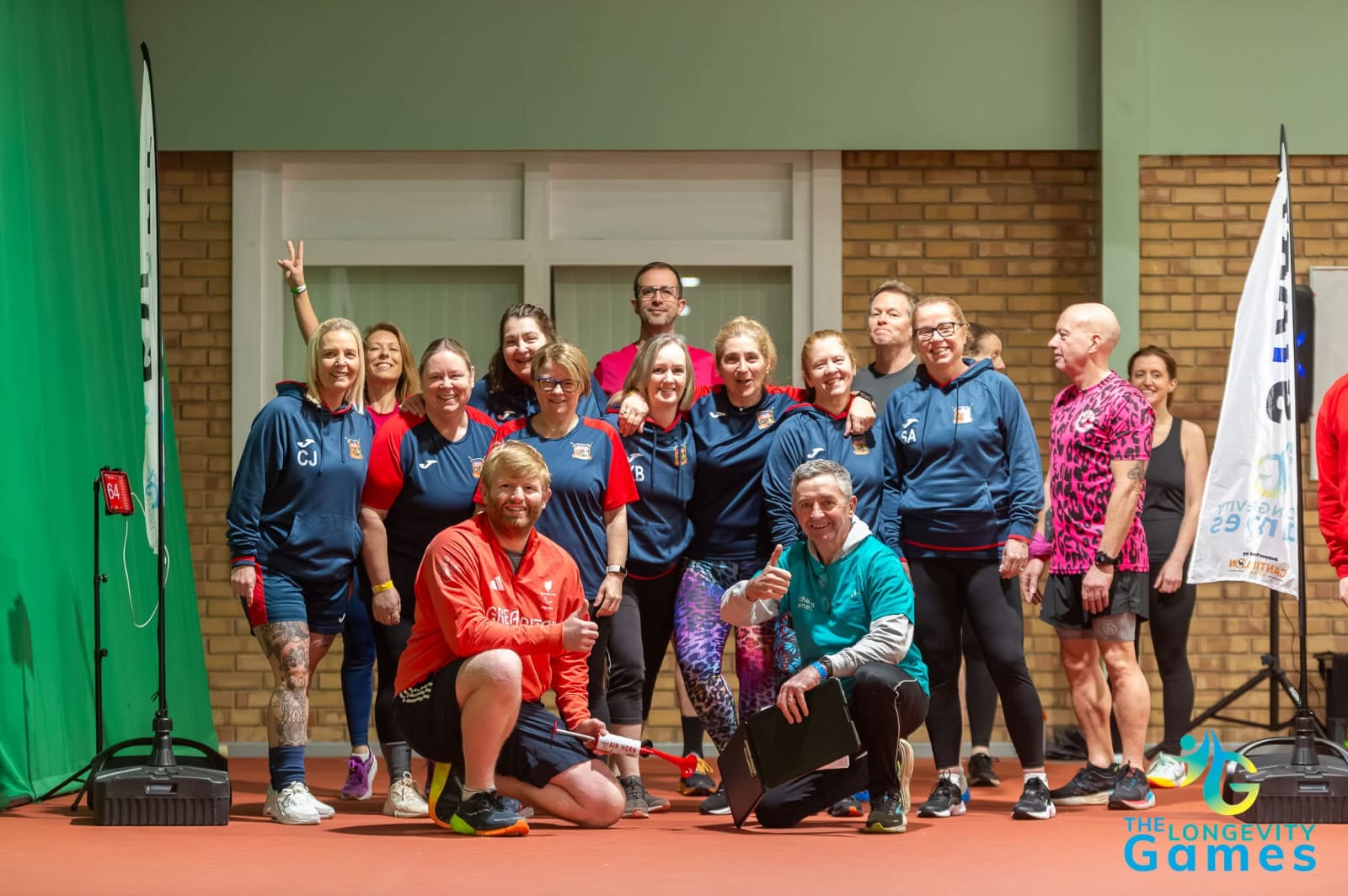
Speaking to Swindon 24, Howe said accessibility remains central to the project.
“There shouldn’t be a barrier to health and wellbeing,” he said. “We’ve had our first wheelchair user. We’ve had people ask if a blind friend can take part. We adapt it. That’s what it’s about.”
He believes many people in their 40’s and 50’s reach a point where they begin to reflect on their health.
“You go through your twenties and thirties and you’re fine because you’re young. Then in your forties and fifties you notice it. You walk up the stairs and think, I need to do something. But where do I start?”
Beyond the growing profile, Howe has called for greater coordination between local organisations to support preventative health.
After attending a recent Swindon Health Board meeting, he said stronger collaboration was needed between council services, NHS providers, sports facilities and community leaders.
“There’s a council doing one thing, NHS doing another, sport facilities doing another,” he said. “We need to pull everyone together and show the data.”
Howe pointed to research published by Sport England suggesting that for every £1 invested in physical activity there can be a £4.83 return to the public purse through reduced social care and healthcare costs.
His proposal centres on consistent, free-to-access community fitness sessions at fixed times across the town, loosely modelled on Parkrun.
“Make it easy,” he said. “Same time, same format, different hubs. Bring a water bottle. That’s it.”
What began as a handful of people training at dawn in a Swindon field has now led to national media attention, local award recognition and an invitation to Buckingham Palace.
“We’re not going to change everybody,” he said. “But you’ve got to give everybody the chance.”