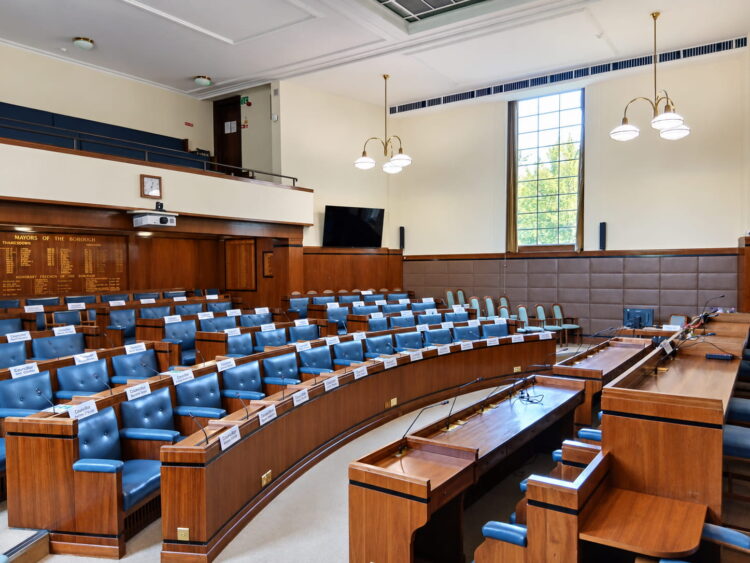

Thursday night’s (22nd October) meeting saw Conservative councillors back a Reform UK motion calling for a fairer distribution of asylum accommodation across the South West, despite strong opposition from Labour.
The meeting also saw agreement on tackling illegal working, improving the maintenance of Swindon’s Cenotaph and seeking greater Government support for the council’s finances and children’s services.
But the political fallout continued afterwards, with Labour accusing the Conservatives and Reform of acting together, while Conservative deputy council leader Jake Chandler rejected claims of any political alliance.
The most contentious debate concerned a Reform UK motion calling for the Government to review the distribution of asylum accommodation across the South West. Proposed by Councillor Colin Lovell and seconded by Reform group leader Sara Godwin, the motion highlighted Home Office figures showing 511 people receiving asylum support in Swindon at the end of June 2026.
That represents approximately 15% of the South West’s supported asylum population, despite Swindon accounting for around 4% of the region’s population. Of those receiving support in Swindon, 448 were living in dispersal accommodation, 52 in contingency accommodation and 11 were receiving financial support without accommodation.
However, the number receiving asylum support in Swindon has fallen by around 36% since September 2023, when the figure stood at 798. Opening the debate, Lovell argued that the issue was not about asylum seekers themselves, but whether Swindon was being treated fairly by the Government over accommodation levels, consultation and funding for local services.

Conservative council leader Gary Sumner supported the motion, arguing that its primary concern was the pressure on services provided by the council rather than singling out any particular community. Deputy Labour leader Emma Bushell questioned why the council was focusing on a relatively small group of vulnerable people, many of whom had already experienced considerable hardship.
“It does not offer any solutions,” she told the chamber.
Labour group leader Jim Robbins urged Conservative councillors to reconsider their support, describing the proposal as divisive. The motion was passed with the support of Reform UK and Conservative councillors, while Labour voted against.
It calls for the council leader to write to the Home Secretary seeking a review of accommodation levels, improved consultation and recognition of additional pressures on council services. The amended proposals also request annual website updates covering asylum accommodation numbers, Government funding and evidenced impacts on local services.
However, responsibility for asylum accommodation remains with the Home Office, meaning the council’s decision does not itself restrict the number of asylum seekers accommodated in Swindon.
Reform UK expressed frustration that only 4 of the 12 motions submitted across the council were debated, with the remaining eight referred to committees. Two of the motions discussed in the chamber had been brought forward by Reform.
In a statement following the meeting, the party argued that Full Council should provide opportunities for elected representatives to debate the issues affecting residents.
Councillor James Head raised concerns during the meeting about the arrangements and the need to protect democratic debate.
Among those referred to committees was a motion seeking improvements to women’s safety in Swindon’s parks.
Despite the disagreement over asylum accommodation, councillors found common ground on several other matters.
A Reform UK motion brought forward by Councillor Gordon Slade called for tougher action against illegal working in Swindon’s food delivery and courier sector. The proposals raised concerns about delivery accounts being rented or shared to bypass right-to-work checks, while seeking greater cooperation with national enforcement agencies.

Labour acknowledged agreement on the need to tackle illegal working, although the precise scope of the final agreed measures remains important in determining what practical action follows.
There was also cross-party agreement on the need for additional Government support for the council’s finances and children’s services.
A Conservative motion highlighted financial pressures facing Swindon Borough Council and the challenges surrounding education provision, including the £55.3 million funding shortfall arising from the Government’s decision not to proceed with two planned schools in the New Eastern Villages.
Councillors also supported calls for better maintenance of Swindon’s Cenotaph following a Labour proposal brought forward by Councillor Mike Davies. The proposal sought a regular programme of inspection and cleaning throughout the year, rather than concentrating attention on the memorial around Remembrance Sunday.
Following the meeting, Robbins criticised what he described as the Conservatives and Reform continuing to vote together despite denying any political arrangement.
“The Tories and Reform remain firmly in lock-step, voting together despite their increasingly bizarre protestations to the contrary,” he said.
He described the asylum motion as “largely pointless” and praised Labour councillors Emma Bushell and Abdul Amin for opposing it. Robbins said he was disappointed with Conservative councillors who supported the proposal while seeking to distance themselves from its implications.
However, he acknowledged that the meeting had produced constructive moments, including agreement on the Cenotaph, illegal working and children’s services.
The Labour leader also questioned the Conservative administration’s approach to the former Highworth Golf Course, suggesting that developing the site for housing could generate much-needed revenue to help address the council’s financial difficulties.
Conservative deputy council leader Jake Chandler responded in a Facebook video, accusing Labour of allowing party politics to dominate its approach to council business. He rejected suggestions of an agreement between the Conservatives and Reform, arguing that Labour itself had supported much of the same business during the meeting.
Chandler claimed Labour had voted differently from other political groups on only three occasions, including the Reform asylum motion, councillors’ allowances and a proposal concerning Wroughton Parish Council.
He also highlighted the decision to freeze councillors’ allowances for the coming year, despite an independent panel recommending an increase. Chandler criticised Labour’s financial record and challenged its position on the future of Highworth Golf Course.
He argued that councillors should be willing to support proposals from other parties when they could benefit residents, rather than opposing them for political reasons.
“We need to recognise that we’re a council where there are three big political parties,” he said, adding that all could bring forward worthwhile ideas.
The Conservatives currently run Swindon Borough Council as a minority administration following May’s local elections, meaning support from other councillors can be crucial when decisions are put to a vote.
The meeting demonstrated both the tensions between Swindon’s political groups and the areas where cooperation remains possible.
For residents, the next test will be what happens beyond the council chamber, including whether the Government responds to the asylum accommodation concerns, what action follows on illegal working and whether motions referred to committees result in practical improvements.
Although four motions received a debate, Reform’s criticism of the process also raises a wider question about how Swindon’s increasingly divided council can give all political groups a fair opportunity to bring forward proposals while managing the time available.