The discussion will take place at Lydiard Park and will bring together business leaders to consider the town’s role within the wider regional economy and what direction it should take next.
A central theme is the contrast between Swindon’s economic performance and its external reputation. While the town regularly ranks among the most productive urban areas in the South West, it continues to face comparisons with nearby centres including Bristol, Oxford and Reading.
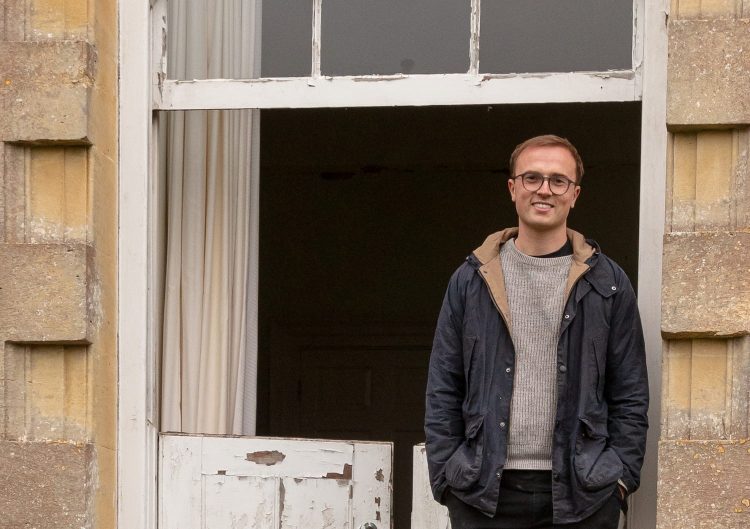
Dallimer, who has overseen more than £20 million of property investment across Swindon and Wiltshire in the past decade, is expected to address how sustained development can help reshape perceptions.
His current projects include the redevelopment of Burderop House Estate and involvement with Apsley House, formerly the town’s museum and art gallery.
He said: “We now have an opportunity to be openly proud of being part of this town.”
He pointed to ambitions such as a potential UK City of Culture 2029 bid and the possibility of closer economic ties with neighbouring counties under a future mayoral authority.
The themes of culture, identity and economic positioning are expected to feature prominently in the debate. Developments such as Burderop House and Apsley House are seen not only as regeneration schemes but as part of a wider effort to influence how the town is experienced and perceived.
“I am looking forward to being part of this important conversation about Swindon’s future,” he said. “There is a great deal of potential within the town and it is vital that businesses and communities work together to realise it.
We also need to express our belief in the amazing positive potential of Swindon, which is the second most economically active urban area in the whole of the South West, second only to Bristol.”
Dallimer will be joined by Kate Westbrook and James Phipps, with the session chaired by Anita Jaynes. The panel is due to explore how Swindon can define its place within a changing regional structure, particularly as discussions around devolution continue.
At the core of the event is a broader question about whether economic growth alone is sufficient, or if it must be supported by a stronger and more clearly defined identity.
There is also a practical consideration. As Swindon seeks further public and private investment, closer alignment between business, civic leadership and the community may prove increasingly important.
Without that cohesion, strong economic figures may not translate into visible improvements for residents.
Dallimer’s contribution reflects a view shared by some in the business community that Swindon’s next chapter will depend less on proving its economic strength and more on defining what it wants to become.