
Speaking after the Full Council meeting where his group’s alternative budget was rejected, Sumner warned that the borough’s position is more fragile than many residents realise.
“Without the exceptional financial support (EFS), which is provided by government, then Swindon would have to declare a 114 notice, which is effectively bankruptcy,” he said.
A Section 114 notice is issued when a council cannot balance its budget and would trigger severe spending restrictions and potential government intervention.
“That EFS is also planned for the coming years as well. So there is no end in sight to this,” he added.
At the meeting, the Conservative Group put forward proposals they said would deliver £5.2 million in savings and additional income.
The proposals included outsourcing property and architecture services, generating more income from STEAM Museum, introducing a highways lane rental scheme, reviewing parking charges between Old Town and the town centre, and offering 30 minutes of free parking in the town centre.
He also proposed interim improvements to the Wyvern Theatre while longer-term decisions are taken on a future entertainment venue.
“We put forward some very credible plans,” he said. “Not unexpectedly, they were voted down by Labour.”
Sumner criticised what he described as the sale of income-generating assets under the current administration at Swindon Borough Council.
“They sold off an industrial estate, which was a very good income producer. I think it brought in something like £1.3m per year.”
He compared the decision to losing a pension-style investment stream.
“It’s like a pension fund, isn’t it? That income would only have increased over time… Those sorts of sales, you can’t go back on that.”
He claimed there are no clearly identified asset sales to plug future gaps, meaning borrowing may be required.
“That ultimately means that they will have to borrow that money from government.”
The approved budget includes a 4.99 percent council tax rise, the maximum normally permitted without a referendum.
Sumner suggested that councils receiving Exceptional Financial Support can seek approval for increases above that level.
“When you are in this position of receiving exceptional financial support, the usual rules don’t apply, so you can request an increase above the 4.99%.”
He added: “Somebody’s going to have to take a difficult decision after the election about whether or not they do that.”
Like the current administration, Sumner identified adult and children’s social care as the main drivers of rising costs.
He referenced figures discussed ahead of the budget indicating that out-of-borough residential placements for children can cost thousands of pounds per week.
“We would increase in-borough placements,” he said.
He added: “We have credible alternative ideas… that would come, should we form an administration in the council after May.”
Sumner also highlighted overall budget growth.
“£233 million is the expected budget for the coming year versus £166 million when they took over,” he said.
“I think we now have 16 directors on over £120,000 a year.”
He said a future Conservative administration would take “pragmatic steps to ensure that costs are controlled, and that additional income is generated.”
Turning to regeneration, Sumner questioned the affordability of a proposed entertainment venue in the town centre.
“It’s a fantastic thing to say we want an entertainment venue in the town centre. But that’s going to cost them £40, £50 million. Where’s the money going to come from?”
He argued that many schemes are currently financially challenging due to low land values.
“Most development in the town centre is not viable. The land values are so low and in some cases negative.”
Referring to the vacant Kimmerfields site near Zurich Insurance Group, he suggested a residential-led approach for Kimmerfields.
“I think it has a fantastic opportunity to be a town centre residential-led development.”
He questioned whether an entertainment venue in that location would benefit surrounding businesses.
“If you had an entertainment venue there, people get off a train, go to the venue and get back on a train. That doesn’t help the town centre.”
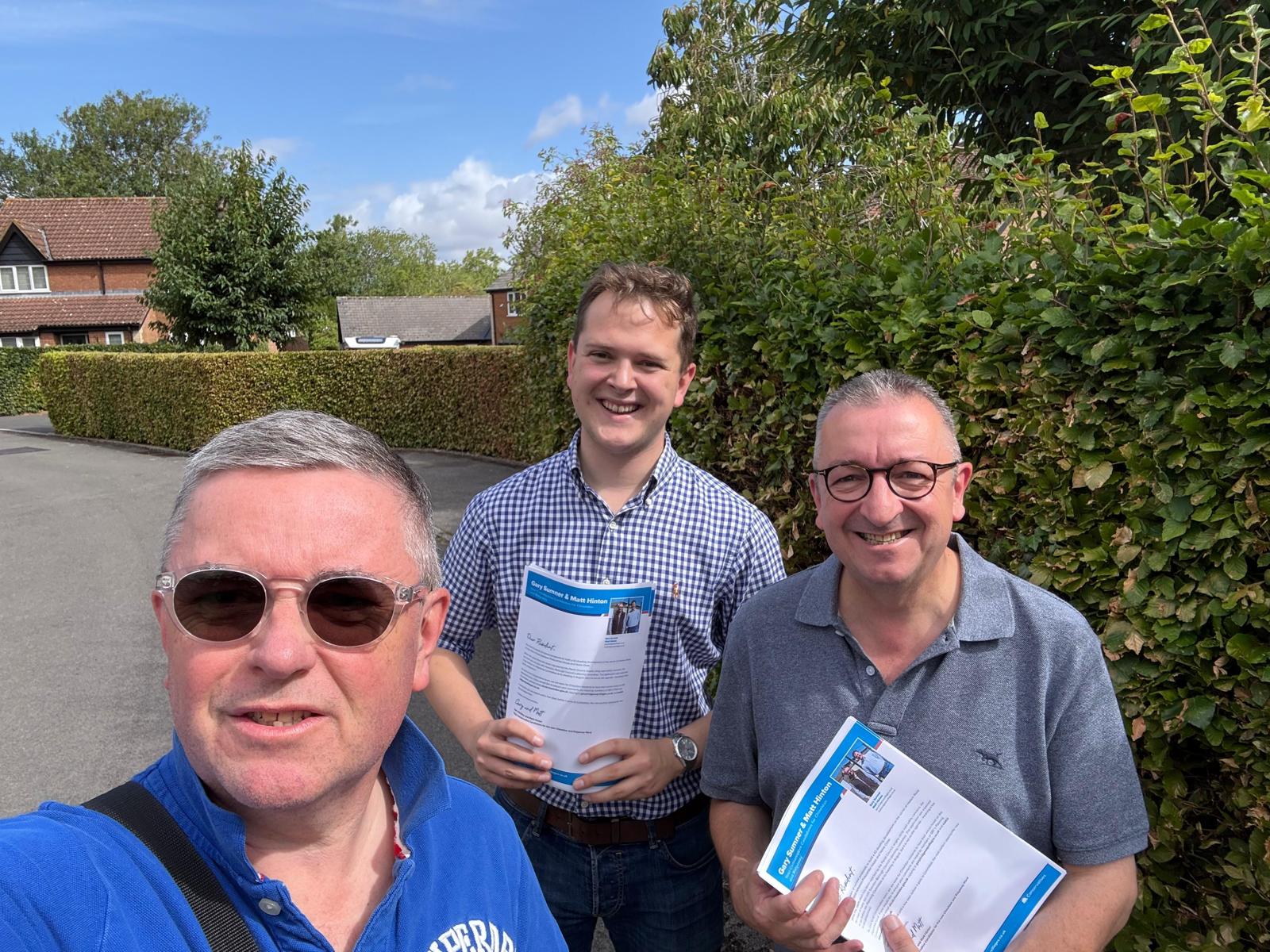
With local elections approaching, Sumner said he believes the political picture in Swindon will differ from recent national trends.
“We’re out knocking on doors all over Swindon and getting feedback from the people that really count,” he said.
“We are seeing people that voted for Labour in 2024 saying we’re not doing that again.”
While acknowledging increased competition, he added: “We’re getting really good feedback actually, which is encouraging.”
For Sumner, the coming vote will determine whether the council continues to rely on government support or pursues what he describes as tighter financial control.
“The writing is clearly on the wall,” he said.